 Vietnamnet.vn

 Podcast



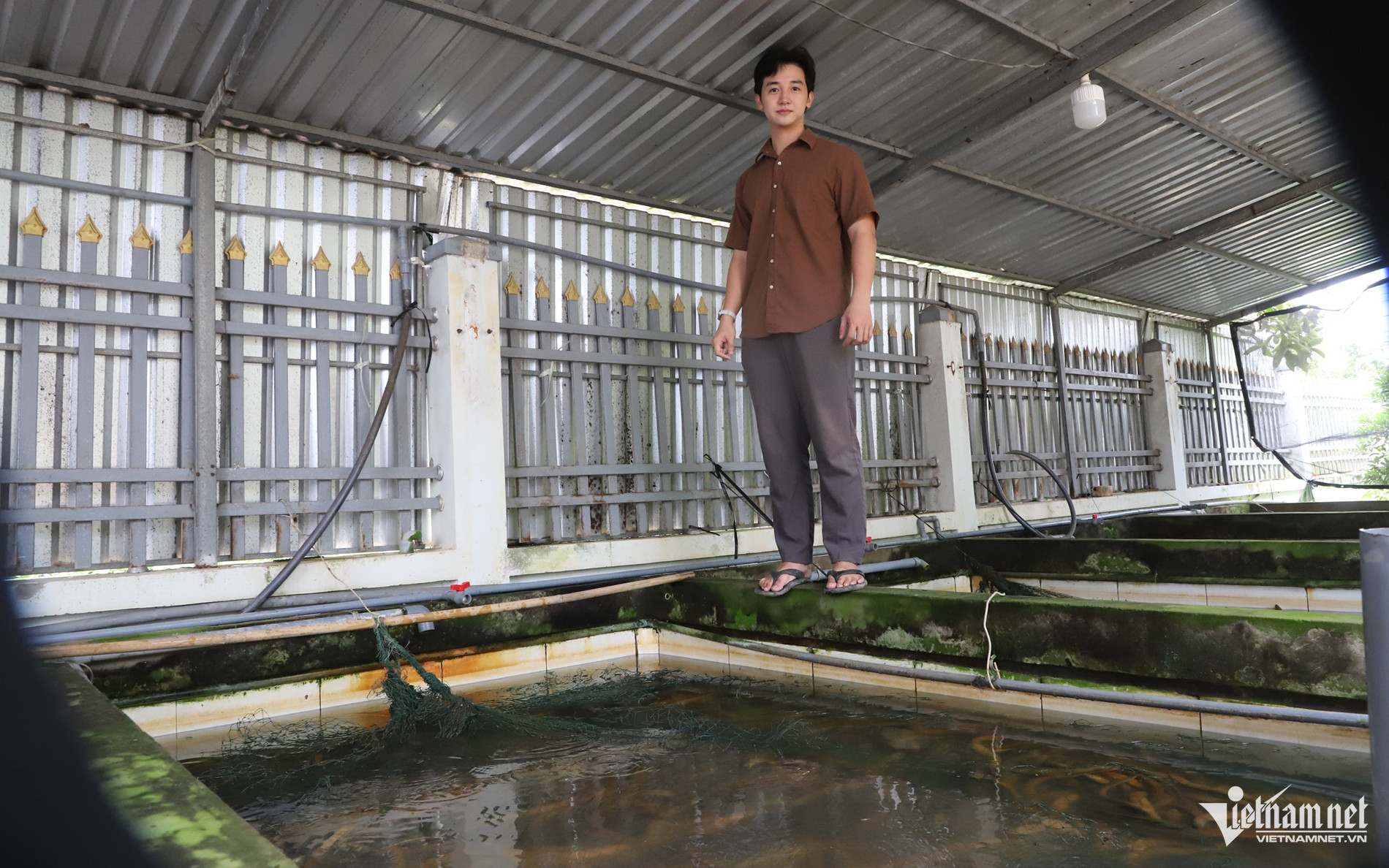
Nguyen Hong Phong (29, Phong Nam Commune, Can Tho City) is the youngest child in a family with two brothers. His parents run a small retail business and raise eels.
After graduating with an English Language degree from a university in HCMC, Phong pursued a second degree in Business Administration. He spent 11 years studying and working in HCMC, previously working in the sales department of a company with an income of over VND20 million per month.
A stable job, good income, and numerous opportunities once made Phong think he would stay in the city long term. However, in early 2026, returning home for Tet, witnessing his family and many eel-farming households facing hardship due to deeply falling prices, he began to change his mind.
Phong's family has 15 eel ponds, with a yield of about 700kg to 1 ton per pond. Most recently, just four ponds yielded about 3.2 tons of eel. On average each year, the family can sell more than 10 tons.
In previous years, commercial eels usually commanded quite high prices. However, before Tet 2026, prices dropped sharply, at times reaching only about VND35,000/kg.
"My father and other farmers could only sit and cry because of the heavy losses," Phong recalled.
Faced with that reality, he began thinking of ways to prevent his family's eels from relying entirely on traders. Phong's decision was supported by his parents.
Discarding tens of kg of eel
Phong came up with the idea of making dried eel. Lacking experience in this field, he researched on his own, experimenting with methods from sun-drying and frying to machine-dehydrating.
Phong had to discard several dozen kilograms of eel during the trial process. Each experimental production run also required hiring labor, causing further expenses to arise.
Before bringing the product to market, Phong hardly sold any of the first batches. He gave them to relatives, friends, and neighbors to try and gather feedback.
After numerous trials, he chose machine-drying as his main production method because it preserves the meat's natural golden color, produces straighter pieces and reduces the smell of cooking oil.
Phong seasoned the eel with lemongrass and chili to create a unique flavor. Once dried, the eel only needs a quick fry on each side before serving, retaining crispiness, the natural sweetness of the meat, the aroma of lemongrass, and a mild spicy kick from the chili.
In early April 2026, Phong began listing dried eel on e-commerce platforms. The first customers were mainly local residents in the commune and people who came via referrals.
Afterward, positive reviews on the platform became the motivation for him to expand production. According to Phong, many customers not only gave good reviews but also made repeat purchases.
"At first, I only planned to try making dried eel for two or three months. If it worked, my parents could continue the business while I returned to HCMC to work. But the more I did it, the more I saw its potential, so I decided to stay," Phong said.
In addition to dried eel, Phong makes tamarind fish sauce as a dipping sauce for the products. He has also developed eel floss for children and older people.
He currently sells dried eel for about VND500,000 per kilogram. Eel floss costs VND95,000 per 100g jar, equivalent to VND950,000 per kilogram.
In August, Phong used about 200kg of fresh eels for processing, producing around 25-30kg of dried eel and eel floss.
Rising demand has sometimes left Phong's small operation short of stock. His current dryer can handle a maximum of 16kg per batch, but he uses only about 12kg of raw materials per batch, yielding more than 3kg of finished products.
At times, orders have reached 6-7kg a day. Phong has had to switch to a pre-order system so he can plan production more effectively.
As for profits, Phong said he has not yet fully calculated all his expenses, so he cannot determine his exact profit. However, what matters most to him is not simply selling the products but giving his family more control over the market for their eels instead of depending entirely on traders.
By turning some of the eels into dried products, his family no longer has to sell the entire harvest at once. Part of the stock is sold fresh, while the rest is kept for processing.
Hoai Thanh
.svg)
