 Vietnamnet.vn

 Podcast



Tran Tuyen
This vibrant urban ward plays a crucial role in An Giang’s economic development and is also home to many popular tourist attractions that visitors shouldn’t miss.
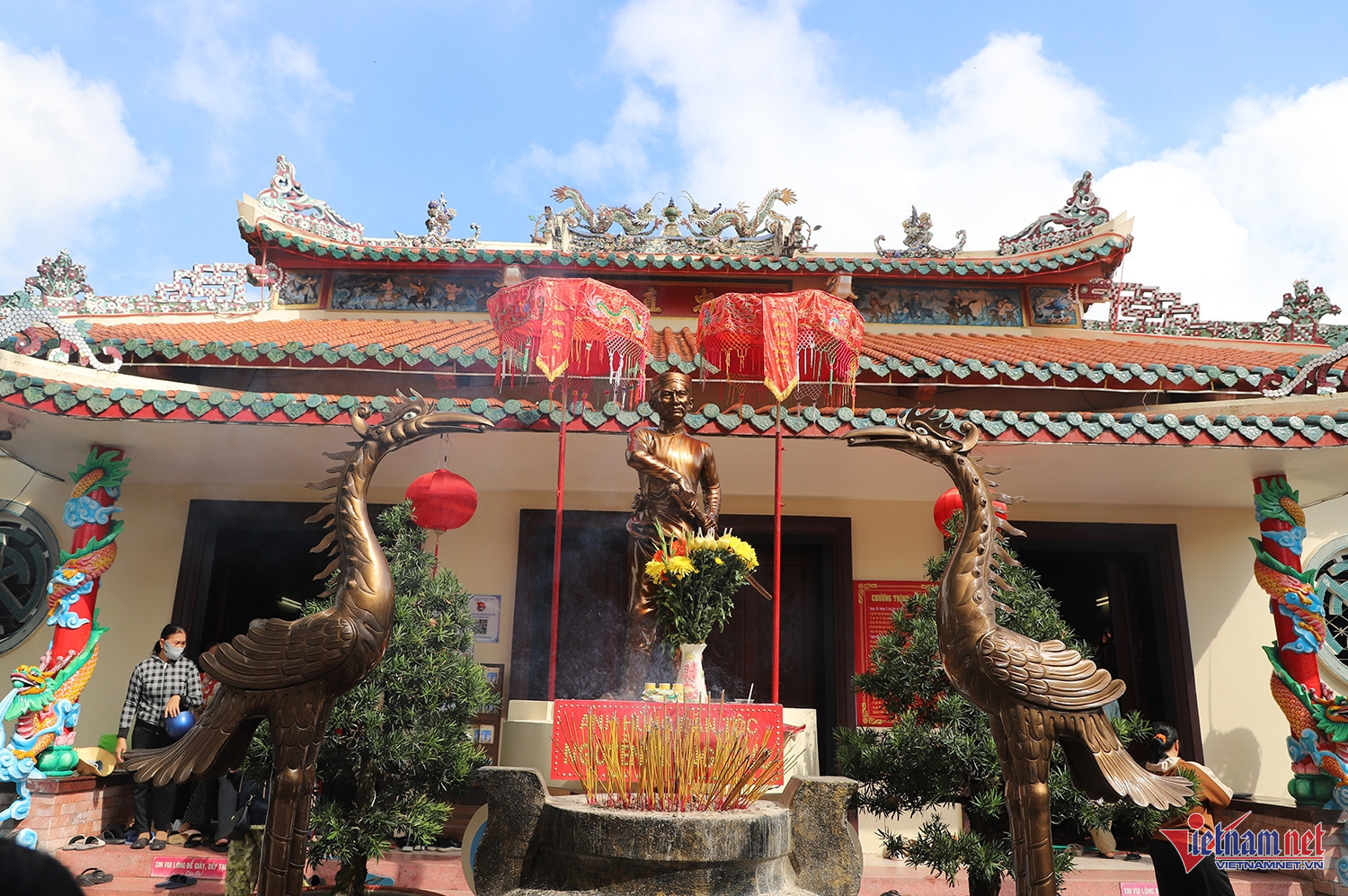
One of the most revered landmarks is Nguyen Trung Truc Temple, which honors the national hero known for his defiant statement: “Only when the French uproot all the grass in Vietnam will they stop the Vietnamese from fighting them.”
Deeply respected by the local people, who commemorate his execution by the French at Rach Gia, his spirit tablet was originally placed at Lang Ca Ong (Whale Shrine). Each year, his memorial festival (from the 26th to 28th of the 8th lunar month) draws millions of visitors.
Another must-see is Tam Bao Pagoda, also known as Sac Tu Tam Bao, located on Su Thien An Street. Though it was originally a modest structure built centuries ago, in 1940, it became a revolutionary hub under Venerable Tri Thien, who used it to hide weapons, documents, and leaflets in preparation for the Southern Uprising.
In June 1941, the French colonists raided the pagoda and imprisoned Venerable Tri Thien, who later died in protest during a hunger strike at Con Dao prison.
Legend has it that King Gia Long conferred the royal title “Sac Tu Tam Bao Tu” upon the pagoda. The imperial edict was reportedly lost during the French suppression in the 1930s and 1940s.

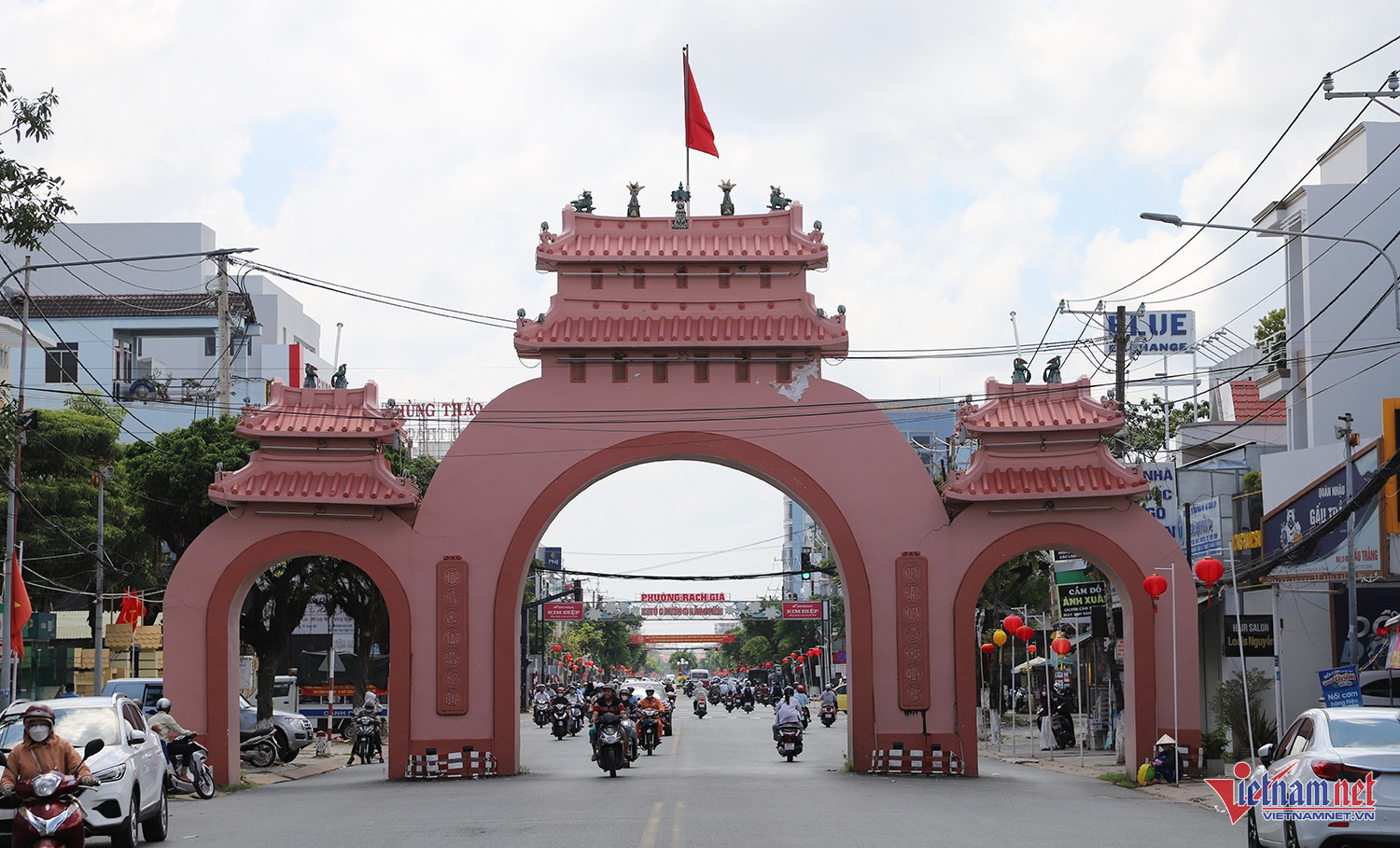
The Tam Quan Gate, located on Nguyen Trung Truc Street, is another symbolic structure of Rach Gia tourism. Built in 1955, this historical gateway features three soft archways, with a large central gate flanked by two smaller ones. Each arch is topped with a two-tiered roof, reflecting the traditional Vietnamese village style.
Nearby, An Giang Museum stands as one of the oldest preserved buildings in the area. Once a mansion of a feudal landlord, the museum is more than 100 years old and showcases a unique blend of Eastern and Western architecture. It spans roughly 2,000 square meters and is widely regarded as the most beautiful and well-preserved heritage building in the region.
The museum houses various exhibits related to the local land, people, and history. Among them, the Oc Eo culture section, featuring rare artifacts discovered in what was formerly Kien Giang province, is a major highlight.

Rach Gia is also home to Vietnam’s first land reclamation project, covering 420 hectares. This coastal development features a 2-kilometer-long artificial beach with clear blue waters, white sand, public infrastructure, entertainment venues, and recreational areas that offer exciting experiences for all visitors.

At the base of Rach Soi Bridge lies An Hoa Park, a charming riverside destination adorned with floral gardens, greenery, and vibrant lighting. A standout feature is the 20-meter-tall sun wheel, from which visitors can enjoy panoramic views of the coastline, especially breathtaking at night.

Finally, Rach Gia Port serves as both a vital transportation hub for routes to islands such as Phu Quoc and Nam Du, and a picturesque spot for photography and sightseeing. It’s particularly popular at sunrise and sunset, offering views of the bustling harbor, striking bridge architecture, and the vast sea.
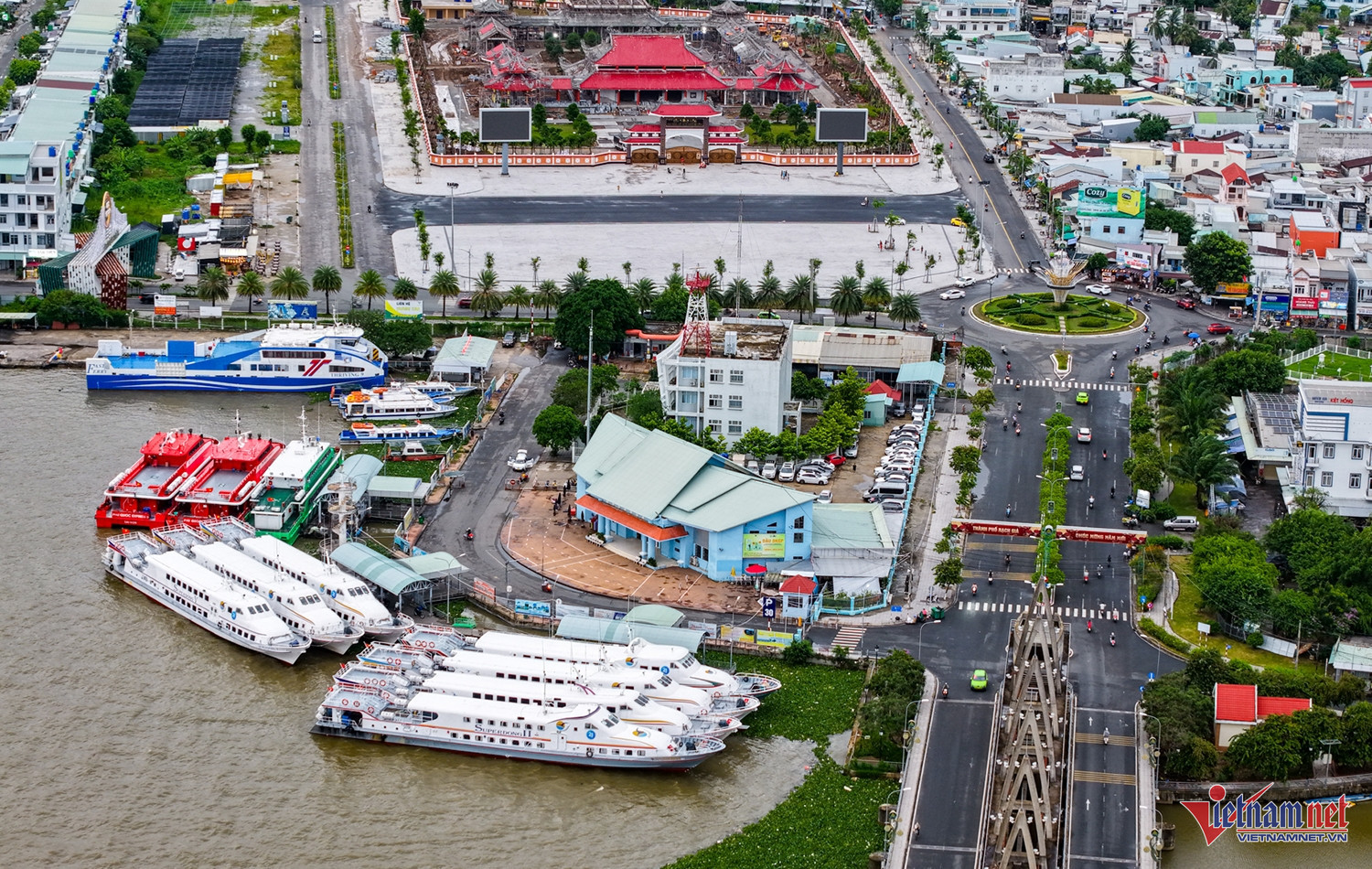
Rach Gia Port is a popular spot for sightseeing and travel to nearby islands. Photo: Nguyen Hue
.svg)
