 Vietnamnet.vn

 Podcast



Hai Duong
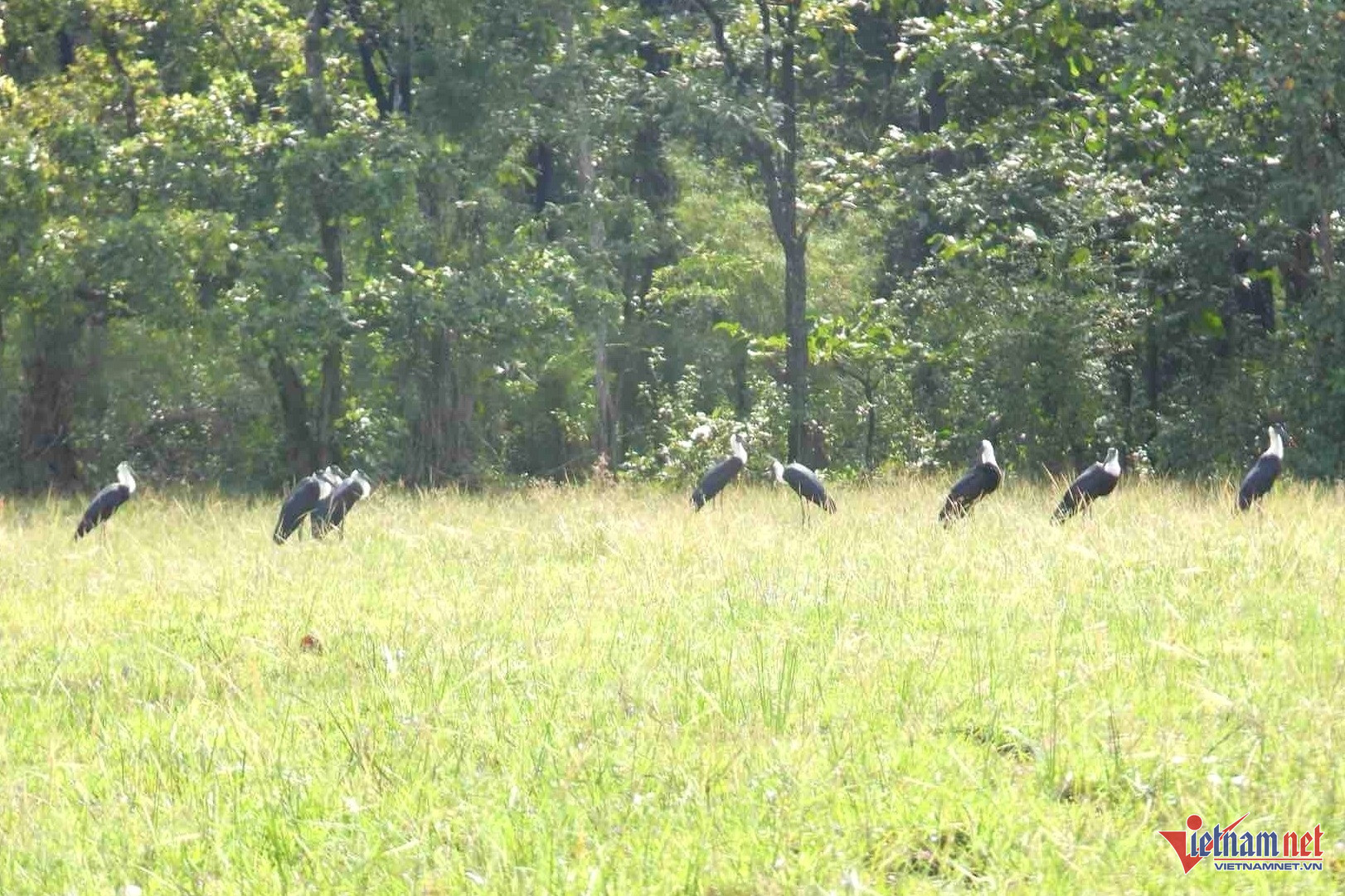
Y Siem H'Dok, a guide at the Environmental Education and Services Center of Yok Don National Park in Dak Lak Province, said the flock recently appeared in the park's administrative and service zone after being absent for an extended period.
At around 9 a.m., while guiding tourists on an elephant-watching experience in the park's dipterocarp forest, Y Siem unexpectedly spotted the woolly-necked storks descending into the administrative and service area to forage.
According to Y Siem, woolly-necked storks had been spotted in the park about three months earlier, but only one or two birds appeared at a time.
This time, the flock numbered nine, all fully grown - the largest group ever recorded there.
Pham Tuan Linh, director of Yok Don National Park, said the woolly-necked stork is a rare species facing the threat of extinction.
As soon as the flock appeared, the park instructed its forces to closely monitor the area to promptly prevent illegal entry and hunting.
The woolly-necked stork (Ciconia episcopus) measures about 75-91 centimeters in length. It is distinguished by its woolly white neck, which contrasts with the glossy black plumage covering much of its body and wings.
In Vietnam, the woolly-necked stork is classified in Group IB, which covers forest wildlife threatened with serious extinction and given priority protection. Commercial exploitation and use of species in this group are prohibited.
The resident bird has a limited distribution and is occasionally recorded in wetlands in the Central Highlands, southern Vietnam and the south-central region.
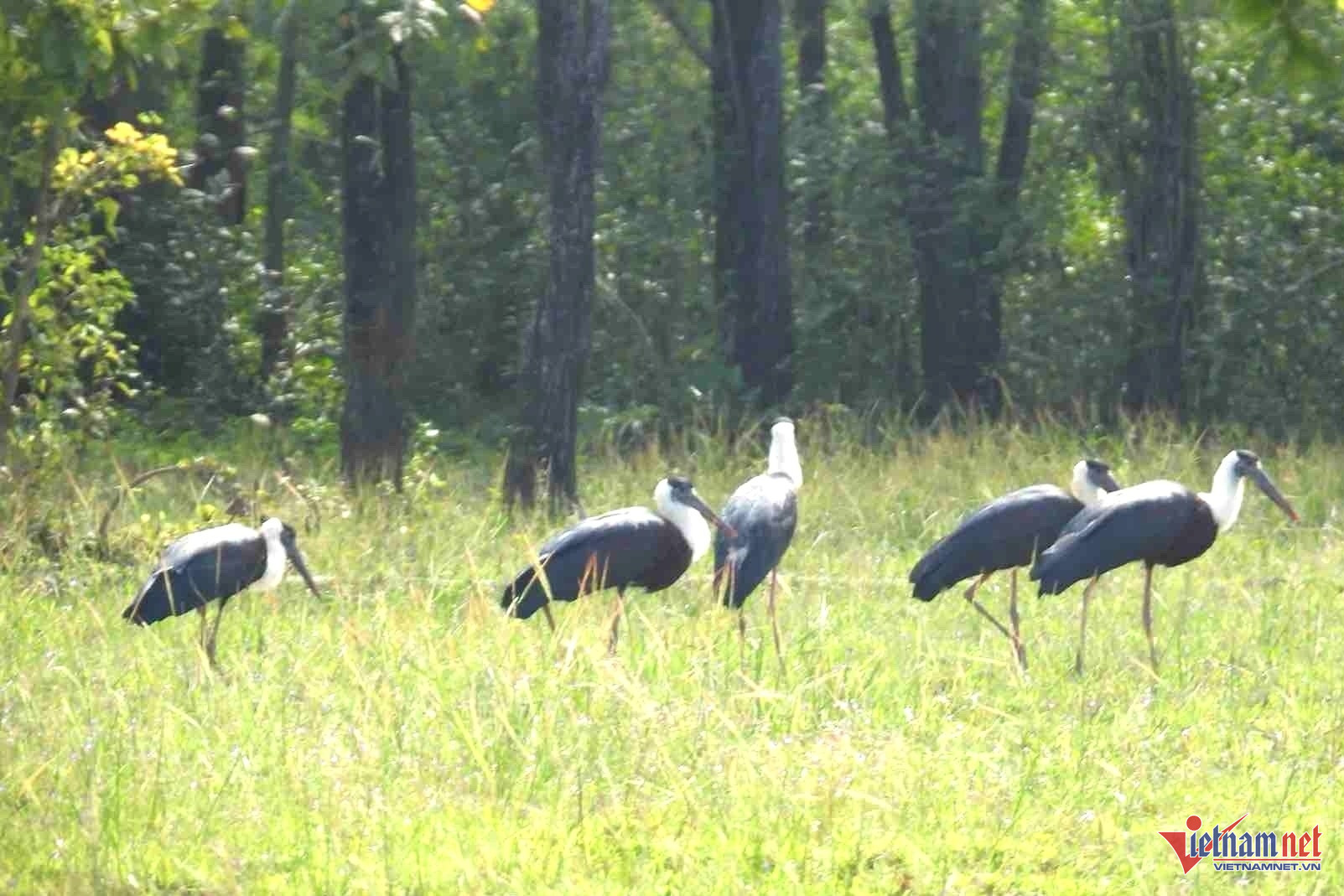
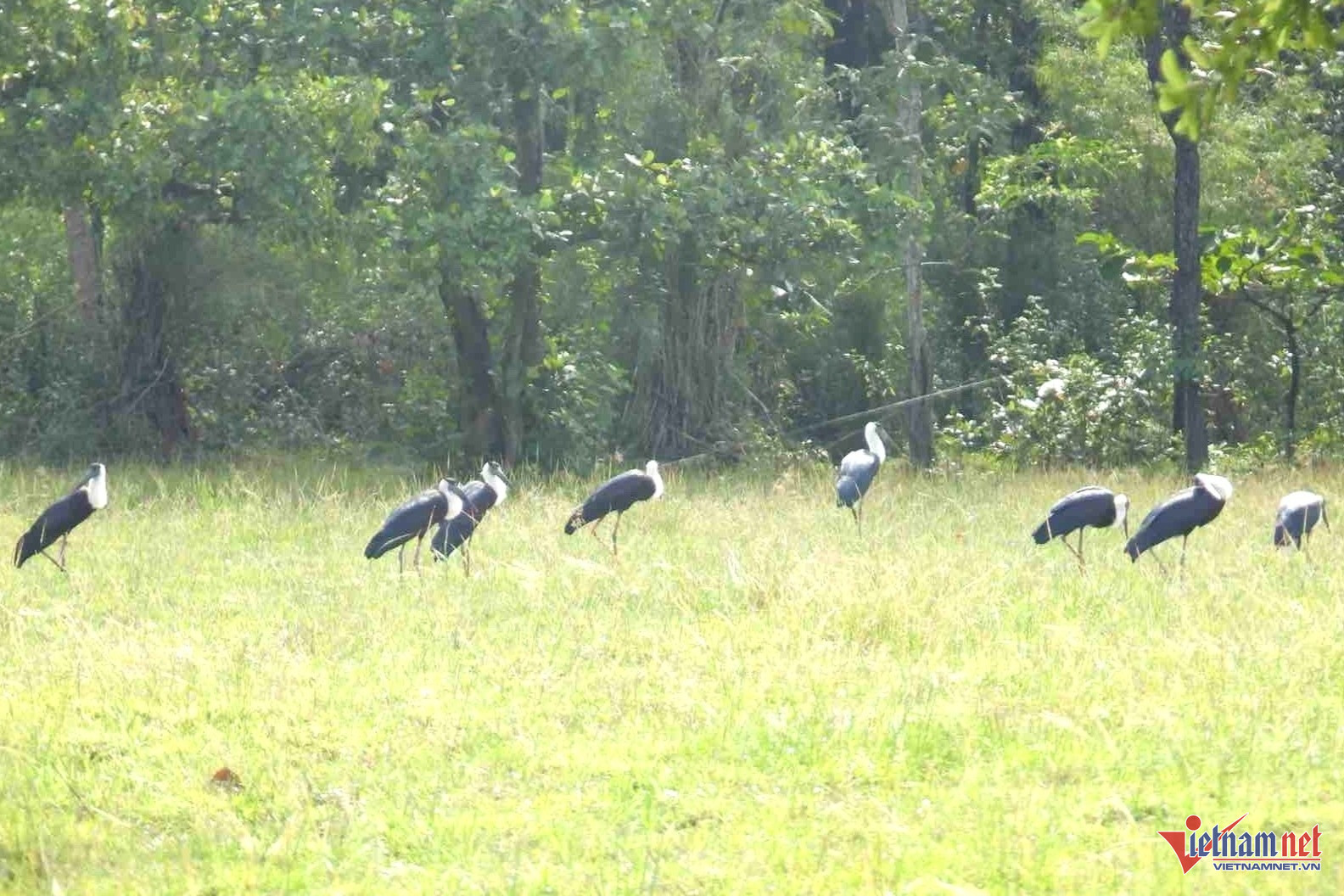
A flock of woolly-necked storks appears at Yok Don National Park. Photo: YS
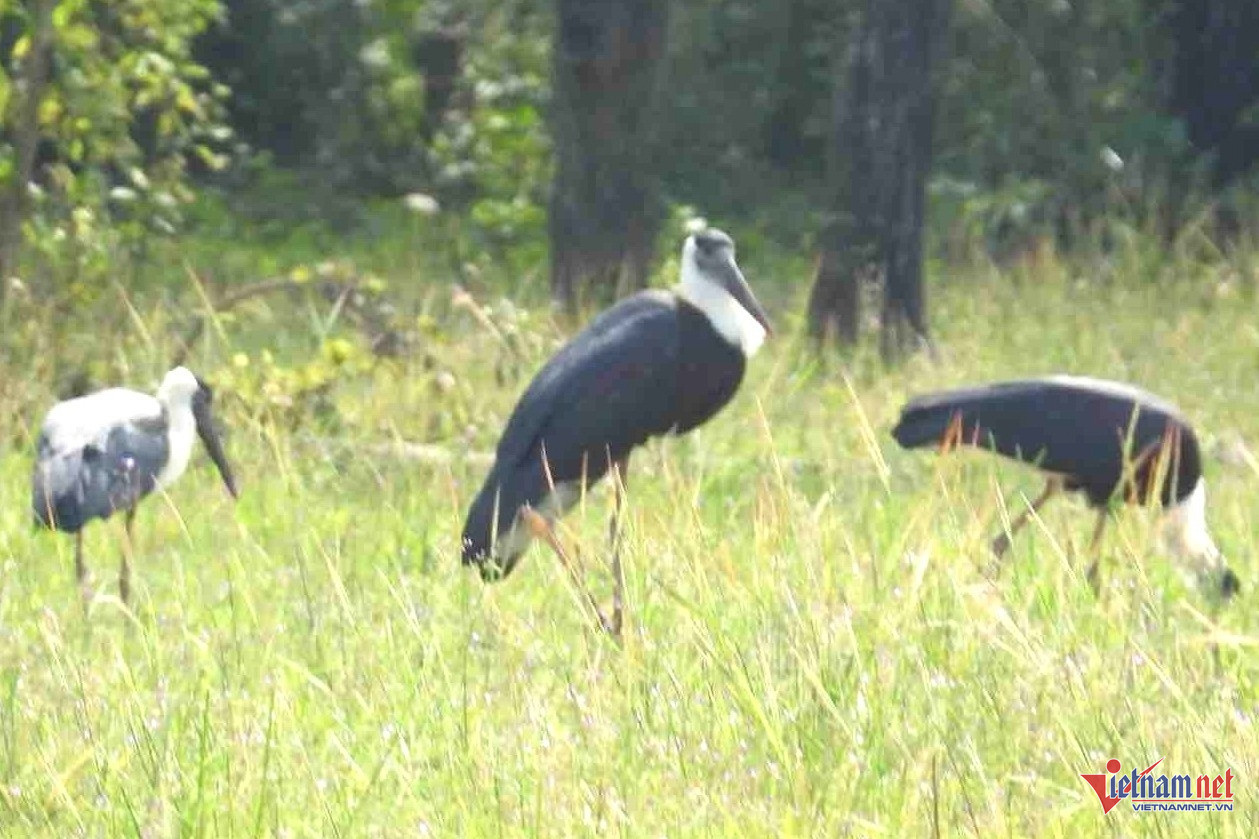
The storks forage on a large grassland in the core area of Yok Don National Park. Photo: Hai Duong
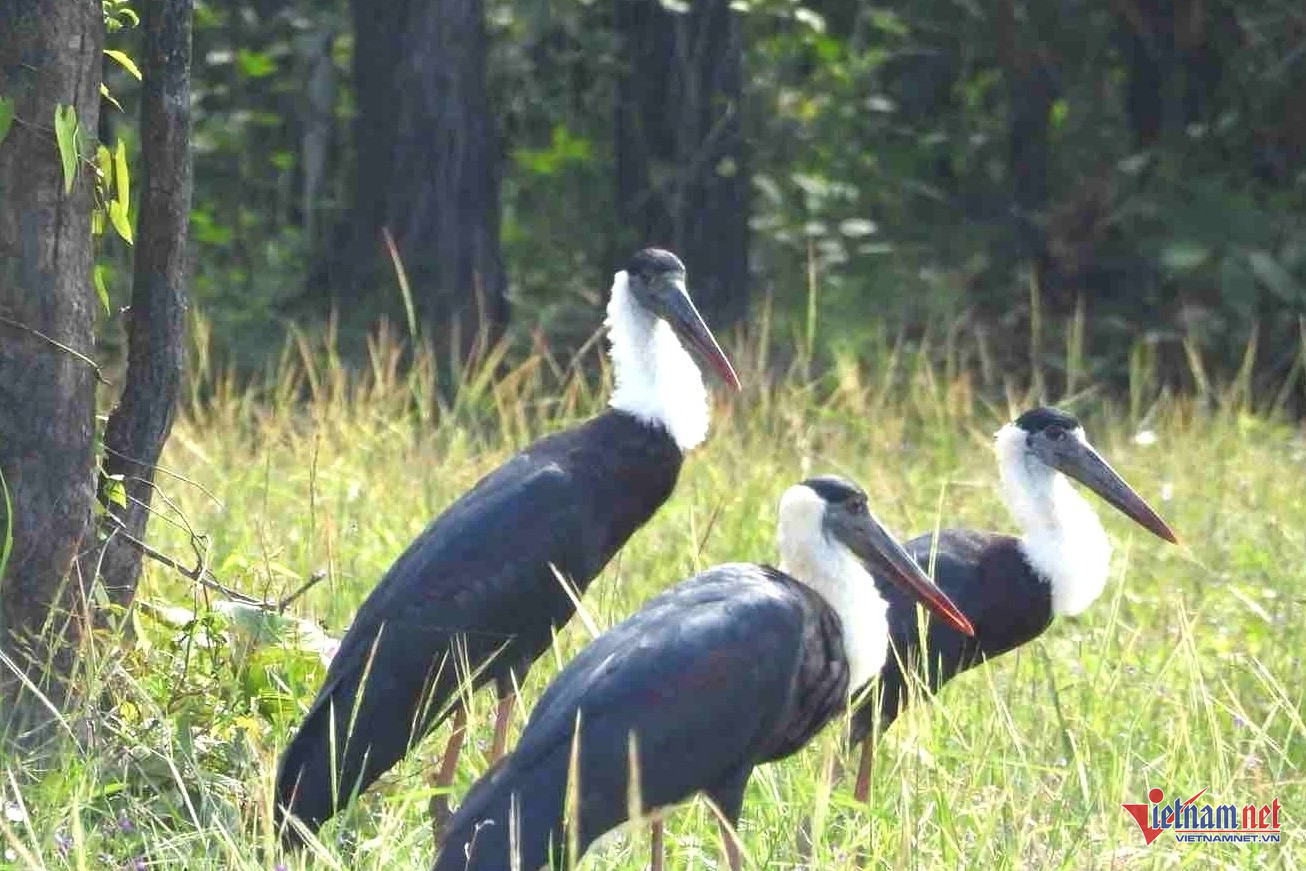
.svg)
