 Vietnamnet.vn

 Podcast



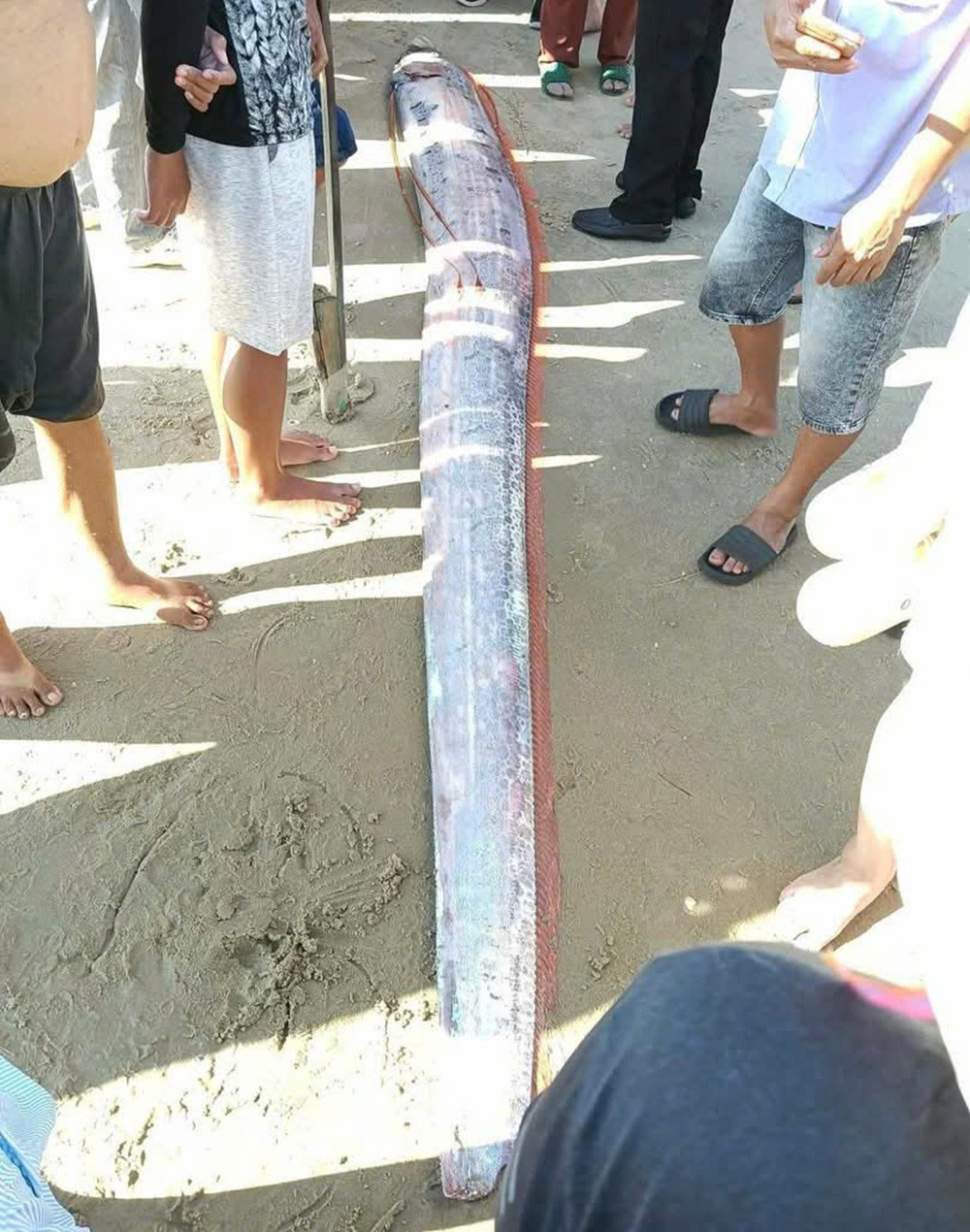
The discovery was made on the afternoon of March 22 by residents of Tam Tan hamlet, who spotted the lifeless fish drifting near the shoreline close to the Dinh Thay Thim area.
The fish had a long, flattened body, with a striking red dorsal fin running from head to tail. Its head featured elongated barbels, while part of its tail appeared to be missing.
Local residents worked together to bring the fish onto the shore. Based on its physical characteristics, they identified it as an oarfish, a rarely seen deep-sea species.
Considering the creature to be sacred and unusual, villagers organized a burial ceremony later that same evening in accordance with local customs.
The oarfish, known scientifically as one of the longest bony fish in the world, has a ribbon-like, silver body and a vivid red dorsal fin extending along its length. It typically inhabits ocean depths ranging from 200 to 1,000 meters and is seldom seen near coastal areas.
Most oarfish measure between 3 and 8 meters, though some exceptional specimens can reach up to 17 meters in length and weigh as much as 270kg.
The species is surrounded by numerous legends, including beliefs that it is a “messenger from the sea god’s palace,” often associated in folklore with omens of earthquakes or tsunamis.

Quang Hung
.svg)
