 Vietnamnet.vn

 Podcast



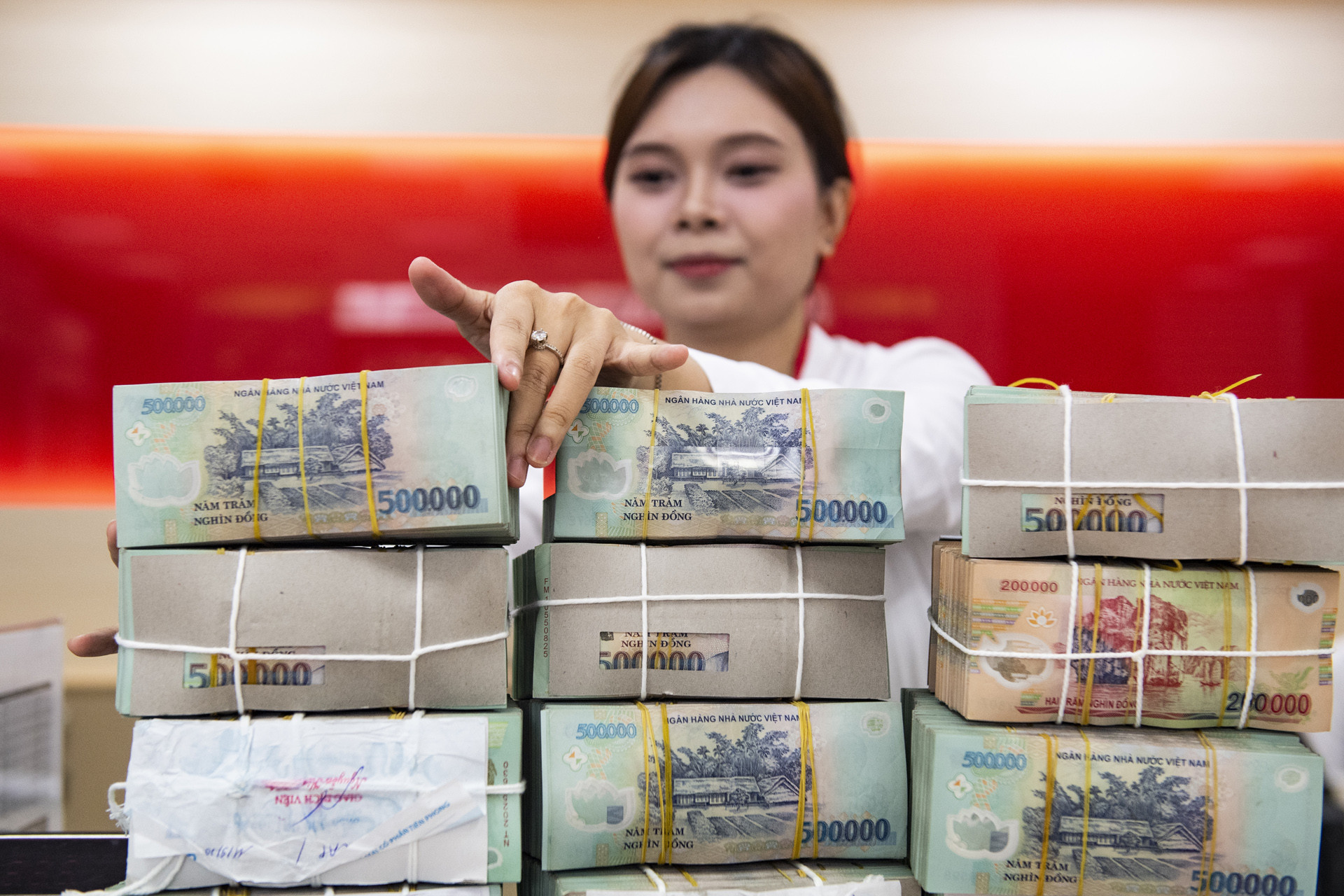
Regarding capital mobilization and access, MOC’s report cited the latest updated data from the State Bank of Vietnam (SBV), that as of November 30, 2025, outstanding credit for real estate business reached VND2 quadrillion.
In 2025, outstanding loans for this sector maintained stable growth across quarters and most categories, rising from more than VND1,560 trillion in the first quarter of 2025 to VND2,000 trillion in the fourth quarter of 2025.
As for corporate bond issuance in the real estate sector, the fourth quarter of 2025 recorded strong fluctuations in both scale and issuance structure.
The share of real estate bonds in total issuance value fluctuated widely, from 7.43 percent in October, rising to 38.6 percent in November, before falling to 28 percent in December.
The value of real estate bond issuance increased toward the end of the fourth quarter, indicating improved access to capital for some enterprises. However, issuance activity remained selective and continued to face high interest rate pressure.
According to MOC, in 2025 the corporate bond market gradually recovered but was not yet truly sustainable. Issuance volume improved markedly in the second half of the year, with the banking sector continuing to play a leading role. Real estate bonds were issued selectively, focusing on enterprises with solid financial capacity and a willingness to accept high interest rates.
The issuance structure showed clear differentiation among business fields, reflecting cautious investor sentiment.
“Overall, the market in 2025 was more stable than in the previous period, but it still faced pressure from capital costs and maturity obligations,” the MOC’s report concluded.
Regarding foreign direct investment (FDI), by the end of 2025 total registered FDI reached $38.42 billion, up slightly by 0.5 percent from 2024.
Disbursed FDI reached $27.62 billion, up 9 percent, showing that actual capital inflows into the economy continued to improve. The real estate sector alone accounted for 21.2 percent of total newly registered FDI, up 12.8 percent year on year, maintaining its important role.
Although the absolute value of real estate FDI declined slightly from $3.72 billion to $3.67 billion, its share of total FDI increased, reflecting a higher concentration of foreign capital in this field. This indicates that real estate remains an attractive field and plays a stabilizing role in the FDI structure.
Market transparency
Regarding key solutions, MOC said it will strengthen inspections, urge progress, and remove difficulties for real estate projects, especially social housing projects, while guiding localities to accurately determine the number of social housing units completed in accordance with regulations.
MOC will also continue to study and perfect the model of the "Real Estate and Land Use Rights Trading Center” managed by the State to improve management efficiency and enhance openness and transparency of the market.
Additionally, the Ministry will study and submit to the Central Party Secretariat a Directive on "Strengthening Party leadership over the development and management of the real estate market in the new period," while regularly monitoring market developments to take timely regulatory measures, ensuring the market develops safely, healthily, and sustainably.
For the Ministry of Finance, the key task is to continue reviewing and perfecting legal regulations related to investment, bidding, taxes, and related fields to resolve practical obstacles.
For SBV, the MOC’s report raises the request to conduct monetary policy in a flexible and effective manner to stabilize the macroeconomy and control inflation, while carrying out thematic and case-based inspections and closely monitoring credit to the real estate sector.
At the same time, it calls for directing commercial banks to strictly control credit to the real estate sector, ensuring the safety and security of the banking system, taking responsibility for unhealthy credit flows that do not serve production and business activities, and inspecting and handling capital flows that go into real estate market speculation.
SBV plans banking system-wide credit growth rate of about 15 percent in 2026, with flexible upward or downward adjustments in line with actual developments, ensuring inflation control and macroeconomic stability, while supporting economic growth and the safety of the credit institution system.
Nguyen Van Loc, PhD, a lecturer at the University of Economics under Vietnam National University, Hanoi, said the regulator has sent a message that it is not prohibiting real estate credit in an extreme or prohibitive manner, but is instead clearly distinguishing between capital needs serving social welfare and capital demand driven by speculation.
Duy Anh
.svg)
