 Vietnamnet.vn

 Podcast



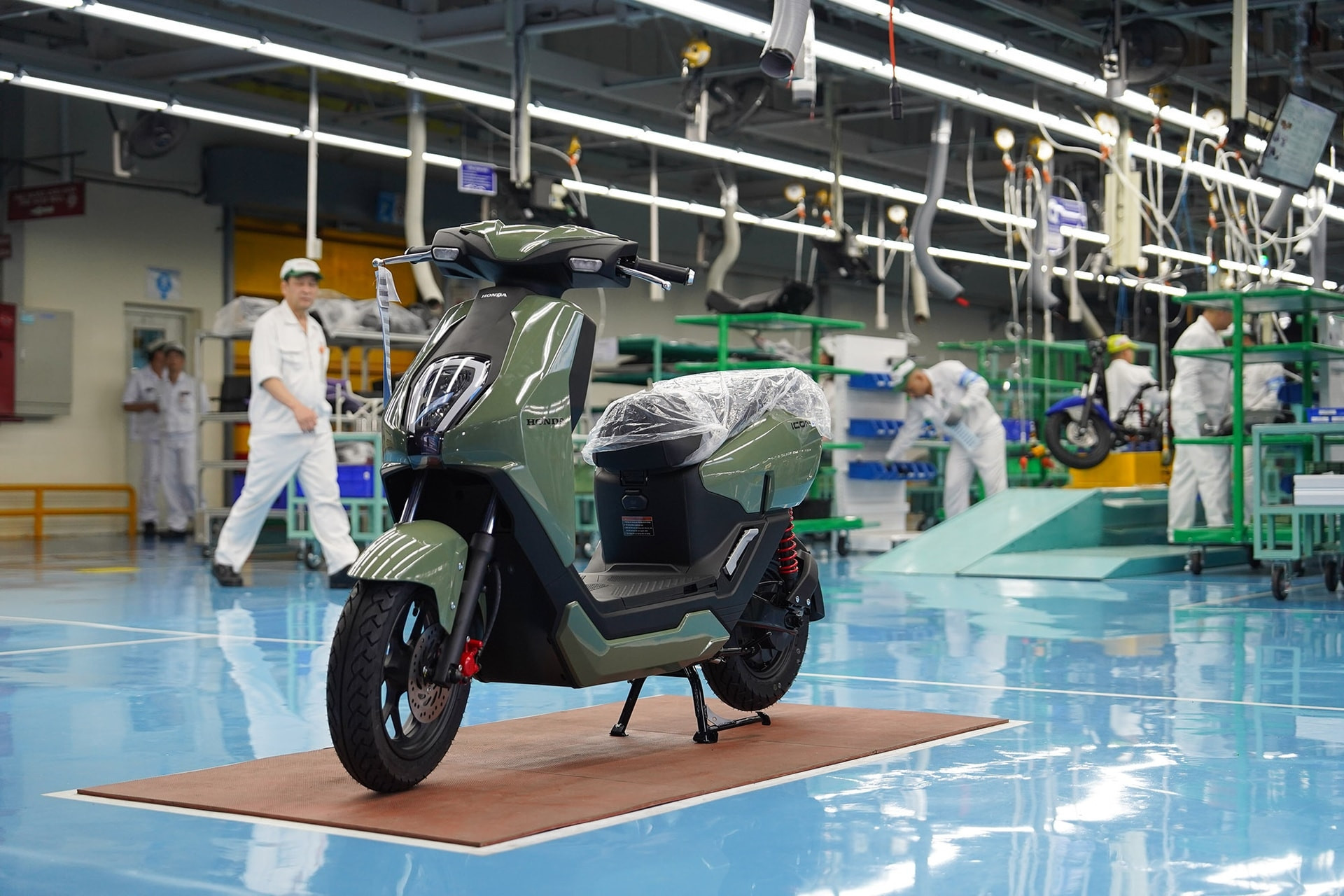
According to the latest report released by the General Statistics Office under the Ministry of Finance, an estimated 340,600 new motorcycles rolled off production lines in December 2025 alone. This figure rose 5.9% from November, when output stood at 321,700 units, and was 4.5% higher than December 2024. December also marked the highest monthly production level of the year.
The data suggest that motorcycle supply has become increasingly abundant, especially during the year-end peak season. As factory output surged, manufacturers and dealers gained greater flexibility in inventory management, while competitive pressure intensified across the market.
This environment has pushed brands to accelerate promotional campaigns, keep prices stable or expand incentives to stimulate demand. For consumers, ample supply has reduced the risk of price markups during peak periods. For manufacturers and dealers, however, it has also created added pressure to move inventory amid demand that has not risen at the same pace.
Over the entire year of 2025, domestic motorcycle production was estimated at 3,423,500 units, up from 3,115,100 units in 2024. This represents an unprecedented record for Vietnam’s motorcycle industry, which for many years had hovered around the three-million-unit mark.
The plentiful supply of new motorcycles throughout 2025, particularly in the final months, has altered the balance between supply and demand. As a result, prices of new motorcycles have fallen sharply, even during traditionally strong year-end sales periods.
In December 2025 and January 2026, the market witnessed a wave of price cuts across multiple segments as companies sought to stimulate consumption. Not only small dealers but also large distribution networks proactively adjusted retail prices to accelerate sales.
In the popular underbone segment, models such as the Honda Wave Alpha, Wave RSX and Yamaha Sirius were discounted by roughly USD 20 to USD 60 through direct price cuts or registration fee support. Meanwhile, scooters saw more pronounced reductions, with models including the Honda Vision, Air Blade, Lead and Yamaha Janus or Freego selling for USD 40 to USD 120 below listed prices.
Electric motorcycles have also joined the race to attract buyers. Many manufacturers have rolled out aggressive discounts bundled with free batteries, chargers or trade-in support. Models such as the Honda Icon e: and Yamaha Neo’s have reportedly seen price reductions of up to around USD 400. These developments underscore how price and incentives have become the primary tools for defending market share amid intensifying competition.
Vietnam’s motorcycle market is currently anchored by the Vietnam Association of Motorcycle Manufacturers, which comprises five members: Honda Vietnam, Piaggio Vietnam, Vietnam Suzuki, SYM Vietnam and Yamaha Motor Vietnam. Collectively, these brands account for an estimated 70% of total motorcycle sales, with several members already producing electric models.
Beyond this group, however, a growing number of non-member companies, particularly in the electric motorcycle segment, are accelerating expansion and steadily capturing market share from traditional gasoline-powered models. VinFast stands out with a diversified electric lineup catering to a wide range of users, from entry-level to premium.
Other brands such as Pega, Yadea, DatBike, Dibao, Detech, Selex and Before All are also scaling up production and boosting output to meet rising demand for electric motorcycles.
The sharp increase in motorcycle production in 2025 reflects not only the manufacturing capacity of domestic companies but also short-term purchasing power and deeper shifts underway in Vietnam’s personal mobility market.
Experts view 2026 as a pivotal year that will mark the reshaping of Vietnam’s motorcycle market, as restrictions on gasoline-powered motorcycles become more clearly enforced in major cities. While the transition roadmap has been discussed for years, 2026 is expected to be the point at which regulatory frameworks, infrastructure development and consumer behavior truly converge, triggering a structural transformation.
Gradual tightening of gasoline motorcycle usage is intended not only to curb emissions and ease congestion but also to align with broader goals for sustainable urban transport. In areas that impose stricter emission standards, limit new registrations or designate zones restricting gasoline vehicles, consumers will be forced to rethink their choice of personal transport.
Against this backdrop, electric motorcycles are emerging as the biggest beneficiaries. No longer in an experimental phase, many electric motorcycle manufacturers have entered a full-scale acceleration race, expanding capacity, diversifying models, improving battery quality and investing heavily in charging and battery-swapping ecosystems, as well as after-sales services.
As a result, the electric motorcycle segment is not only growing in volume but also moving into higher market tiers, increasingly meeting everyday mobility needs rather than serving only young users or short-distance travel.
Conversely, traditional gasoline motorcycle makers are facing mounting pressure to restructure. Some are shifting toward electric models or focusing on rural markets, where restrictions are expected to roll out more slowly. Others are being forced to streamline costs and narrow product portfolios to remain competitive during the transition.
In the long run, 2026 will not simply be a debate between gasoline and electric motorcycles. It will represent a comprehensive shift in how the motorcycle market operates. Consumers are paying closer attention to total lifetime costs, charging infrastructure, battery policies and sustainability. The market is thus entering a new cycle, shaped jointly by technology and policy rather than long-standing habits.
Hoang Hiep
.svg)
