 Vietnamnet.vn

 Podcast



.
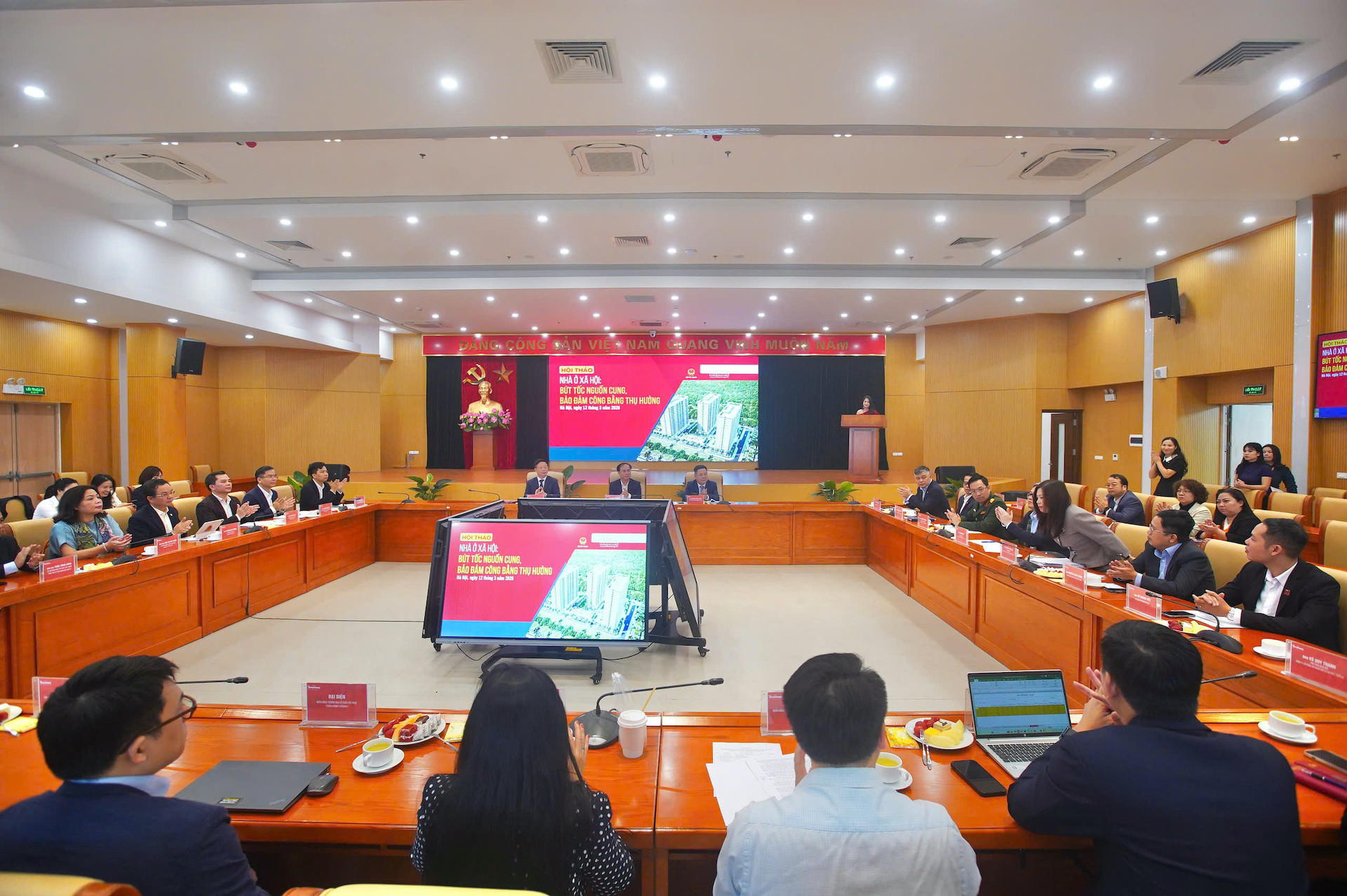
The proposal was raised by Le Quang Huy, Deputy General Director of BIC Vietnam JSC, at the seminar “Social housing: Accelerating supply, ensuring fair access” organized by Tien Phong newspaper on March 12.
Under the current regulations, if an ineligible buyer is discovered, the social housing project developer must terminate the contract, reclaim the unit, resolve financial issues and restart the entire sales process.
“This is a very large risk for businesses, while the mistake may not originate from us,” Huy said.
He proposed that the approval of social housing buyers should be conducted by state agencies from the beginning. At the same time, a shared database of people eligible to buy social housing should be established on the VNeID system. When citizens register to buy a unit, businesses would only need to check the system and sign contracts based on the list already confirmed by authorities.
At the seminar, Colonel Nguyen Tien Nam, Director of Project Management Unit 1 at Corporation 319, said that during the implementation of social housing projects, one of the major difficulties is that the process of receiving and reviewing applications in many places take a long time, reducing access for people who genuinely need housing.
In addition, procedural obstacles can create loopholes that allow brokers or intermediaries to exploit the system for profit, distorting social housing policies.
Meanwhile, data on social housing projects has not been made public or connected. People face difficulties in searching for information about projects, developers, or buying conditions, while document-receiving agencies also encounter obstacles in checking and collating information.
Nam believes that policies should simplify procedures, cut unnecessary confirmation steps, and promote data digitization to reduce the burden on both citizens and implementing agencies.
Along with that, strengthening transparency of information about projects, developers, and buying conditions will help people easily access information and limit the profiting from policies.
Concerns over selling prices
As a developer, Nguyen Hoang Hai, Deputy General Director of Urban Infrastructure Development Investment Corporation (UDIC), said the company has been implementing the Ha Dinh social housing project (Hanoi), expected to be completed this year. However, during the process, the business has encountered obstacles related to determining selling prices as well as handling the commercial area within the project.
The selling price of commercial apartments in social housing projects is calculated according to a different mechanism compared to regular commercial housing projects, Hai said. If the determined price is too low, the business will not have enough revenue to cover investment costs. Conversely, if the price is determined to be too high, it is inconsistent with management regulations and may lead to risks during the appraisal and approval process.
“Due to these obstacles, the project has so far been unable to finalize the selling price to launch sales as planned,” Hai said.
Since late 2024 many social housing projects in Hanoi have been launched, but selling prices have shown a strong upward trend.
The CT3 social housing project in the Kim Chung new urban area in Thien Loc commune (Hanoi) was launched in 2025 at around VND18.4 million per sqm (including VAT and maintenance fees), the lowest price among social housing projects currently under development in Hanoi.
Viglacera, one of the investors, said the project was able to maintain a relatively low price because the company secured its own building material supply. In addition, the company has restructured its production operations and set a target of expanding automation and digital transformation to improve efficiency and reduce costs.
Nevertheless, investment costs remain a major concern for many businesses involved in developing social housing.
Nguyen Thanh Trung, Director of the CT3 Kim Chung social housing project management unit, said that under current regulations set by the Ministry of Construction, cost norms for building social housing are almost the same as those for commercial apartment projects. Meanwhile, profits from social housing projects are capped by regulation, leaving developers with relatively low profit margins.
Speaking at the seminar, Deputy Minister of Construction Nguyen Van Sinh promised that social housing projects will be placed in a “green lane” for administrative procedures, allowing multiple processes to be carried out simultaneously to cut at least 50 percent of processing time and compliance costs for businesses.
Hong Khanh
.svg)
