 Vietnamnet.vn

 Podcast



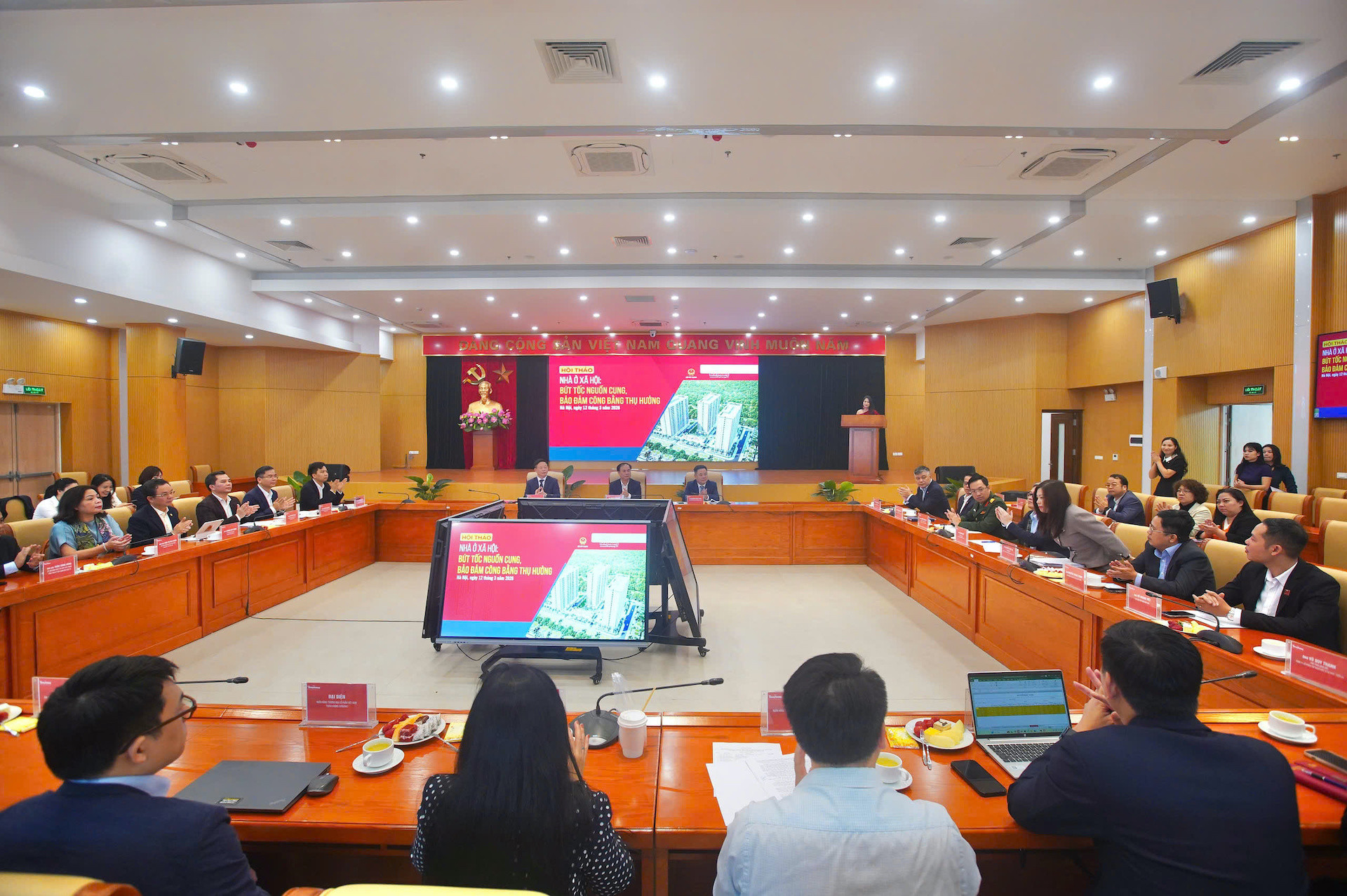
A proposal has been made to build a national database of eligible social housing buyers on the VNeID digital identity platform, allowing authorities to screen applicants and prevent higher-income individuals from occupying limited housing supply.
The suggestion was raised by Le Quang Huy, Deputy General Director of BIC Vietnam JSC, at the conference "Social housing: accelerating supply while ensuring fair access" held on March 12 by Tien Phong newspaper.
According to Huy, if a buyer is later found to be ineligible, developers must terminate the contract, reclaim the apartment, handle financial settlements and restart the entire sales process.
"This represents a very large risk for developers, especially when the problem may not originate from our side," Huy said.
From this reality, he proposed that authorities should directly approve eligible social housing buyers from the outset. At the same time, a unified database of qualified applicants should be established on the VNeID system.
Under the proposal, when citizens register to buy a social housing unit, developers would only need to check the system and sign contracts based on the list already verified by competent authorities.
Sharing further at the conference, Senior Colonel Nguyen Tien Nam, Director of Project Management Unit No.1 at Corporation 319, also noted that in many localities the procedures for receiving and reviewing applications remain lengthy. This reduces the opportunity for people with genuine housing needs to access social housing.
Complicated administrative procedures can also create loopholes that allow brokers or intermediaries to exploit the policy for profit, distorting the original purpose of social housing programs.
In addition, information on social housing projects has not yet been fully disclosed or integrated across platforms. Citizens often struggle to find information about projects, developers or purchasing conditions, while authorities responsible for reviewing applications also face difficulties verifying and cross-checking data.
From this perspective, Nam suggested that mechanisms and policies should continue to be improved in the coming period by simplifying procedures, eliminating unnecessary verification steps and accelerating data digitization to reduce administrative burdens for both citizens and authorities.
Greater transparency regarding project information, developers and eligibility conditions would also help the public access information more easily and reduce the risk of policy abuse.
Concerns over social housing prices
From the perspective of developers, Nguyen Hoang Hai, Deputy General Director of the Urban Infrastructure Development Investment Corporation (UDIC), said the company is currently implementing the Ha Dinh social housing project in Hanoi, which is expected to be completed this year.
However, the developer has encountered multiple obstacles related to the mechanism for determining selling prices as well as handling commercial areas within the project.
According to Hai, apartment prices for the commercial section of social housing projects are calculated differently from those in regular commercial housing developments.
If the price is set too low, developers will not have sufficient revenue to offset investment costs. But if the price is set too high, it may not comply with regulatory frameworks and could create risks during the appraisal and approval process.
"Because of these difficulties, the project has not yet been able to determine its final selling price to launch sales as planned," Hai said.
In practice, since late 2024 many social housing projects in Hanoi have begun construction, but selling prices have also risen sharply.
Notably, the CT3 social housing project in the Kim Chung new urban area, located in Thien Loc commune in Hanoi, was launched in 2025 at around VND18.4 million per square meter (approximately US$720), including VAT and maintenance fees - the lowest price among social housing projects currently underway in the capital.
A representative of Viglacera Corporation, the joint investor of the project, said the relatively low price was possible because the company could proactively control its supply of construction materials.
The enterprise has also restructured production operations and set a goal to accelerate automation and digital transformation in order to improve efficiency and reduce costs.
Even so, investment costs remain a major concern for many companies participating in the development of social housing.
Nguyen Thanh Trung, Director of the CT3 Kim Chung Social Housing Project Management Unit, noted that under current regulations issued by the Ministry of Construction, the construction cost norms for social housing projects are nearly identical to those applied to commercial apartment developments.
Meanwhile, profit margins for social housing projects are capped under existing regulations, leaving investors with relatively thin returns.
Cutting administrative procedures by half
Speaking at the conference, Deputy Minister of Construction Nguyen Van Sinh said social housing projects will be placed in a "green channel" for administrative procedures.
This approach would allow multiple processes to be conducted in parallel, reducing at least 50 percent of the time required to complete administrative procedures as well as compliance costs for businesses.
Progress on the program will be compiled and reported to the Prime Minister on a monthly and quarterly basis to ensure timely direction and policy adjustments.
The measure aims to accelerate the national program to develop one million social housing units, with a target completion date of 2028 - two years earlier than originally planned.
Hong Khanh
.svg)
