 Vietnamnet.vn

 Podcast



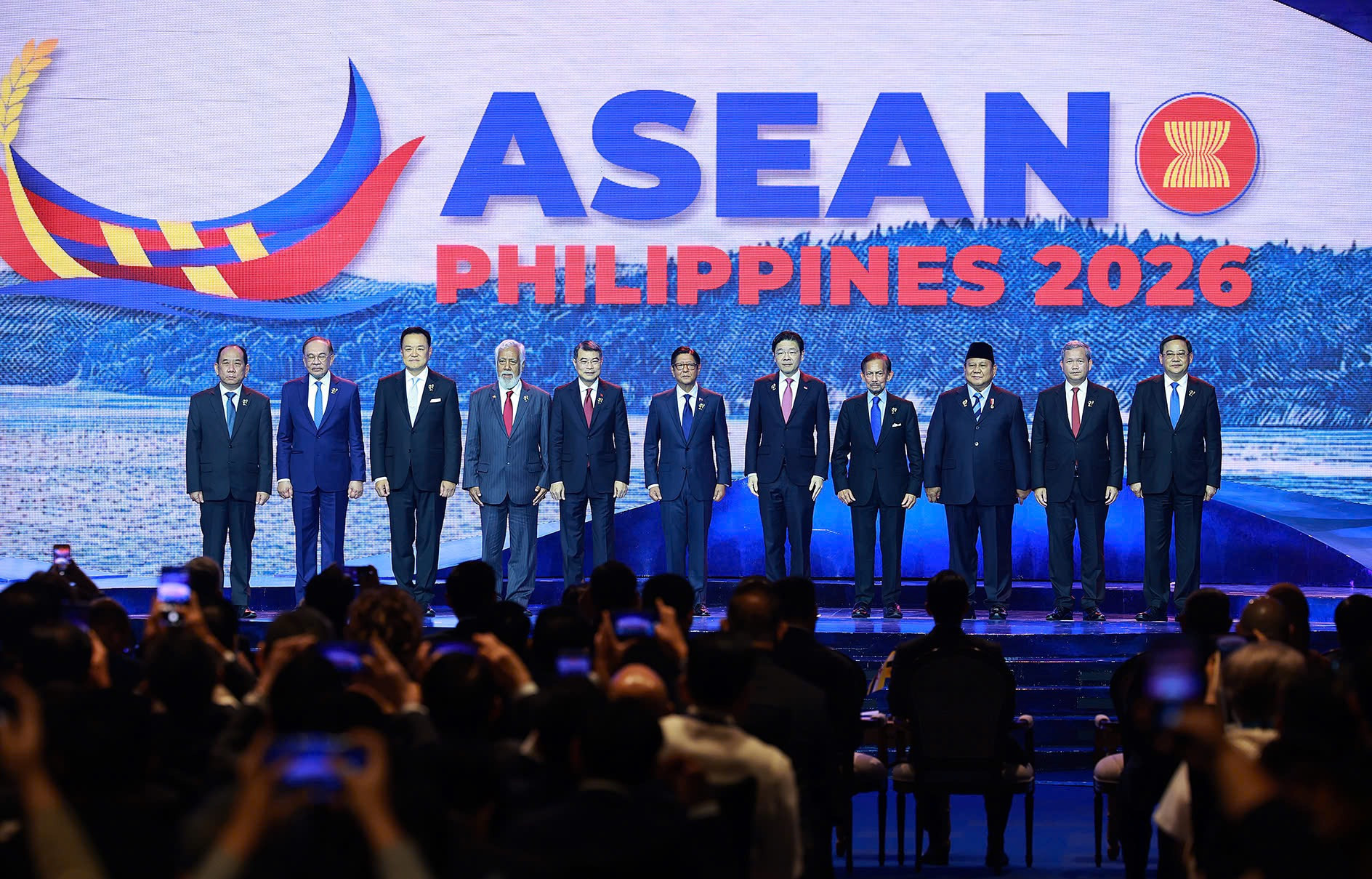
According to Deputy Foreign Minister Nguyen Manh Cuong, this year's theme reflects the core priorities that ASEAN and the wider region are pursuing.
Peace remains the essential foundation for development. Prosperity is the common goal shared by all member states, while placing people at the center reflects the guiding spirit of the ASEAN Community.
"The future of the region cannot be shaped without the participation of its people, who are both contributors to and beneficiaries of the cooperation process," Cuong said.
For that reason, AFF has been designed as an open platform for dialogue, bringing together not only political leaders but also scholars, businesses, young people, civil society organizations, political parties and local authorities.
Reinforcing ASEAN centrality
Speaking at the 2026 Shangri-La Dialogue, General Secretary and President To Lam emphasized the importance of building an open and inclusive regional architecture with ASEAN at its center.
He stressed that ASEAN centrality cannot be taken for granted and must instead be reinforced through unity, strategic autonomy and the ability to shape a common regional agenda.
AFF 2026 is intended to carry that vision forward through regional dialogue.
The forum will provide a venue for ASEAN and its partners to discuss ways to preserve the bloc's central role in an increasingly complex strategic environment, ensuring that new initiatives and mechanisms complement rather than weaken ASEAN-led cooperation frameworks.
Deputy Foreign Minister Cuong said Vietnam's decision to initiate and consistently organize the forum, alongside its active participation in regional and international mechanisms, reflects the country's role as a responsible and constructive member of the international community.
He added that such efforts represent Vietnam's practical contribution to peace, stability and development across the region.
Resilience through cooperation
Resilience has emerged as another key theme of this year's forum.
According to Cuong, resilience is a vital requirement in a rapidly changing and unpredictable world.
"Resilience does not mean isolation or standing alone," he said. "For small and medium-sized countries, and for a regional grouping such as ASEAN, genuine resilience is achieved through cooperation. A country that withdraws into itself does not become safer; it simply becomes easier to overlook."
He argued that lasting strength comes not from isolation but from becoming an indispensable part of multiple cooperative networks, making it more difficult for any single actor to exert unilateral pressure.
When member states strengthen connectivity, share resources, integrate infrastructure and coordinate policies, each nation becomes more resilient, and so does the wider community.
"A resilient ASEAN is one that turns connectivity into a source of collective strength," he said.
Bringing regional issues closer to people
The same philosophy is reflected in this year's discussions, which will cover topics ranging from regional solidarity and conflict prevention to artificial intelligence governance and energy security.
Officials say a key objective is to make major policy challenges more relevant to everyday life.
This includes promoting a people-centered approach to artificial intelligence, helping citizens adapt to the digital economy, narrowing digital divides, advancing green transitions and strengthening energy security while delivering tangible benefits to communities.
"All of these efforts are aimed at reinforcing ASEAN's capacity for self-reliance through cooperation," Cuong explained.
High-level participation
Four ASEAN prime ministers are expected to visit Vietnam and attend the forum alongside official bilateral engagements.
They include Lao Prime Minister Sonexay Siphandone, Cambodian Prime Minister Hun Manet, Thai Prime Minister Anutin Charnvirakul and Timor-Leste Prime Minister Kay Rala Xanana Gusmao.
Their participation underscores both regional solidarity and Vietnam's proactive role within ASEAN.
According to the Deputy Foreign Minister, AFF 2026 will also feature two notable firsts.
For the first time, the forum will host a dedicated session on cooperation among political parties in Southeast Asia, creating a new channel of dialogue to complement government-to-government engagement.
In addition, Hanoi will host the inaugural ASEAN Cities Leaders Conference, bringing local governments into discussions on regional cooperation.
Alongside side events focusing on the Mekong sub-region, Southeast Asian youth and AI governance, the participation of political parties, city leaders, young people and businesses highlights the forum's broad and inclusive nature.
Contributing to ASEAN policymaking
Following its first two editions in 2024 and 2025, a number of ideas and recommendations generated at the forum were reflected in ASEAN summit documents and policy discussions.
This has reinforced the forum's reputation as more than an academic gathering, demonstrating its practical contribution to ASEAN's formal decision-making processes.
Vietnam hopes AFF 2026 will generate additional perspectives, policy recommendations and innovative ideas to support the continued development of the ASEAN Community.
Through the forum, Vietnam also seeks to reaffirm its role as an active and responsible member of the region while advancing the country's broader foreign policy and international integration objectives.
Tran Thuong
.svg)
