 Vietnamnet.vn

 Podcast



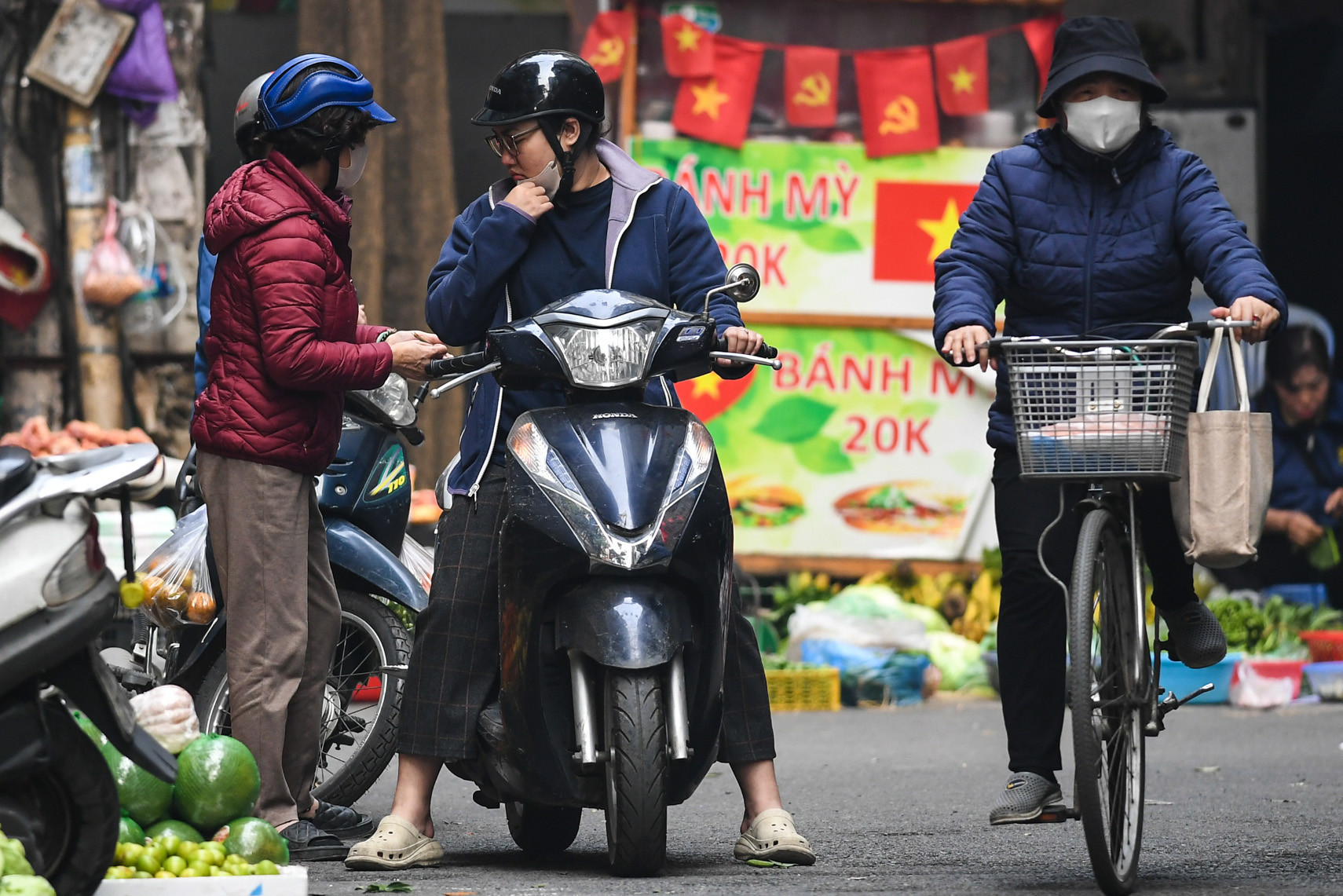
At a recent May regular government meeting, Prime Minister Le Minh Hung put forward a notable directive:
“Recently, we set tax thresholds for individuals and business households. You [the Ministry of Finance] must design options for family circumstance deductions or research new tax thresholds. In the current difficult context, relieving burdens on people and supporting enterprises is of paramount importance.”
This is not the first time the Prime Minister has signaled a reduction in the burden on business households. At the end of April, he directed that the taxable revenue threshold be raised from VND500 million to VND1 billion per year. Now, the narrative continues to expand toward family circumstance deductions and new tax thresholds.
The Government is sending out a clear message: to grow the economy, it is necessary to allow citizens and enterprises to retain more resources to do business.
Relieving burdens to nurture growth
The Prime Minister's directive is not only about taxation. More broadly, it reflects an approach to creating additional growth drivers for the economy in the coming years.
High growth cannot rely solely on public investment or exports. Ultimately, growth is driven by millions of people, household businesses, and enterprises operating every day.
An economy can hardly remain dynamic if those creating wealth have diminishing incentives to expand their businesses, while entrepreneurs increasingly feel they are viewed first as subjects of regulation rather than as contributors who should be encouraged to grow.
The latest figures from the Statistics Office show that relieving burdens on people is not merely a slogan.
In the first five months of 2026, total retail sales of goods and consumer service revenue rose 11.2 percent year-on-year. However, after excluding price increase factors, real growth was only 6.1 percent, while average CPI increased 4.31 percent.
Notably, fuel prices rose 17.1 percent compared with the same period last year.
Many households are having to spend more money simply to maintain the same standard of living. As electricity prices, rental costs, and many other living expenses continue to increase, household incomes are being squeezed by higher living costs.
This means retail sales growth is not entirely the result of people buying more, but because consumers are simply paying more for the same products and services.
Therefore, relieving burdens on people is not only a measure to support living standards but also a way to sustain the economy's growth momentum.
When revenue is not income
The group most directly affected by these changes is household businesses. For many years, household businesses’ health has often been viewed through the lens of revenue. A high revenue figure may create the impression that a business is thriving, but after paying rent, wages, electricity, water, and various other expenses, the actual income left over can be much more modest.
According to the Vietnam Association of Small and Medium Enterprises, a retail household business generating around VND1 billion in annual revenue may retain only about VND100 million in profit after deducting operating costs.
As rents, electricity bills, raw material costs, and living expenses have all risen significantly, maintaining tax thresholds designed many years ago is increasingly disconnected from reality.
However, what concerns many household businesses is not only the tax burden itself but also a sense that they are treated differently from salaried workers.
Two people may both be raising two children, paying school fees, utility bills, and rent, yet one qualifies for family circumstance deductions while the other does not simply because they earn a living through different means.
For this reason, the proposal to consider family circumstance deductions for household businesses is not only a matter of support but also one of fairness.
Beyond taxation, many household businesses are also concerned about increasingly complex declaration procedures. If regulatory risks outweigh growth opportunities, it is difficult to expect them to expand operations or transition into formal enterprises.
Of course, any discussion about tax reductions inevitably faces a familiar question: will state budget revenue decline?
In the first five months of 2026, state budget revenue still increased by 15.3 percent year-on-year.
This suggests that the issue is not whether the budget still has revenue sources, but how to ensure that people and businesses retain sufficient resources to generate even greater revenues in the future.
Tu Giang
.svg)
