 Vietnamnet.vn

 Podcast



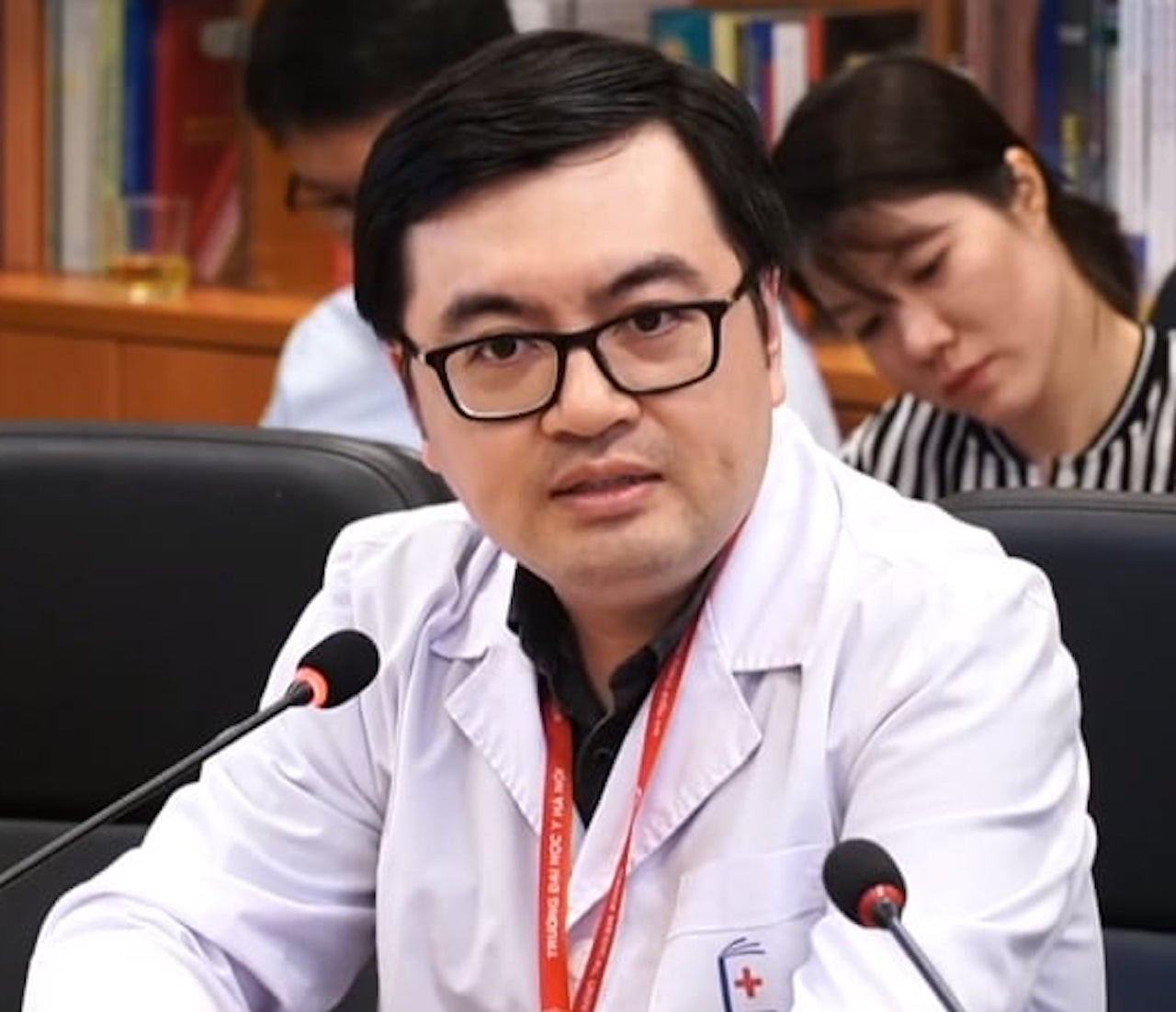
The Hanoi People's Committee is currently seeking public opinion on the Capital's Master Plan with a 100-year vision, which includes a direction to relocate infectious disease treatment facilities with a high risk of spreading out of the inner city.
Dat, a lecturer at the Department of Infectious Diseases, Hanoi Medical University, argued that from a professional perspective in infectious disease management, the policy of relocating these facilities should be discussed and adjusted.
“At first glance, moving infectious disease treatment facilities to the outskirts seems reasonable because people think it minimizes the risk of spreading diseases to the community. But that is not correct,” he said.
“In fact, building modern infectious disease treatment facilities right in the heart of the city is the most optimal plan for responding when an epidemic occurs, just as to put out a fire, you need fire extinguishers and hydrants on-site,” he explained.
Standard infectious disease treatment facilities are often the places with the lowest risk of spread because specialized doctors have the best knowledge and practices. Invested infrastructure helps provide the most timely treatment and reduces the mortality risk to the lowest level,” Dat said.
Dat cited the 2003 SARS outbreak as evidence. The Institute of Clinical Medicine for Tropical Diseases, located right in the city center (78 Giai Phong Street), successfully treated all SARS patients without allowing hospital-acquired infections or spreading the disease to the community.
“The COVID-19 pandemic shows the importance of early, on-site treatment and mobilization of the entire system to control outbreaks. Concentrating too many infectious cases in one location could even increase mortality risk and outbreak potential due to lack of resource distribution and infection control,” he warned.
In many developed countries, high-risk infectious disease treatment facilities are located in city centers and equipped with negative-pressure isolation rooms. These systems are maintained even when there are no patients, ensuring readiness for outbreaks.
For example, the Japan Institute for Health Security in Tokyo has dedicated isolation units with modern negative-pressure rooms in the city center. In Germany, Charité – Universitätsmedizin Berlin is located in the Wedding district of Berlin.
Infectious disease departments within general hospitals
Dat argued that Hanoi has a large population, high density, rapid urbanization, and a climate favorable for pathogens to emerge, with frequently circulating epidemic diseases such as dengue fever, hand-foot-mouth disease, and highly infectious diseases like measles and flu.
Therefore, relocating infectious disease treatment facilities out of the inner city will limit and delay the access of capital residents to care and treatment. This could lead to silent transmission within the community and late detection of outbreaks.
“Previously, the 2007 Law on Prevention and Control of Infectious Diseases stipulated that general hospitals at the district level and above must establish an infectious disease department. This strategy clearly reflects modern scientific thinking in both decentralizing and sharing resources toward an on-site disease management approach specific to Vietnam,” Dat expressed.
To contribute to ensuring health security for the capital, Vu Quoc Dat suggested that the draft should consider adjustments in the following directions:
Establish and strengthen investment in the infectious disease sector at general hospitals to improve the capacity for admission, treatment, and care of patients with local endemic infectious diseases to control outbreaks on-site and perform initial classification and detection of emerging infections.
Establish specialized medical facilities with research capacity on infectious diseases for the city, featuring modern infrastructure and negative pressure isolation rooms to treat and respond to dangerous epidemics, ensuring the health security of the capital.
The People’s Committee of Hanoi is collecting public opinions on the Capital Master Plan with a 100-year vision, which outlines the development of the healthcare system toward modernization, specialization and international integration.
According to the draft, by 2035, the capital’s healthcare system is expected to become a modern center for medicine and science-technology, strongly promoting digital transformation in healthcare. Residents will have access to high-quality medical services, while physical fitness, stature, life expectancy and overall quality of life are expected to continue improving.
Hanoi proposes relocating high-risk infectious disease treatment facilities out of the inner city while building four new major hospitals. This includes two regional general hospitals, each with a capacity of 500 beds, Hanoi Geriatric Hospital with a capacity of about 250 beds, and the Hanoi Endocrine Hospital, also with 250 beds.
N. Huyen
.svg)
