 Vietnamnet.vn

 Podcast



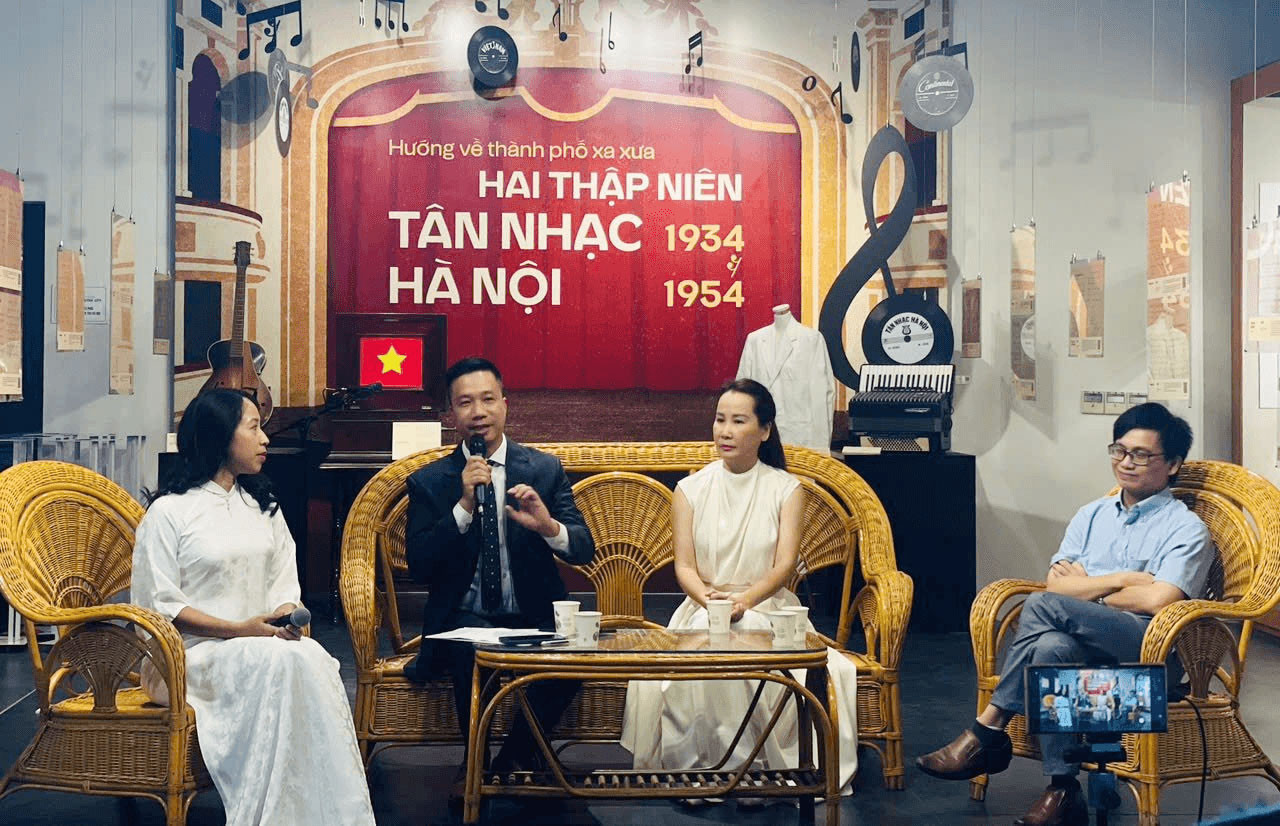
The opening ceremony and seminar Looking back to the Ancient City: Two Decades of Vietnamese Modern Music in Hanoi (1934-1954) recently took place within the framework of the 2nd Thang Long - Hanoi Festival in Hanoi.
Vietnamese Modern Music, or Tan Nhac, refers to a genre of modern Vietnamese music that emerged in the early 20th century.
102 musical scores and artifacts
The exhibition is divided into five themes, recreating a vivid picture of Hanoi's cultural, social, and musical life during the first decades of Vietnamese modern music: from the romantic beauty of love ballads and the patriotic spirit in revolutionary songs to the urban rhythm of Hanoi and the creative imprint of prominent composers such as Van Cao, Doan Chuan - Tu Linh, Duong Thieu Tuoc, and Tham Oanh, along with many other names who contributed to shaping the face of Vietnamese moden music.
The exhibition offers visitors an artistic journey through memory. From an extensive collection of around 2,000 musical scores, along with valuable documents and photographs, the organizers selected 102 precious scores and artifacts to introduce to the public.
Researcher and writer Nguyen Truong Quy, owner of more than 100 sheet music items, said: "It can be said that from its inception to its maturity in the 1940s, especially during the peak of the August Revolution, Vietnamese modern music created a special identity for Hanoi within the heart of Vietnamese culture."
Musician Giang Son, a member of the Executive Committee of the Vietnam Musicians’ Association and the author of the song Ha Noi Muoi Hai Mua Hoa (Hanoi’s twelve flower seasons), was deeply moved to see the musical scores carefully preserved in the exhibition space.
“There are genuinely some scores that I am seeing for the first time. The collector has put tremendous effort into this work, loves music and has a deep understanding of this period. These are all famous songs from 1934 to 1954, marking an important milestone in Vietnamese popular music and the development of Vietnamese music,” Giang Son said.
Introducing early Vietnamese modern music to Gen Z
Early Vietnamese modern music features wonderful melodies and profound historical value, but it is facing major barriers in reaching younger audiences.
Reflecting on the fact that younger generations, particularly Gen Z, are increasingly unfamiliar with and less connected to early modern music, musician Giang Son said this was not entirely the fault of young people. The deeper cause lies in the media system and in previous generations, which have not created enough space for young people to encounter this music.
In addition, venues for enjoying musical heritage remain limited in scale. Many programs are held only in small halls with an actual capacity of just over 100 people, which is insufficient to bring the music to a wider public.
Another major barrier lies in the differences in musical sensibilities between generations. While older people often find contemporary youth music “noisy and headache-inducing,” young people, in turn, tend to consider old music “drawn-out and sleep-inducing.”
To address the challenge of spreading love for pre-war music, the speakers at the seminar agreed that heritage music programs should be brought directly to larger venues, particularly universities, where they could reach thousands of students at once.
In reality, old songs possess wonderful melodies and beautiful lyrics, while reflecting the Vietnamese spirit and being closely associated with important historical milestones. Providing young people with regular opportunities to encounter these works will naturally awaken affection for and pride in them among generations born, raised or studying in the capital.
Another effective approach is to encourage students to incorporate music into their creative activities. For example, students in literature departments have been combining New Poetry and literature with music, helping heritage works regain vitality and spread in the most natural way.
One of the issues that attracted the most attention at the discussion was Dr. Tran Ngoc Hieu’s view on the boundaries of adapting classic works. He said that preserving musical heritage solely through digital platforms or the internet would face major challenges, as this could inadvertently strip away the original “aura” of the era in which the works were created.
Instead of rigidly preserving the original versions, Hieu proposed drawing on the way the world has kept songs from the 1920s alive by boldly changing their chord progressions and rhythms.
Tinh Le
.svg)
