 Vietnamnet.vn

 Podcast



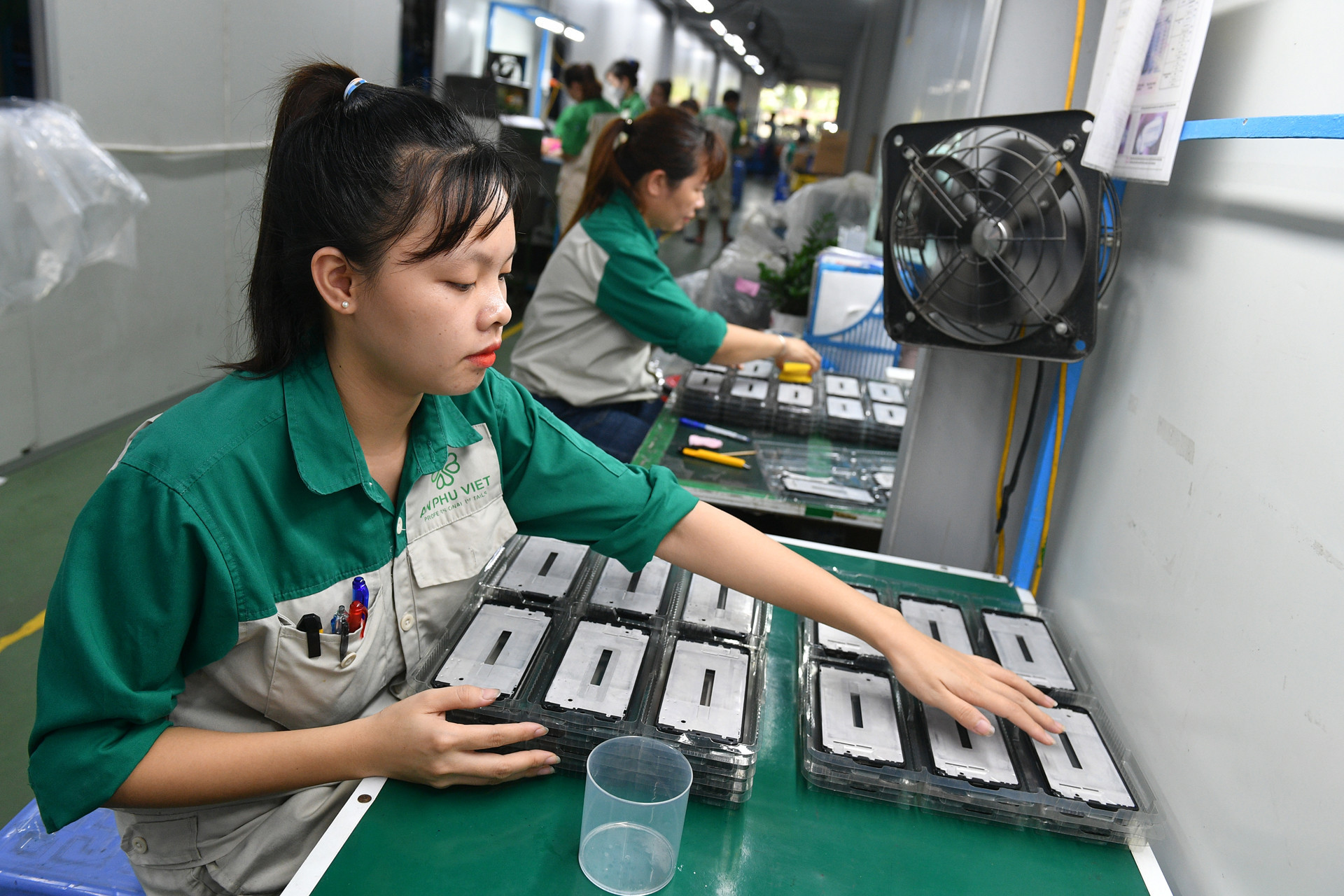
However, the most noteworthy aspect of this Resolution does not lie in those billions of dollars in investment, but rather in how Vietnam is redefining the core objectives of its FDI attraction process.
For the first time in nearly 40 years of open-door policy, Vietnam has established benchmarks aimed not just at FDI enterprises, but at domestic Vietnamese enterprises themselves: 10,000 domestic enterprises participating in the supply chains of the FDI sector, including 500–1,000 Tier-1 suppliers, and a localization rate of 45–50 percent in key spearhead industries.
Demanding more from FDI
After nearly four decades of attracting foreign investment, Vietnam has become one of the region's most successful FDI destinations. In 2025, disbursed FDI reached its 5-year high, while the FDI sector contributed 20 percent of GDP and more than 70 percent of the country's export turnover.
Yet as the question of capital has largely been addressed, a larger question has emerged: What does Vietnam gain beyond investment capital?
A close reading of Resolution 10 found that the focus is shifting from attracting capital to attracting technology, knowledge, management expertise and deeper participation in higher value-added segments of global value chains.
High-quality institutions attract high-quality FDI
Lawyer Tran Thi Thanh Hao, who has worked with foreign investors for more than 20 years, said investors are not primarily seeking a few percentage points of tax incentives. What they value most is the ability to predict the business environment years into the future.
A corporation may be willing to accept slightly higher costs, but it is far less likely to accept an environment where it cannot foresee what will happen over the next five or 10 years.
That is why Resolution 10 devotes significant attention to improving investment transparency, protecting property rights and enhancing policy predictability.
A new measure of success: Vietnamese enterprises’ development
According to Phan Huu Thang, former Director General of the Foreign Investment Agency under the Ministry of Planning and Investment, now part of the Ministry of Finance, Vietnam previously measured success by counting how many foreign companies came to invest.
Resolution 10 introduces a different metric: how many Vietnamese enterprises grow and mature because of their presence.
At first glance, the target of around 10,000 Vietnamese companies participating in FDI supply chains may be the most challenging goal in the resolution. Achieving it will require narrowing a gap that has persisted for years between the FDI sector and domestic enterprises.
Ultimately, the objective of attracting foreign investment is not simply to bring in more FDI factories. It is to enable Vietnamese companies to learn new technologies, strengthen management capabilities and move into the highest value-added stages of global production chains.
After nearly 40 years of attracting foreign investment, Vietnam still witnesses the presence of two economic sectors that largely operate in parallel within the same economy.
The FDI sector accounts for the majority of exports, consistently generates trade surpluses and enjoys significantly higher labor productivity. Meanwhile, many domestic enterprises remain concentrated in lower value-added segments of production chains.
After more than 15 years of investment in Vietnam, Samsung has become the country's largest exporter. Yet the number of Vietnamese enterprises participating in Samsung’s technology-intensive and high-value-added segments remains relatively modest compared with the scale of the group's activities.
Competition for talent
Resolution 10 targets a workforce training rate of around 80 percent while significantly increasing the proportion of Vietnamese nationals holding technical, management, research and design positions in high-quality FDI projects.
For many years, Vietnam's advantages lay in its abundant workforce and competitive labor costs. However, the semiconductor, AI and R&D centers that Vietnam hopes to attract require engineers, researchers and professionals capable of creating new knowledge.
Ultimately, Vietnam's ability to attract high-tech FDI will depend more on the quality of its human resources than on tax incentives or industrial park acreage.
The challenge of the next phase, is no longer how many billions of dollars in investment Vietnam can attract. The real question is how much technology, knowledge and competitive capability Vietnam can retain from those capital flows.
Resolution No10-NQ/TW, issued on June 8, 2026, identifies the foreign-invested sector as an important driver of the economy. It marks a shift from attracting capital to attracting strategic investment, with priorities including high technology, innovation, technology transfer and stronger linkages with domestic enterprises. By 2045, the country aims to become one of Asia's leading manufacturing, services and innovation hubs, with the FDI sector contributing around 30 percent of GDP.
Tu Giang
.svg)
