 Vietnamnet.vn

 Podcast



Talking with VietNamNet about the Politburo’s Resolution 57, Thang emphasized that this is a truly breakthrough resolution, from institutions and policy mechanisms to specific figures, fully covering key elements as well as strategic orientations.
“As soon as I read the content of the Resolution, I clearly saw long-term development opportunities for Viettel. Resolution 57 has opened up completely new mechanisms for investing in science, technology, and innovation. It allows pilot evaluation mechanisms for new business models, acceptance of risks, venture investment, latency in research and development, and liability exemptions in cases of economic losses caused by objective factors.”
“The resolution also sets out capital mobilization mechanisms, specifically allocating at least 3 percent of total annual state budget for the development of science and technology, innovation, and national digital transformation, with gradual increases based on development needs. In addition, it introduces mechanisms to encourage public procurement of products and goods that are the results of scientific research created by domestic enterprises,” said Thang.
He went on to say that Resolution 57 represents a major institutional breakthrough, giving organizations and individuals, including state-owned enterprises such as Viettel, greater confidence and boldness to invest in experimentation, master new technologies and models, and put them into practice, thereby creating breakthroughs for businesses.
The issuance of Resolution 57 has brought a fresh wave of momentum and created an upbeat mindset across the business community.
Not only leaders of state-owned groups but private business owners have expressed enthusiasm, proactively studying and learning from the resolution to find new directions for their enterprises.
In early 2025, the National Assembly issued Resolution No193/2025/QH15 dated February 19, 2025, on piloting a number of special mechanisms and policies to create breakthroughs in the development of science and technology, innovation, and national digital transformation.
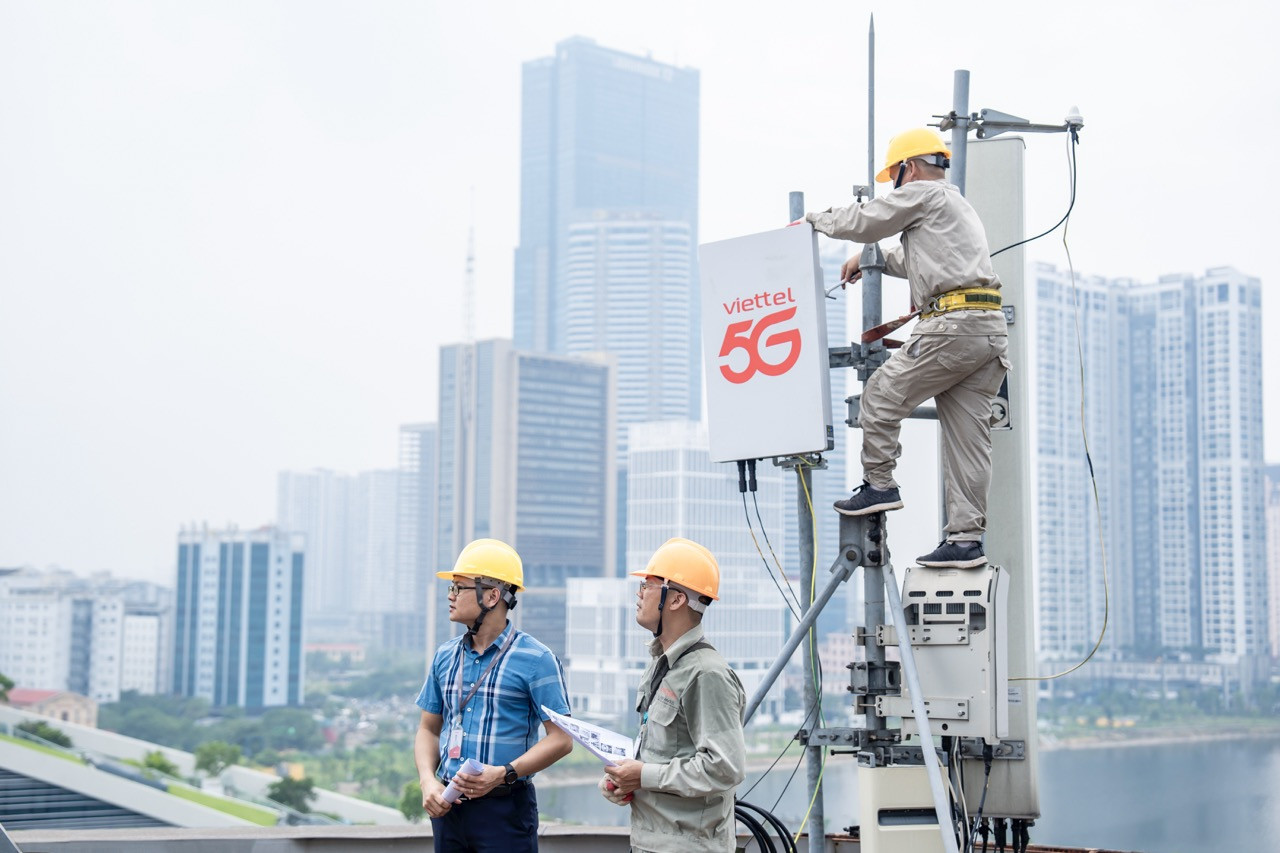
Under detailed guidance in Government Decree No88/2025/ND-CP, the state will support enterprises in deploying nationwide 5G infrastructure if they develop at least 20,000 5G base stations that are accepted and put into operation from February 19 through December 31, 2025.
This is a special policy aimed at creating breakthroughs in national digital transformation and realizing the goal of advanced, modern digital infrastructure with nationwide 5G coverage by 2030 as set out in Resolution 57.
“The Politburo’s Resolution 57, with its focus on promoting breakthroughs in science and technology development, innovation, and national digital transformation, has provided strong motivation for Viettel. The group recognizes its responsibility and is concentrating resources to deploy nationwide 5G infrastructure as soon as possible. This is the technological foundation to effectively support digital transformation for the government, businesses, and the public,” Thang emphasized.
Sharing further about the issue at the seminar titled “How does 5G commercialization impact Vietnam’s economy?” on December 29, Nguyen Ha Thanh, deputy CEO of Viettel Telecom, said that on December 22, Viettel received official certification from the Ministry of Science and Technology, confirming that the company had fulfilled and exceeded its commitments regarding 5G deployment.
Viettel has more than 20,000 5G base stations (20,758 by December 10). By the end of December 2025, the figure is expected to reach 23,500.
If counting the 6,500 5G stations deployed in 2024, Viettel will own the largest 5G network in Vietnam, with a cumulative total of 30,000 stations, covering 90 percent of outdoor areas and 70 percent of indoor areas nationwide, from urban centers to rural regions.
In 2026, Viettel aims to deploy an additional 15,000 stations, expanding indoor coverage further from 70 percent to nearly 85 percent.
“Resolution 57 of the Politburo and Resolution 03 of the government identify 5G as a key strategic infrastructure. Viettel therefore considers investment in 5G infrastructure as essential to ensuring the country’s digital infrastructure and has focused on rapid and extensive deployment.
“Going forward, Viettel will continue to invest in depth so that 5G truly becomes a digital infrastructure capable of triggering an explosion of 5G applications, serving not only the public but also businesses and government administration at all levels,” Thanh said.
Viettel is the only enterprise in Vietnam to deploy a fully standalone 5G SA network, enabling speeds of up to 10 Gbps with ultra-low latency, meeting the requirements for deploying mission-critical applications such as national defense and security, telemedicine, and smart cities.
Thai Khang
.svg)
