 Vietnamnet.vn

 Podcast



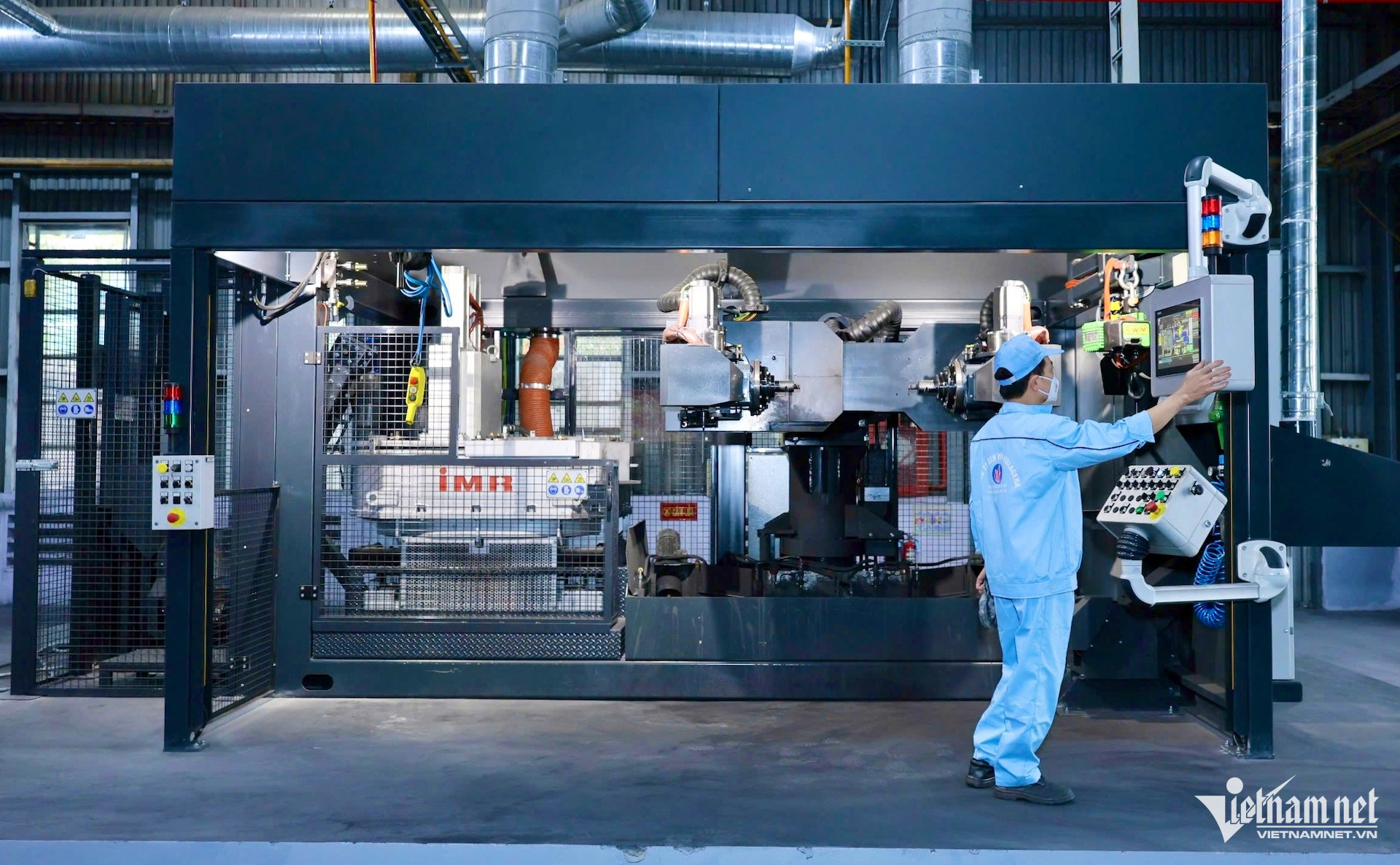
The key issue is how to turn the spirit of the resolution into substantive, sufficiently strong reforms so that large private enterprises, called “leading geese”, can truly take off.
When the private sector grows stronger, not only does economic growth improve but autonomy, competitiveness and resilience of the economy are enhanced. This forms the foundation for Vietnam to enter a new development phase with a more solid position on the regional and global economic map.
“Leading geese” – a missing link in Vietnam’s growth engine
After nearly four decades of doi moi (renovation), the private sector has affirmed its role as a pillar of Vietnam’s economy. According to the General Statistics Office, this sector currently contributes about 46 percent of GDP, creates more than 85 percent of jobs, and accounts for 58–60 percent of total investment capital of the entire society over many consecutive years.
However, a significant gap remains in the growth picture: Vietnam lacks large-scale private conglomerates capable of leading value chains and playing the role of “leading geese”.
While many Asian economies have developed private groups with regional reach, most Vietnamese private enterprises remain small and medium-sized, with limited technological capacity, management capability and value chain linkages. This makes growth less sustainable and weakens the economy’s ability to withstand external shocks.
Major turning point
Resolution 68-NQ/TW marks an important turning point by affirming for the first time that the private economy is one of the most important drivers of the national economy. This approach demonstrates a fundamental shift in development thinking about the role of private enterprises, from a supporting role to a central leading position.
Not only is Resolution 68 of political significance, but it also creates an institutional foundation for restructuring enterprise development policies, especially for large private enterprises. In the context of Vietnam moving to a growth model based on productivity, innovation, and deep integration, establishing the leading role of the private sector is a strategic choice.
Why does Vietnam still lack regional-scale private conglomerates?
By the end of 2024, Vietnam had nearly 1 million active private enterprises, with the number of medium and large firms increasing by about 15 percent compared with the beginning of the current tenure. Several groups have invested in challenging business fields such as infrastructure, energy, electric vehicles and high technology, gradually establishing their positions. Even so, the number of enterprises that truly fulfill the role of “flying geese” remains very limited.
According to the Fortune Global 500 ranking 2024, Vietnam had only a few companies on the list, with modest scale and influence compared with other regional economies. The gap between potential and breakout capacity indicates that the issue lies not only with enterprises themselves, but also with the policy environment.
One of the biggest barriers is the institutional framework and policy stability. Large private enterprises typically require long-term, large-scale investment, yet they continue to face high legal risks, complex administrative procedures and significant law compliance costs.
Access to strategic resources is also constrained. Medium- and long-term credit relies mainly on banks, while the capital market remains underdeveloped and has yet to become an effective funding channel for large projects. According to the State Bank of Vietnam, credit for the private sector is mostly short term, limiting deep investment and technological innovation.
Removing bottlenecks for enabling “flying geese paradigm”
Resolution 68 clearly identifies the need to remove institutional bottlenecks that are restraining private sector development. The focus is reforming the investment and business environment, ensuring property rights, freedom of business and substantive equality among economic sectors.
Notably, the resolution emphasizes building a cohort of large private enterprises with regional and international competitiveness. This requires targeted, focused support policies rather than broad-based incentives, with an emphasis on enhancing technological capacity, governance quality, innovation and value chain linkages.
The greatest challenge lies in implementation. Without being translated into concrete action programs, legal reforms and clear resource allocation, the spirit of Resolution 68 will struggle to generate substantive change.
International experience shows that the emergence of large private conglomerates is always linked to the State’s enabling role, from infrastructure investment and capital market development to support for research and development and export market expansion. These are areas Vietnam needs to push more forcefully in the coming period.
Nguyen Van Loc & Pham Ngoc Huong Quynh (Vietnam National University, Hanoi)
.svg)
