 Vietnamnet.vn

 Podcast



The most notable point of Resolution 79 is the shift in management thinking, moving from "capital preservation" to “accepting controlled risks”, from project-based management to objective-based management, and from administrative intervention to governance based on market practices.
The issuance of Resolution 79 signifies that state-owned enterprises (SOEs) are being placed in the spotlight of the economy. Now, by switching to a new approach that accepts additional investment and allows for the retention of profits and capital, SOEs can become larger entities.
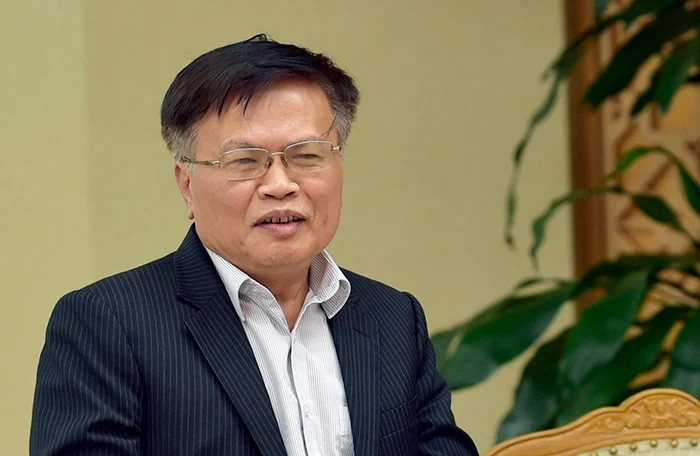
Dr Nguyen Dinh Cung, Former Director of the Central Institute for Economic Management, speaks to VietNamNet about Resolution 79 and the development of the state economy.
What is new in Resolution 79?
The Politburo’s Resolution 79 defines the foundation of the state economy as resources held and managed by the State, including land, mineral resources, water resources, sea areas, airspace, underground space, state-invested infrastructure works, the state budget, national reserves, off-budget state financial funds, SOEs, and state-owned credit institutions.
Accordingly, SOEs are identified as one component of the state economy. How do you assess this point?
The concept of the state economy is now clearer. The role and position of SOEs are also more clearly defined, which can be considered a step forward.
In addition, the functions, positions and roles of each component of the state economic sector have been identified with greater clarity. This helps provide a more comprehensive view of where the strength of the state economy lies and which resources can be mobilized for development, rather than speaking in general terms as before.
With regard to SOEs in particular, they were previously seen as the main material force of the state economy, playing a dominant role across a wide range of sectors.
Now, that dominant role appears to be narrowed, focusing on a number of strategic and critical industries and business fields rather than covering everything. This is a new point, and more importantly, one that is realistic and feasible.
Regarding the objectives of SOEs, this resolution sets out more specific goals. For example, at the level of the entire SOE sector, it mentions how many large enterprises should be formed and how many should rank among the top in the region or the world, accompanied by indicative targets.
However, it just states that management will be conducted based on overall objectives, including both financial and non-financial goals. Financial objectives are defined only at a general level, rather than for each specific project. This means governance is shifting from project-based management to overall goal-based management. Compared with the past, this is also a new point, at least in the spirit of the Politburo’s resolution.
Some other issues have been discussed for a long time, such as governance in line with international practices or equitization, but problems still exist in implementation.
Another noteworthy point relates to capital. Previously, the trend was to withdraw or divest capital. Now, the emphasis is no longer on withdrawal, but on adding capital to increase the scale of SOEs. In equitization, enterprises are allowed to retain more capital and profits. At the same time, instead of divestment as before, the approach shifts toward consolidation and mergers among enterprises in the same industries to form larger-scale entities.
In your view, what are the key strengths of Resolution 79?
First is the issue of attracting talent from outside. Autonomy is granted in defining salaries and pay to workers according to market principles and practices. The resolution also emphasizes creating a favorable business environment, particularly with regard to inspection and supervision.
Another noteworthy point is the State Capital Investment Corporation (SCIC), with the expectation that it will gradually become a national investment fund.
The goal of building major global-scale brands is not new and was already mentioned in Resolution 12 in 2017. The issue lies in how to implement it.
Resolution 79 sets many objectives for SOEs. How do you view this approach?
First is the criteria of objectives, especially non-financial ones. For example, in terms of technology: how many new products does the enterprise develop each year? What market share do those products capture? Do they help establish a position in the market?
Another very important criterion is research and development, and innovation. How many initiatives are there each year? How many research results are commercialized? Does the enterprise gradually move into the leading group in terms of technology within its industry?
The State needs to make investment, but investment is not just pouring money. Investment is also about institutions, policies, motivation, human resources, and intelligence to create conditions to attract and retain talent.
Tu Giang - Lan Anh
.svg)
