 Vietnamnet.vn

 Podcast



Despite operating modest, low-cost businesses, Hanoi’s street food vendors are increasingly being pushed to their limits by rising expenses. What once offered a fragile but steady livelihood is now marked by difficult trade-offs, where raising prices risks losing customers, while holding them steady quietly erodes already narrow margins.
Mounting input costs erode fragile profits
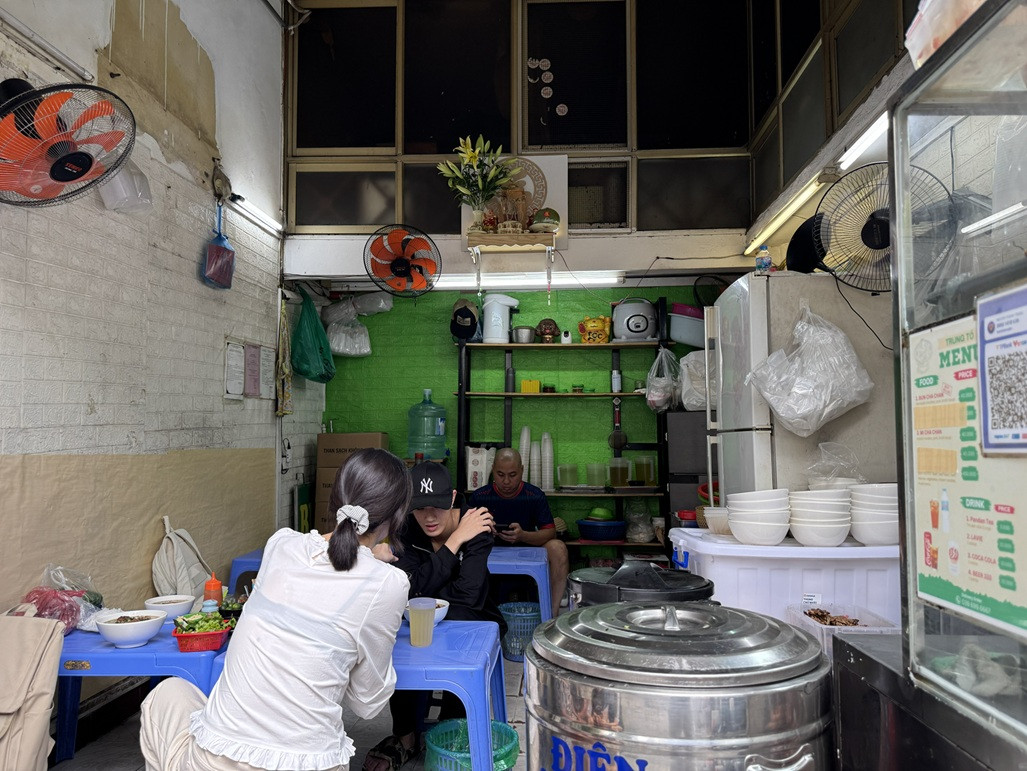
In recent months, the cost of essential ingredients and daily operations has climbed steadily, placing direct pressure on small vendors. Nguyen Thanh Trung, 45, who runs a grilled pork noodle stall in Hoan Kiem District, said pork prices have risen from around VND130,000 to VND160,000 ( US$5.30–US$6.50) per kilogram, while vegetables have increased from VND20,000 to over VND30,000 (US$0.80–US$1.20) per kilogram.
Even so, Trung has kept his menu prices unchanged at roughly VND30,000–VND40,000 (US$1.20–US$1.60) per serving. The decision is deliberate. He fears that any increase, however small, could drive customers away - especially as daily foot traffic has already dropped from more than 100 to around 70.
“Everything is getting more expensive, including fuel, so our income has been affected,” Trung said. “But if we raise prices now, customers may not accept it. We could lose even more business, so for now we accept lower profits.”
Vendors recalibrate to sustain operations
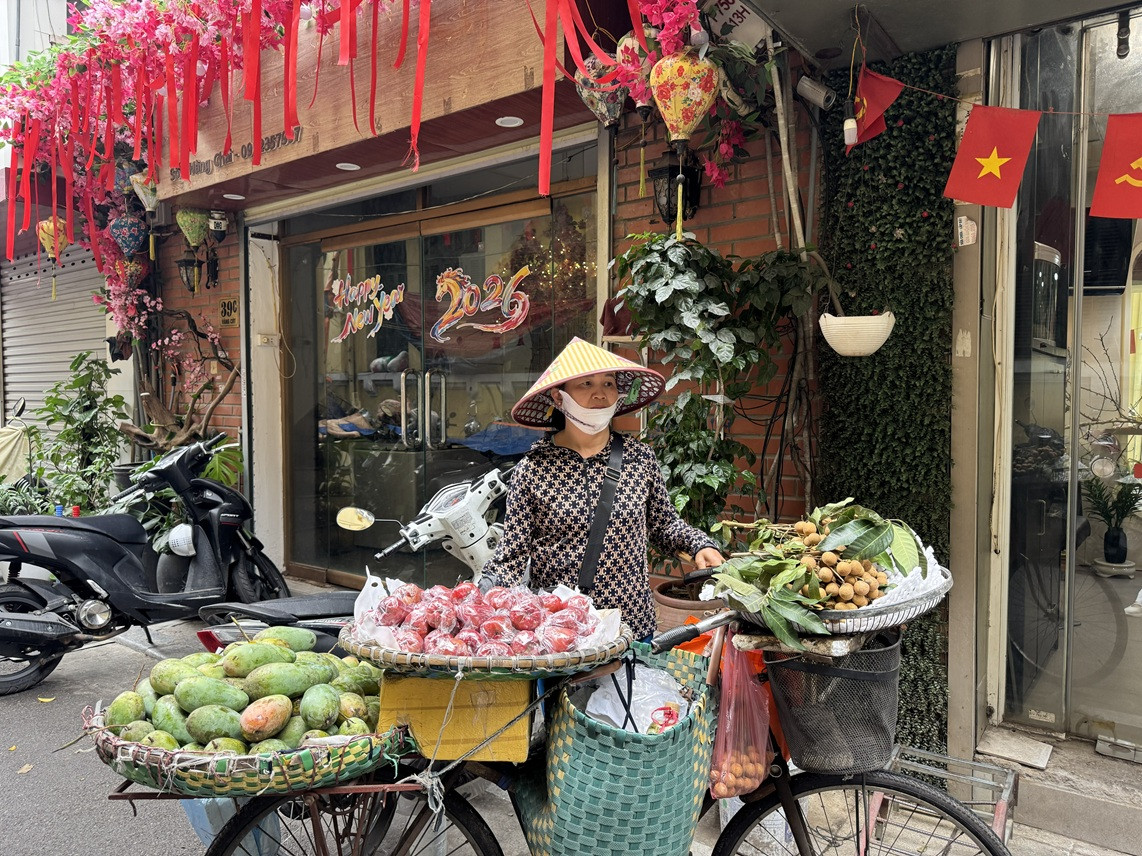
Across the city, vendors are quietly adjusting to these pressures in order to keep their businesses running. Some reduce portion sizes, others substitute more affordable ingredients, while many extend their working hours to offset declining income.
Nguyen Thi Tuoi, 54, a mobile fruit vendor, begins her day at 4 a.m., sourcing fresh produce from a wholesale market before selling on the streets until late evening. Yet despite the long hours, her sales have declined significantly. She once sold about 50 kilograms of fruit per day; now, she sells between 30 and 40 kilograms.
“Import prices have gone up, but I can’t raise my selling prices because customers won’t buy,” she said. “There are days when costs are so high that I can’t sell anything and have to stop.”
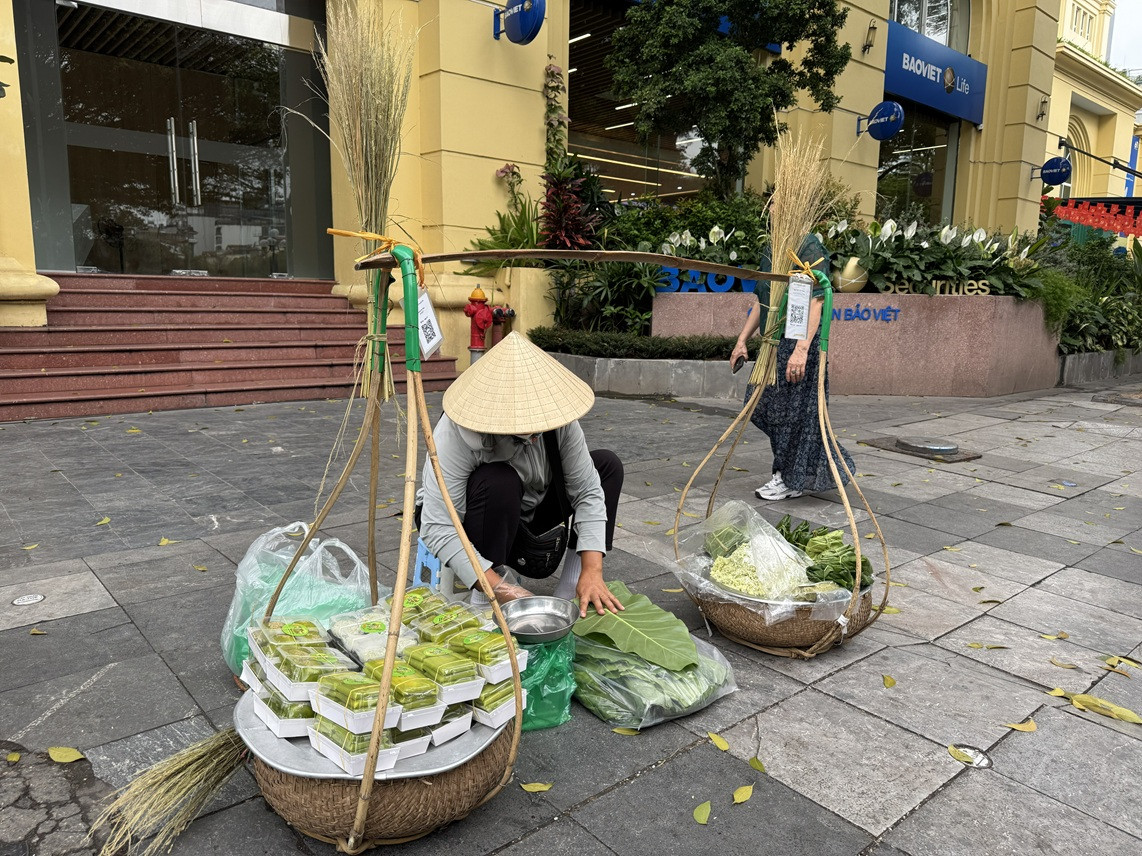
Nguyen Thi Toan, 49, who sells desserts made from com (green rice flakes), faces similar challenges. Rising costs have affected nearly every part of her business, from ingredients to packaging. Still, she has chosen not to adjust her prices, concerned about the loyalty of her regular customers.
“Most of my customers are regulars, so I feel reluctant to increase prices,” she said.
Her daily routine reflects the intensity of that choice. She begins preparing food at 3am, starts selling at 5:30am, and returns home at 6:30pm. The long hours are physically demanding, while demand continues to soften as customers cut back.
“People are eating less, so business has become tougher,” she said.
For vendors like Tuoi and Toan, continuing to operate is no longer about turning a profit. It is about maintaining a livelihood, as their small stalls remain the primary source of income for their families.
Consumer caution reshapes everyday spending
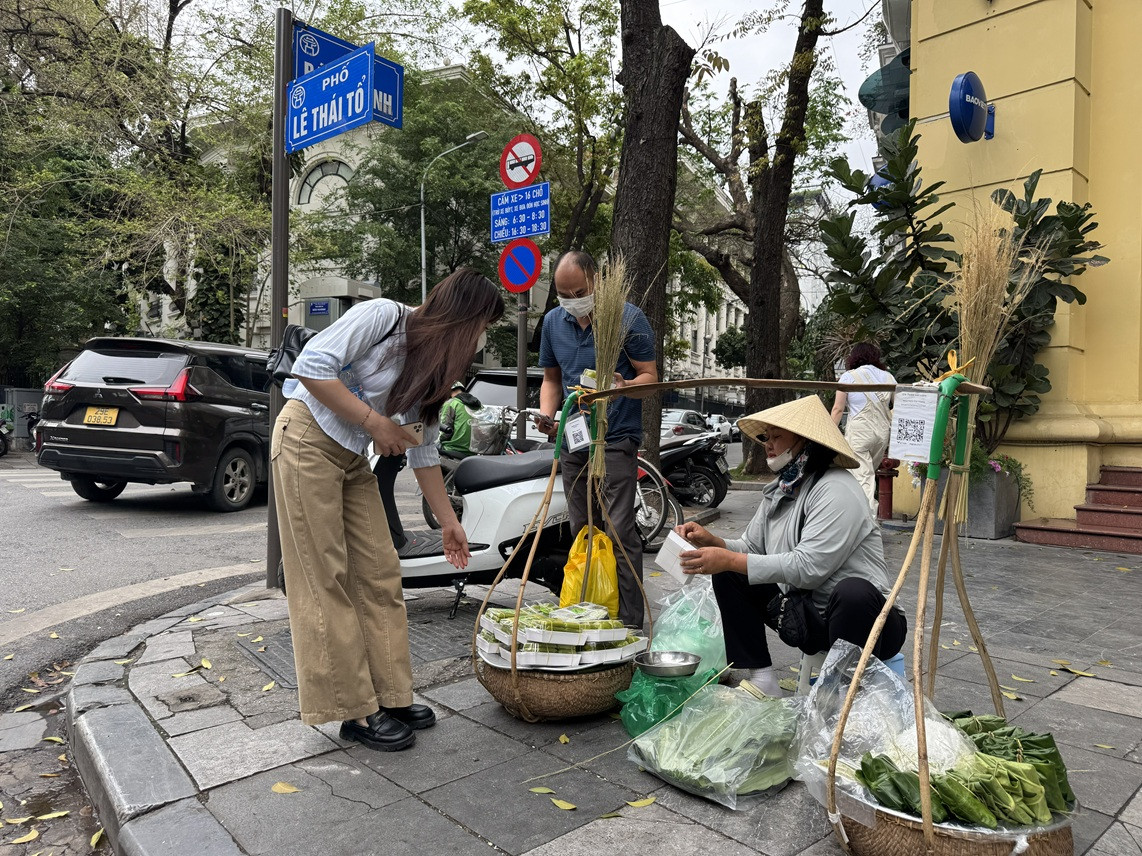
The pressure is not limited to vendors. Rising prices are also reshaping how consumers spend, particularly on eating out.
Hang, a 45-year-old resident of Hoan Kiem District, said that while some of her regular food spots have kept prices stable, many others have raised them by VND5,000 to VND10,000 (US$0.20–US$0.40) per meal.
“When prices go up, it definitely affects my spending. I’ve had to cut back on eating out,” she said. “Small increases are still manageable, but bigger ones would make me rethink my habits more seriously.”
As living costs rise, many households are prioritizing essential expenses and reducing discretionary spending, including meals outside the home.
An uncertain outlook for small-scale vendors
With input costs showing no clear sign of easing, the outlook for many vendors remains uncertain. Some may eventually have no choice but to raise prices, even if it means losing more customers.
Trung said he may need to increase prices by around VND5,000 (US$0.20) per serving if current conditions persist.
“This is not just my situation - it’s happening everywhere. If we don’t adjust prices, it will be very difficult to continue,” he said.
Others acknowledge that their ability to absorb rising costs is reaching its limit. If expenses continue to climb, some small vendors may be forced to suspend operations entirely due to a lack of financial reserves.
Yet despite these challenges, most continue to show up each day. Their stalls remain not only a source of income, but also a reflection of resilience - of workers adapting, enduring, and holding on in the face of an increasingly uncertain economic reality.
Ngoc Phuong - Ai Khanh - Lan Phuong
.svg)
