 Vietnamnet.vn

 Podcast



When the floodwaters exposed poverty
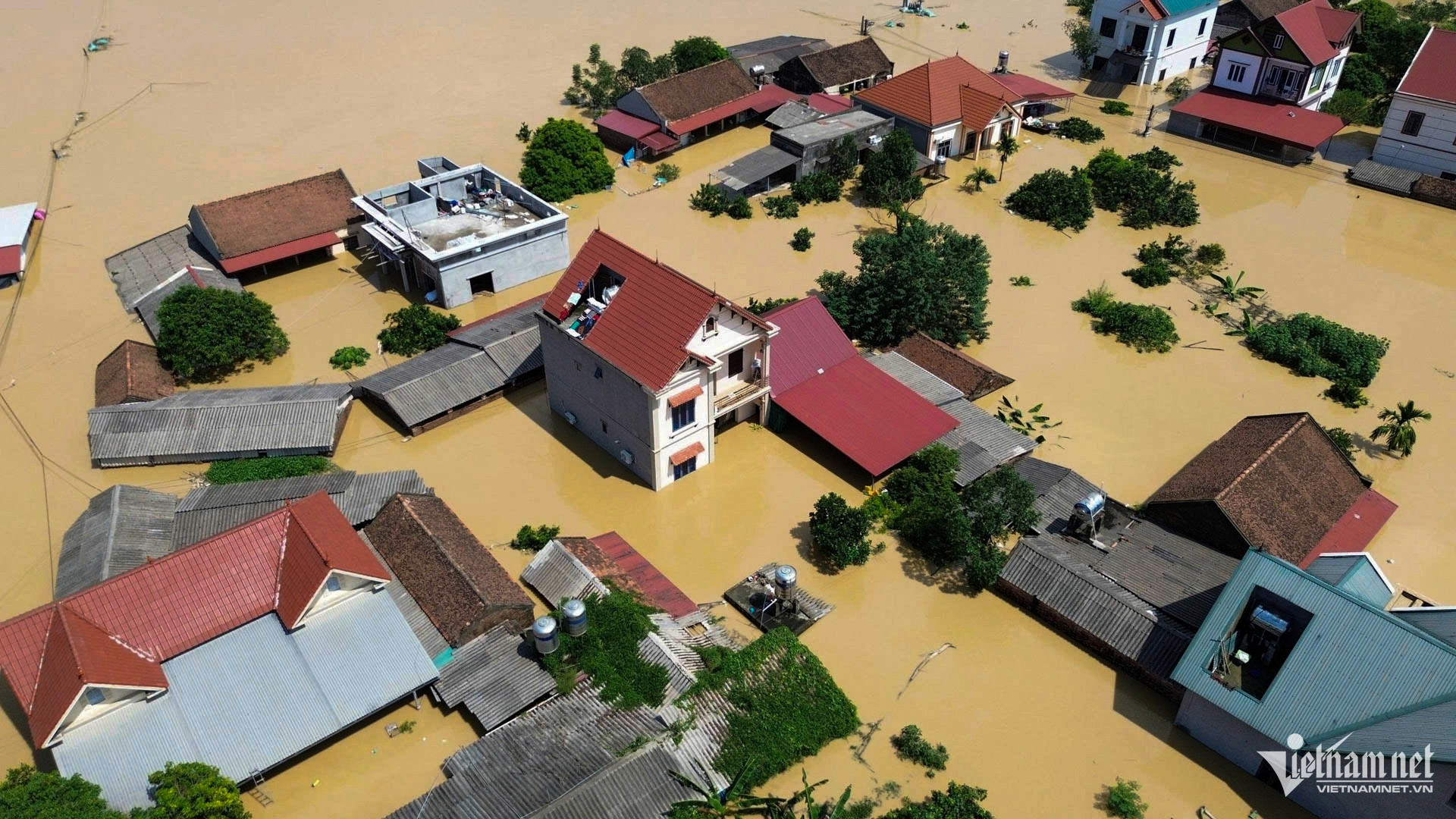
Amid the vast floodwaters covering the Red River Delta, impoverished tin-roofed homes floated like helpless buoys. Inside, people sat huddled, waiting to be rescued.
No one could have imagined that in the 21st century, a single storm could turn fragile, tin-roofed houses into a line between life and death. For the first time in years, Vietnam was compelled to issue an emergency appeal to the international community.
The 11th storm, internationally known as Matmo, was not the strongest in recent memory. Yet initial reports show 15 people dead or missing, 7 injured, and more than 16,900 homes submerged - mainly in Cao Bang, Thai Nguyen, Lang Son, and Hanoi.
The economic toll exceeds 35 trillion VND, approximately 1.3 billion USD, reducing GDP growth by 0.2%. But numbers only reveal the surface. Beneath them lie the tears of the people, their helplessness as they watched a lifetime of possessions swept away by the waters.
In Thai Nguyen, about 5,450 houses were damaged. In Bac Ninh, entire neighborhoods have been reduced to rooftops dotting the flood like isolated islands.
A young woman sobbed as she watched her newly opened spa sink beneath the water. A funeral had to be conducted by boat. An elderly woman sat on her faded tin roof, clutching a soaked cat. These are no longer individual tragedies - they reflect a larger tragedy of poverty: not just material poverty, but the inability to defend oneself against nature.
Many people, especially in remote and rural areas of Vietnam, still live in rudimentary homes, incapable of withstanding increasingly erratic rainy seasons.
Support for the people
As cries for help echoed from submerged rooftops, tens of thousands remained awake through the night. Nearly 30,000 soldiers, 11,500 police officers, and thousands of militia members, youth, and volunteers from surrounding provinces rushed to the flood zones. Convoys of trucks carried instant noodles, clean water, life jackets, and warm blankets. Six military aircraft continuously delivered relief supplies. Police officers carried the elderly and children on their backs. Young soldiers waded through frigid water to reinforce dikes, build shelters, and cook meals for displaced residents.
Amid the floodwaters, the image of soldiers in green uniforms became a symbol of trust - quiet, united, and resilient.
Prime Minister Pham Minh Chinh was present in the flood-hit areas before the waters had even receded. Late into the night, he gave direct orders: “At all costs, no one should go without food, clothing, or shelter.” Deputy prime ministers were dispatched to the front lines. Emergency meetings continued around the clock. The national leadership operated in a dual mode - disaster response and economic stability.
In those moments, Vietnam revealed its heart: a country united by outstretched hands reaching for one another.
When Vietnam calls out to the world
On the afternoon of October 9, the Ministry of Agriculture and Environment convened a meeting with more than 20 international organizations and embassies. Deputy Minister Nguyen Hoang Hiep spoke with raw honesty: “Some issues have gone beyond what our people can endure.”
There was no diplomatic language - just a genuine plea, echoing the exhaustion of citizens worn down by relentless natural disasters.
At the meeting, Pauline Tamesis, UN Resident Coordinator in Vietnam, urged the international community to provide emergency aid, emphasizing that the needs were urgent and overwhelming. “Many families have lost homes, livelihoods, and even loved ones. Our collective action can be a lifeline to those grappling with the aftermath,” she said.
Natural disasters have become a global issue. Vietnam - one of Southeast Asia’s most climate-vulnerable countries - is paying the price for changes it did not cause. In this context, appealing to the world is not a sign of weakness but a courageous act.
Rising from turbulent waters
The storm has passed. The rain has eased. But in Thai Nguyen, Bac Ninh, Lang Son, and Cao Bang, floodwaters remain high. Gaunt children sit on wooden platforms, waiting for their books to dry so they can return to school. One teacher, standing ankle-deep in a flooded classroom, whispered, “As long as the children are alive, we can start again.”
In that simple statement lies the strength and resilience of the Vietnamese spirit.
Even in the face of disaster, the Vietnamese smile. They share their last packets of noodles, their last bottles of water. Some walk dozens of kilometers to deliver rice to nearby villages. Young people from Hanoi drive trucks of life vests to submerged areas. Elderly citizens pedal bikes carrying boxes of milk to donate.
We have risen from the ashes of war. We have endured through pandemics. And now, once again, we are learning to rise from the floodwaters.
As natural disasters grow more unpredictable, what must we do to adapt and become more resilient?
From the government to the people, how must we change the way we prepare, the way we live, and the way we build our economy to face the storms ahead?
Lan Anh
.svg)
