 Vietnamnet.vn

 Podcast



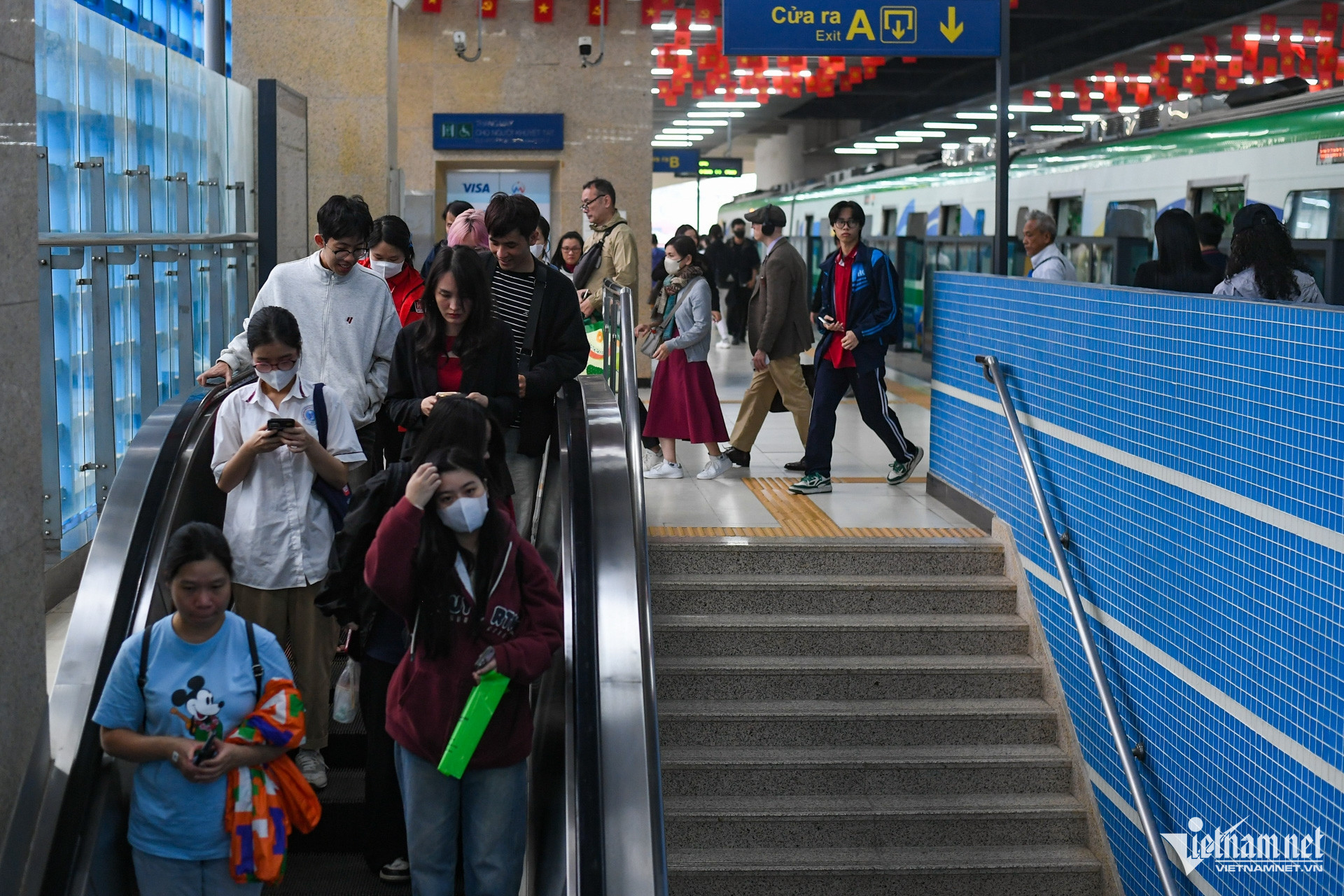
In recent days, between 6:30am and 8:00am, metro carriages on the Nhon - Cau Giay line have appeared more crowded than usual.
In addition to students, office workers, civil servants and other employees can now be seen frequently at metro stations during peak hours.
At around 4:30pm on March 11, many train cars were packed with passengers standing and sitting shoulder to shoulder.
Phan Van Thong, born in 2007 and currently a student, said his home in Phuc Tho is about 25km from his school.
“Traveling by motorbike would be faster, but gasoline prices have gone up so I switched to public transport. I already bought a monthly pass. Now it takes me more than an hour to get to school - first taking a bus from home to Nhon station, then the metro,” Thong shared.
Ngoc Van, another commuter, said she had only occasionally used the metro before.
“I do not usually buy a monthly ticket. But recently gasoline prices have increased and ride-hailing services have also become more expensive, so I decided to take the metro instead,” she said.
At Cat Linh - Ha Dong metro stations, passenger numbers have also increased, even outside peak commuting hours.
At a bus stop on Kim Ma Street, a woman said she lives in Nhon. After taking the metro to Cau Giay station, she continues her journey to work on Lac Long Quan Street by bus.
Bus Rapid Transit (BRT) vehicles have also become noticeably busier. At times, passengers crowd the doors while boarding and disembarking.
“I have used the BRT for more than a year,” said Vo Tan from Tay Ho Ward.
“But recently I have clearly noticed more passengers compared with before. Many buses are completely full, especially during the morning commute and after work in the afternoon. Interestingly, this change happened at the same time gasoline prices began rising,” he said.
At several moments during the day, BRT stations see a constant flow of passengers entering and leaving, while traffic on the surrounding roads appears relatively light.
According to Le Bang An, General Director of Hanoi Metro, passenger numbers on metro lines have shown an upward trend since fuel prices were adjusted on March 6.
From March 6 to 9, the Cat Linh - Ha Dong line recorded an average passenger increase of about 4.9 percent, while the Nhon - Hanoi Station line saw a stronger rise of around 13.2 percent.
Data from the Hanoi Public Transport Management Center also indicates growing demand for public transportation.
Thai Ho Phuong, Director of the center, said that the total number of single bus tickets sold on subsidized bus routes - excluding monthly passes and free rides - averaged 104,146 passengers per day between March 7 and 9.
That figure represents an increase of about 15 percent compared with March 6, before the latest gasoline price adjustment.
PV
.svg)
