 Vietnamnet.vn

 Podcast



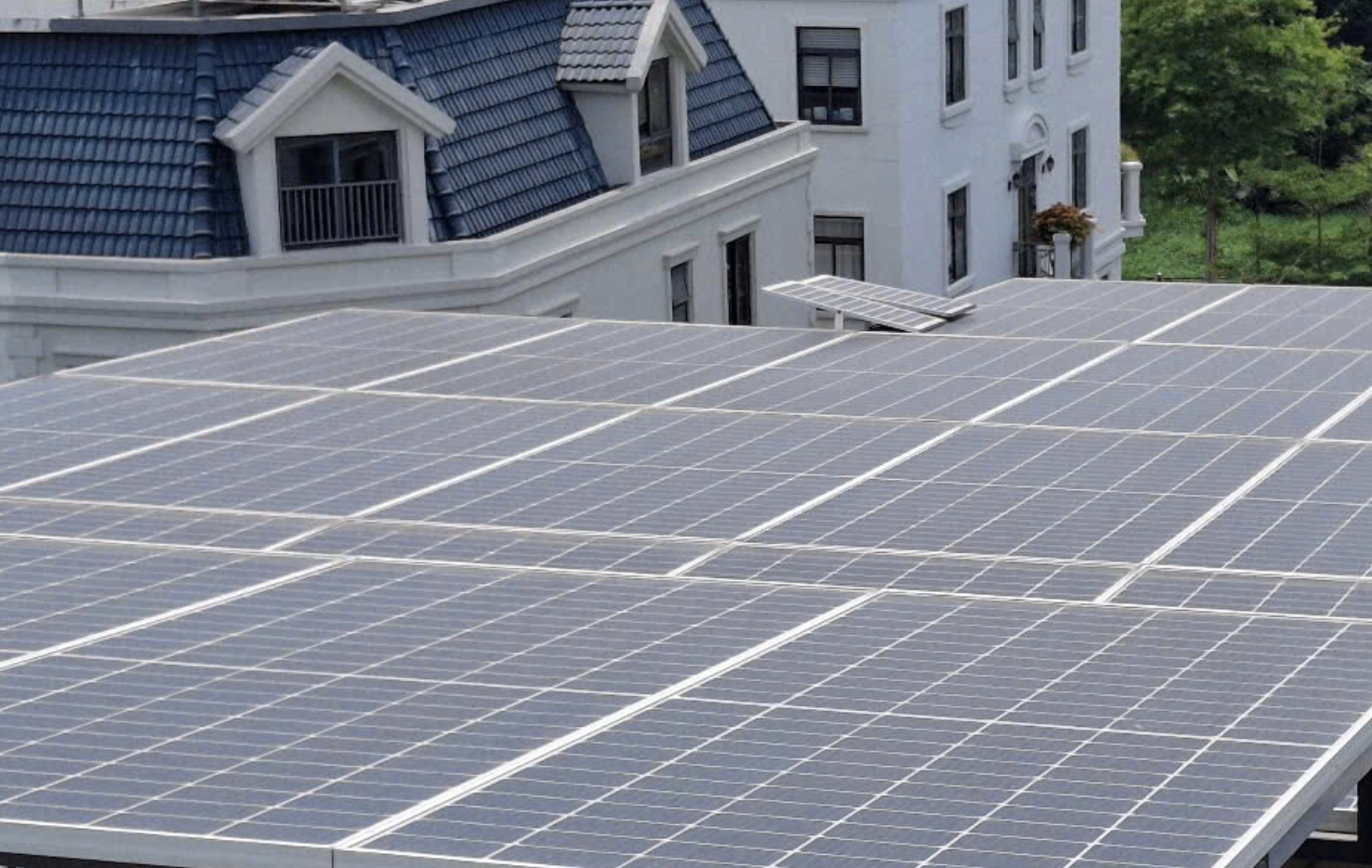
However, among systems developed under the new regulations, only around 1 percent have registered to sell their surplus power.
At noon, production lines at a tile factory in Phu Tho are running at full capacity, turning out tens of thousands of square meters of tiles each day. Notably, rooftop solar supplies about 8 percent of the electricity used to run the plant.
A company representative said photovoltaic panels now cover around 17,000 sqm of the factory roofs, equivalent to a capacity of 1.8 MWp. In the first six months of 2026, the self-generated, self-consumed rooftop solar system produced 850,000 kWh.
The electricity not only helps meet the factory's power needs and cut electricity costs, but also supports the company's efforts to meet green transition requirements.
In industrial parks, rooftop solar systems are increasingly being installed on factory roofs. Some companies have cut their monthly electricity bills by VND6-10 billion after investing in rooftop solar.
Meanwhile, many households have installed rooftop solar to secure their electricity supply and save millions of dong on their monthly power bills. They can also register to sell surplus electricity to the grid under current regulations.
According to EVN, as of the end of July 2026, the country had 130,811 rooftop solar systems with a combined capacity of more than 11,200 MWp.
In addition to meeting on-site production and household demand, rooftop solar systems supplied 6.6 billion kWh of electricity to the grid in the first seven months of the year alone.
EVN said that, as of the end of July, there were 28,254 self-generated, self-consumed rooftop solar systems developed under Decree 58/2025/ND-CP and Decree 243/2026/ND-CP, with a combined capacity of around 1,614 MWp. Of these, 287 systems, with a combined capacity of around 16.4 MWp, were selling surplus electricity to the grid.
“In reality, the number and capacity of installed rooftop solar systems could be higher, as some systems have been installed but have yet to complete the required notification or registration procedures with the competent authorities,” EVN said.
According to EVN, rooftop solar installations have continued to grow rapidly since Decree 243 took effect on June 26, 2026. However, the number of systems registered to sell surplus electricity remains low, at only around 1 percent of newly developed systems.
The main reasons are that some customers are not fully aware of the new requirements governing notification and registration procedures, and eligibility to sell surplus electricity, as well as the amount and purchase price of surplus power. In addition, some installed systems have yet to complete the required notification and registration procedures, while technical documentation still depends heavily on equipment suppliers and installers.
To support households and businesses, EVN and power companies have stepped up efforts to disseminate Decree 243 and regulations governing rooftop solar.
Power companies are also providing households and businesses with technical guidance and support on grid connections, metering and the purchase of surplus electricity in accordance with regulations, while ensuring safe grid operations.
Dr Nguyen Huy Hoach, a member of the scientific council of Vietnam Energy Magazine, said the biggest advantage of rooftop solar for the power system is that it makes use of existing building roofs, avoiding the need for land clearance and reducing transmission losses because electricity is generated close to where it is consumed.
More importantly, as electricity demand in Vietnam continues to rise, particularly during the summer, rooftop solar can help reduce grid loads at various times.
For households and businesses, rooftop solar also helps lower electricity costs. It gives consumers greater control over their power supply, reduces their dependence on electricity purchased from the grid and limits the impact of potential future power price adjustments.
For businesses in particular, rooftop solar has taken on strategic importance as many export markets, especially in Europe, increasingly require the use of green energy across production chains.
However, rooftop solar depends entirely on solar radiation, meaning its output varies with weather conditions and the time of day.
Hoach advised households not to decide whether to install rooftop solar based solely on advertised payback periods. Before investing, they should carefully assess their electricity demand, roof area and orientation, shading conditions, and the reputation and track record of the design and installation contractor. These factors directly affect the system's output and overall efficiency.
Tam An
.svg)
