 Vietnamnet.vn

 Podcast


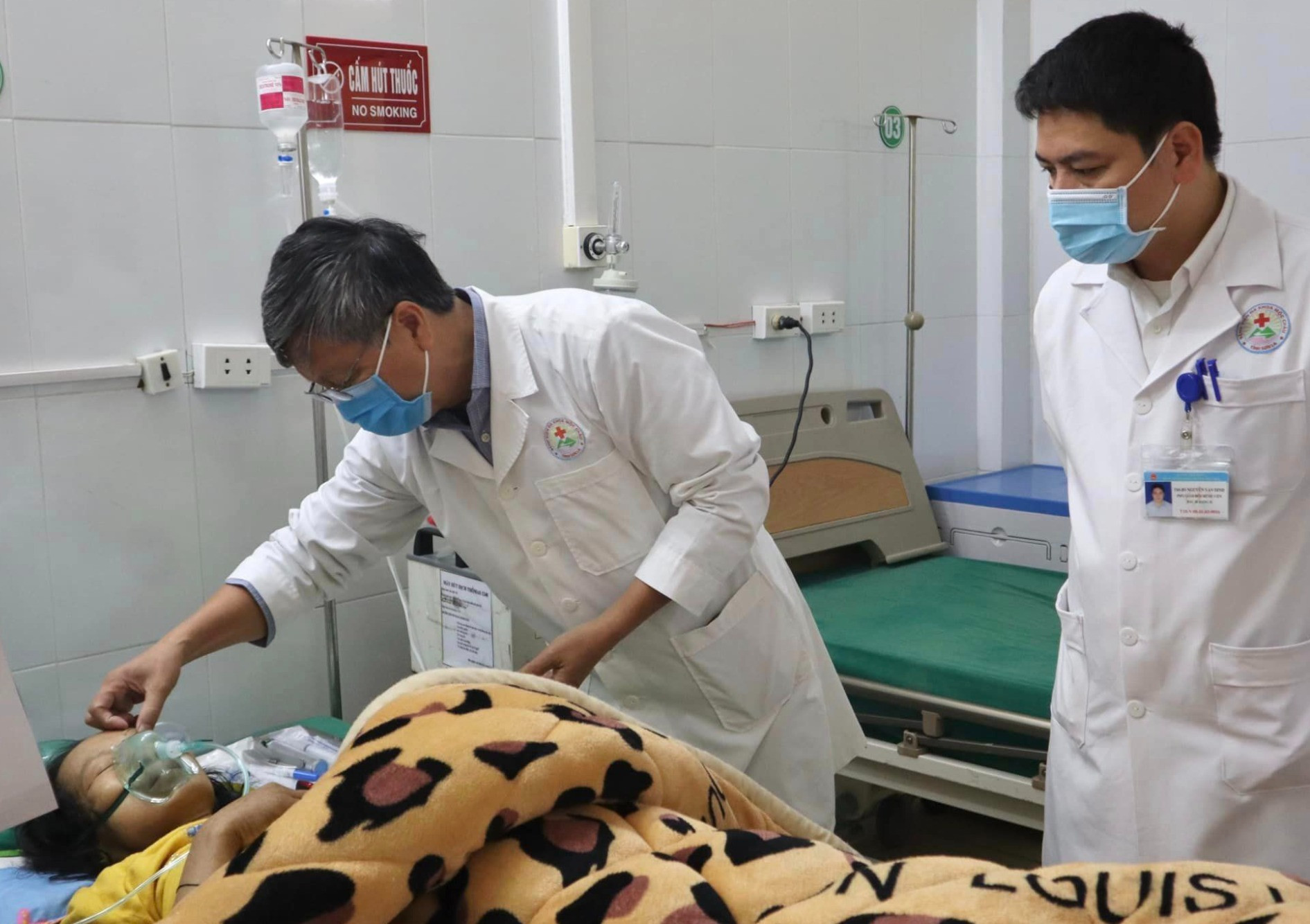
With over 40 years dedicated to medicine, Professor Nguyen Gia Binh has helped snatch the lives of thousands of critically ill patients back from death. Yet, he considers himself nothing more than a "rustic country doctor."
Prof. Dr. Binh is President of the Vietnam Association of Emergency Medicine, Intensive Care and Clinical Toxicology, and former Head of the Intensive Care Unit at Bach Mai Hospital (Hanoi).
“I don't have grand passions or noble medical ethics, so please don't use those words - they frighten me! I simply view myself as a 'rustic country doctor' pottering around hospital beds, doing whatever benefits the patient at all costs,” he said.
His medical career began with a childhood memory of watching his mother suffer from typhoid fever, lying delirious in a hammock tied to bamboo poles.
While serving as a military medic with Treatment Team 36 in the mountainous border region of Cao Bang, he honed his skills in an environment where medicines, laboratory tests and medical equipment were scarce.
Surgeries had to be performed using foot-operated generators, while anesthetics could only be administered intermittently. He learned to diagnose patients through his hands, a stethoscope and meticulous observation.
In 1983, upon leaving military service, he returned to work at Bach Mai Hospital. During those lean years, the Emergency Department had only a few old stethoscopes, and night shift stipends were meager. Under those circumstances, he diligently learned from senior predecessors, particularly focusing on clinical examination techniques to recognize diseases through the subtlest signs.
Whenever something remained unclear, he personally investigated and monitored the patient. To him, patients were not merely subjects of treatment, but “friends and teachers.”
“No matter how far medical technology advances, human beings are not machines. A doctor must be a companion who listens to and empathizes with the pain, anxiety, and fear of a human life,” he said.
Innovation born from scarcity
In 1987, during a mission to Cambodia, he encountered numerous patients with severe malaria and acute renal failure requiring blood purification. Medical facilities lacked hemodialysis machines, and specialized peritoneal dialysis solutions were unavailable.
Unable to wait for external supplies, he and the late Professor Vu Van Dinh devised a way to formulate dialysis solutions from standard intravenous fluids. Cambodian friends helped source individual bags of sodium chloride, bicarbonate, and glucose from local markets. Precipitation reactions were carefully tested before proceeding with the peritoneal dialysis procedure.
The process spanned an entire week. On the seventh day, when the first stream of dark urine appeared and the patient gradually regained consciousness, both mentor and pupil burst into joy.
From those dire circumstances, peritoneal dialysis using standard IV solutions was born, subsequently applied to treat malignant malaria complicated by acute renal failure in Central Vietnam and the Central Highlands.
In 1992, after completing advanced training in France, he had opportunities to work for foreign pharmaceutical firms at salaries tens of times higher than his income at the time. Yet, he chose to return.
“Having gone abroad to study, I must accomplish something for patients in my home country,” he resolved.
Troubled by cases of septic shock and multiple organ failure carrying high mortality risks, he and his colleagues sought to introduce continuous renal replacement therapy (CRRT) to Vietnam. Despite expensive machinery and dialysis fluid costs, he persistently advocated for sponsorship sources to secure equipment, unlocking further chances of survival for critically ill patients.
From those initial steps, many modern blood purification techniques, hemoperfusion, plasma exchange, and combined modalities for acute liver failure and acute poisoning were progressively implemented.
The research project on applying modern blood purification techniques in emergency resuscitation, led by him, was awarded the State Prize for Science and Technology in 2017.
According to figures detailed in the project, the mortality rate for septic shock fell from 60 percent to 40 percent, multiple organ failure dropped from 80 percent to 50 percent, and severe acute pancreatitis decreased from 50 percent to 10 percent.
In intensive care, where a patient's condition can shift by the minute, Professor Binh has always emphasized decisiveness and strict adherence to professional protocols.
Haunted by fatal cases of anaphylaxis, he and his associates conducted research to standardize recognition and emergency management protocols. These contributions helped elevate anaphylaxis management capabilities across medical facilities nationwide.
No longer holding a managerial position, Binh remains deeply devoted to clinical practice. Observing young doctors who sometimes focus excessively on paperwork or operating computer screens without spending sufficient time on direct physical examinations, he offers gentle reminders.
Phuong Thuy

