 Vietnamnet.vn

 Podcast



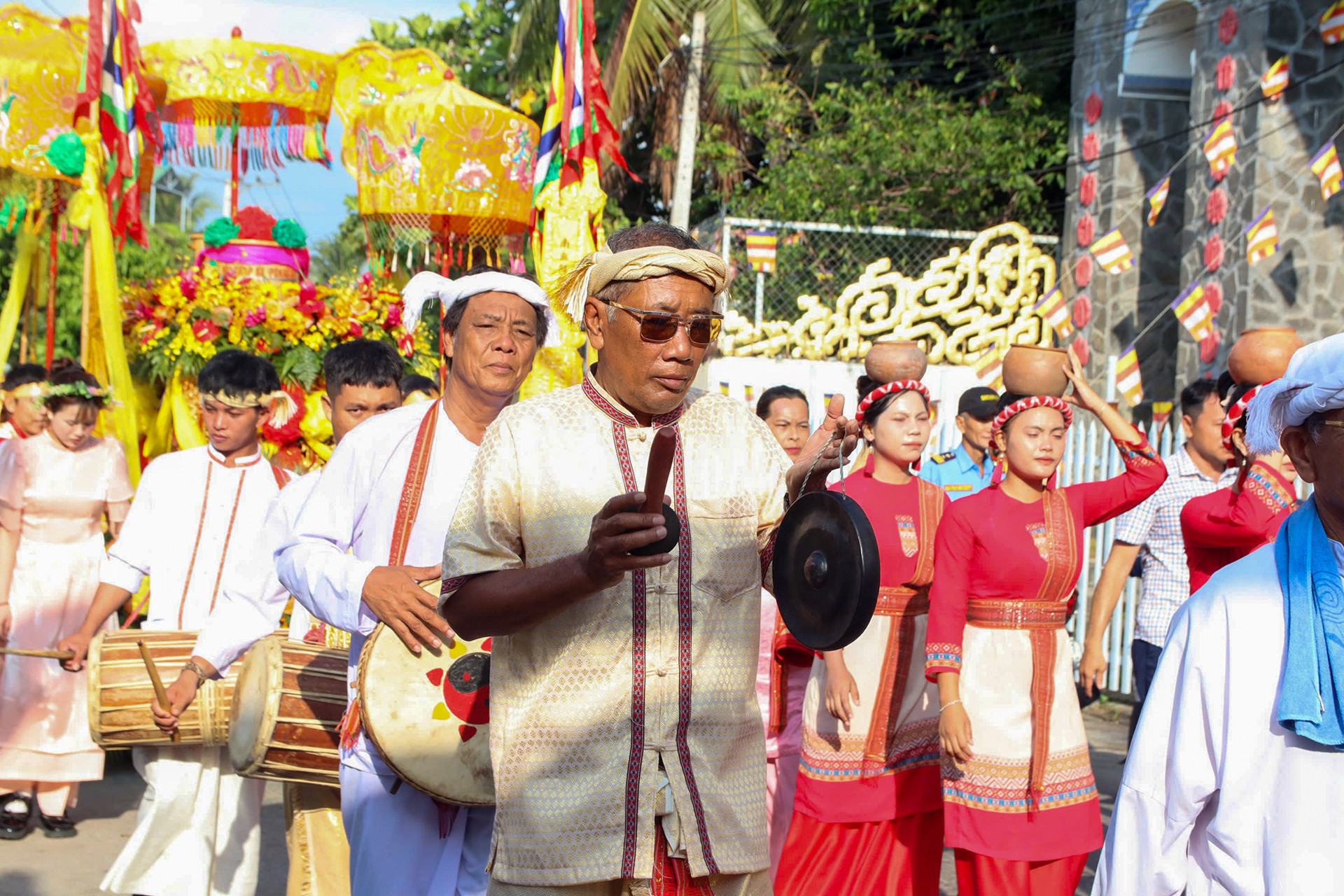
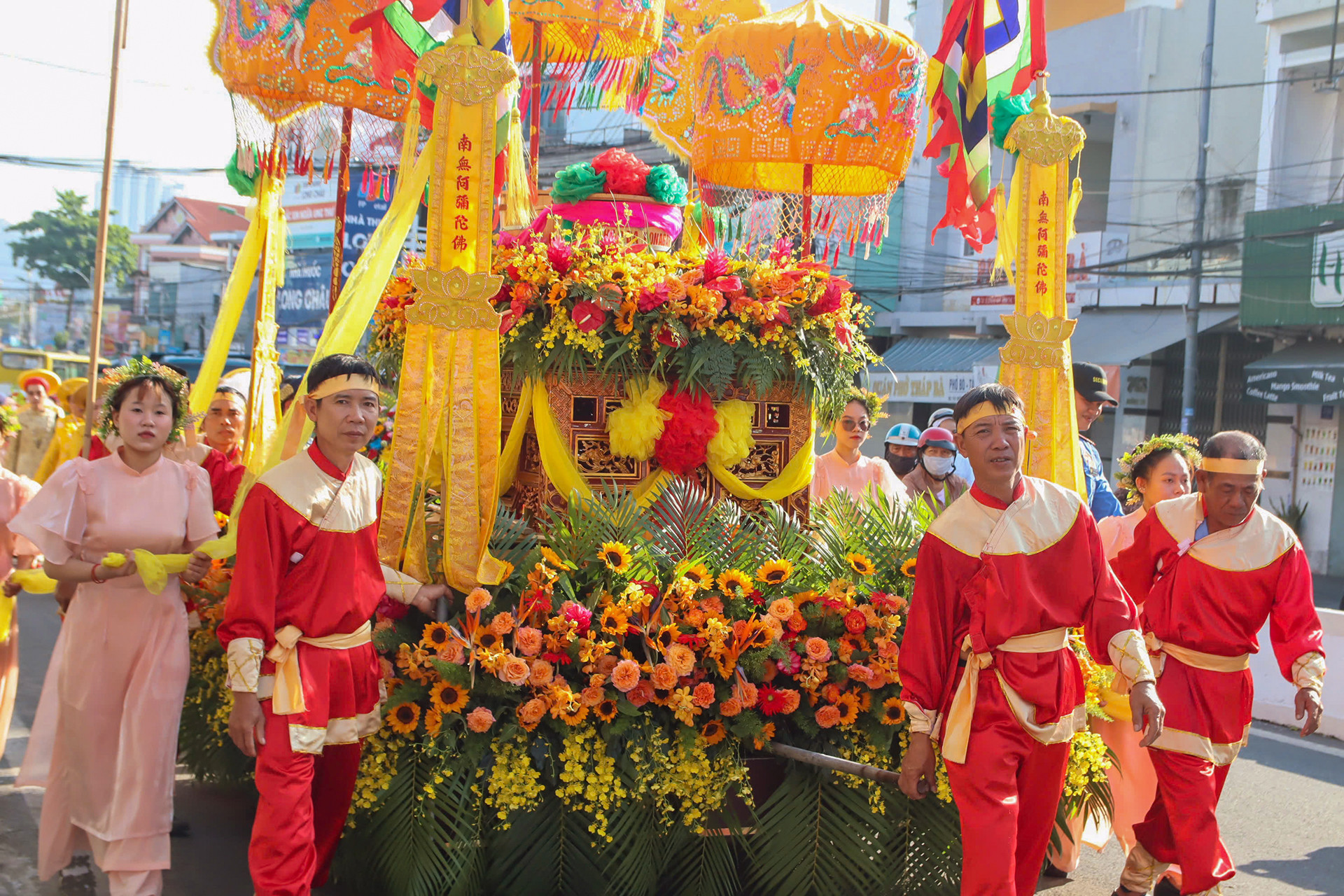
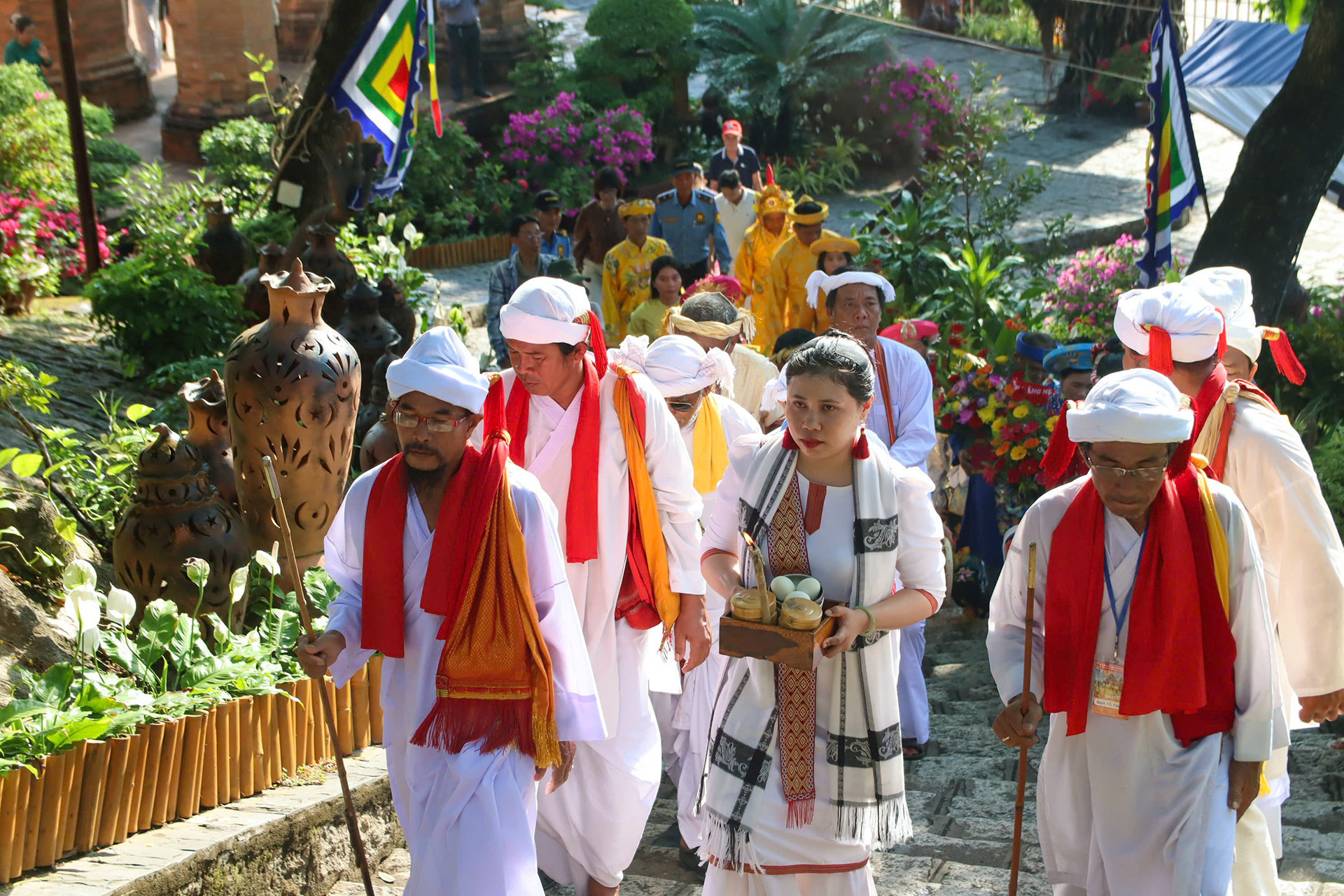
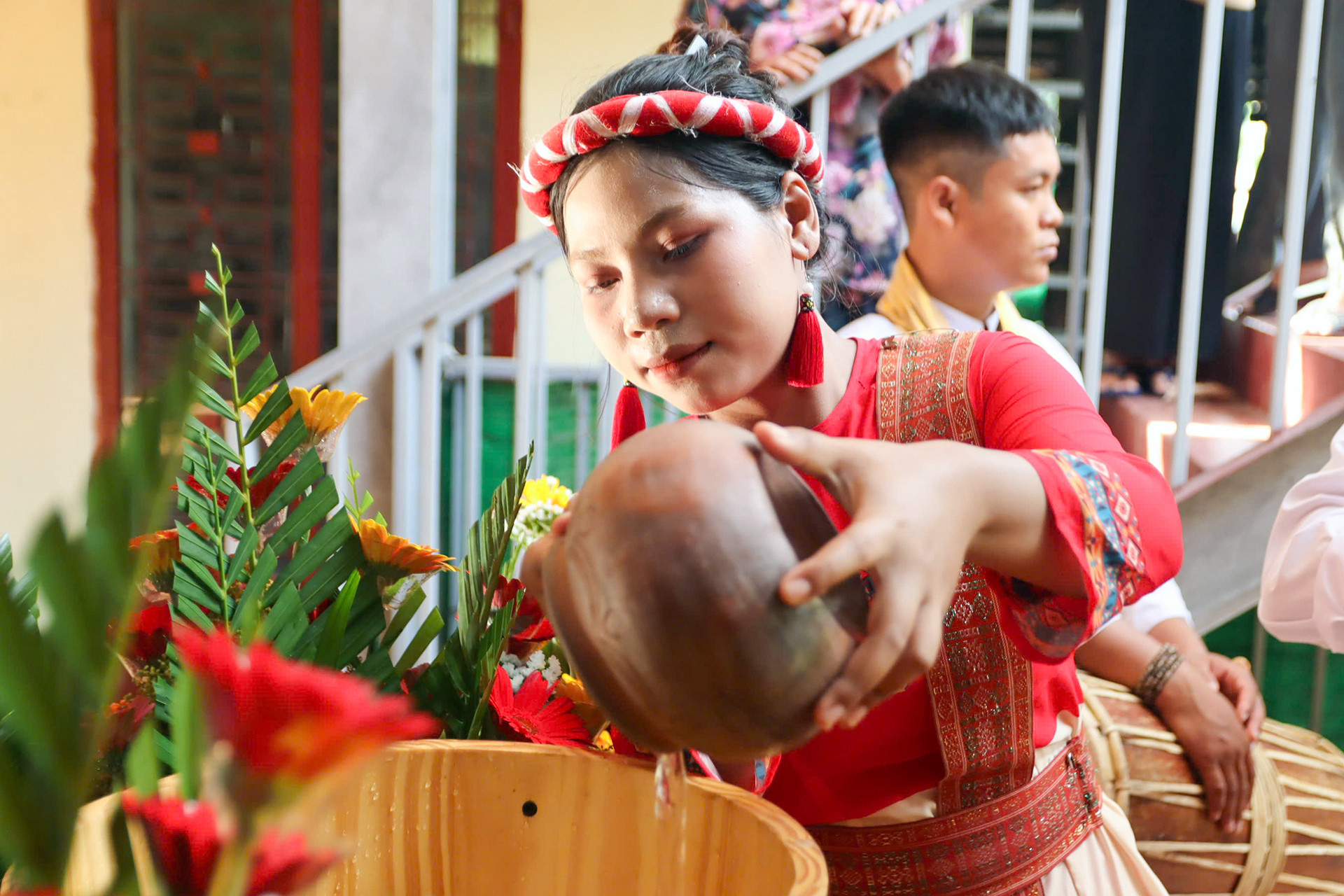
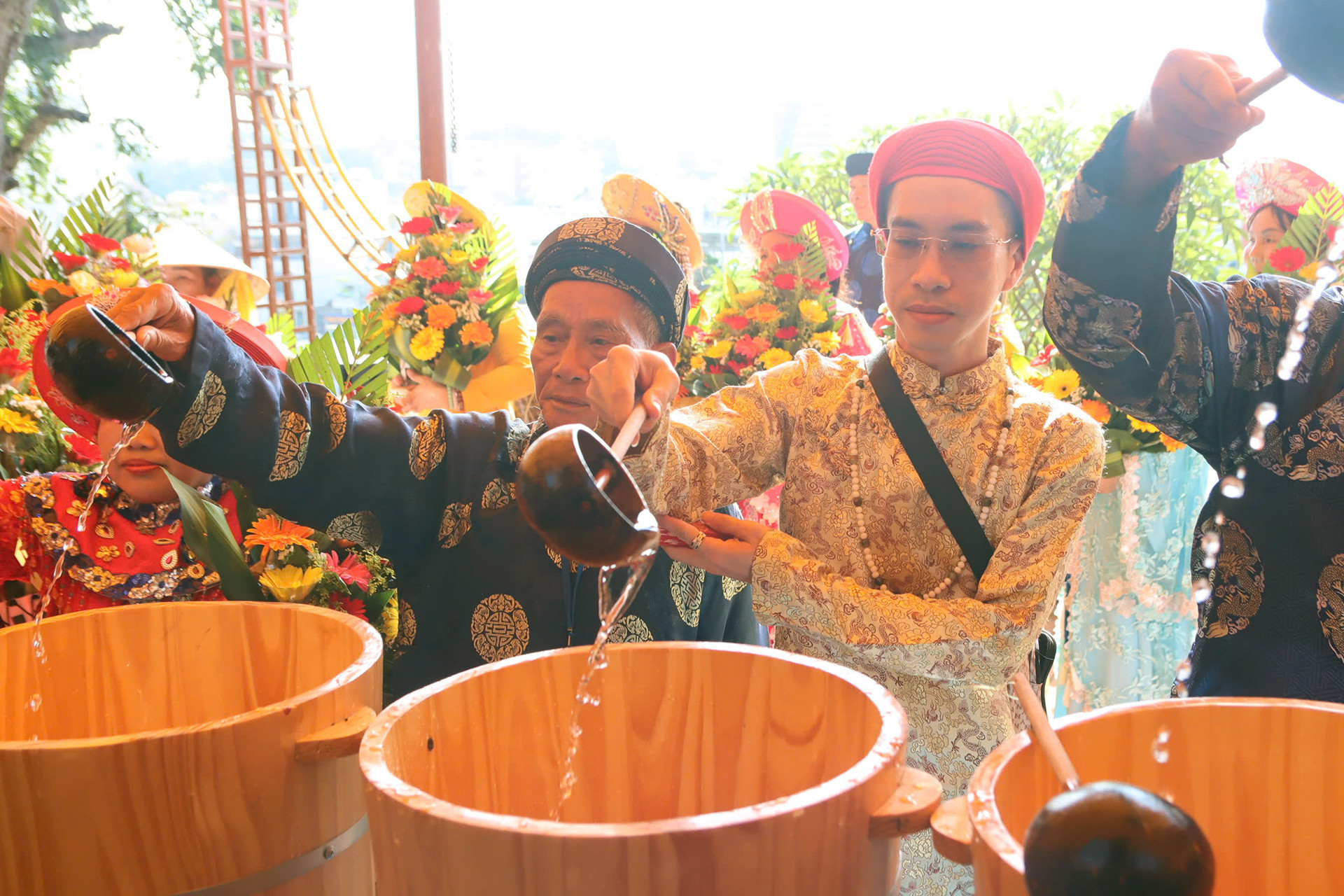
On the morning of May 5, corresponding to the 19th day of the third lunar month, the water procession - one of the most important rites of the festival - officially took place. More than 100 participants joined the procession, including representatives of the ritual committee, Cham religious dignitaries, the site management board, the provincial cultural heritage and spiritual tourism association, as well as Mother Goddess worship clubs and local residents.
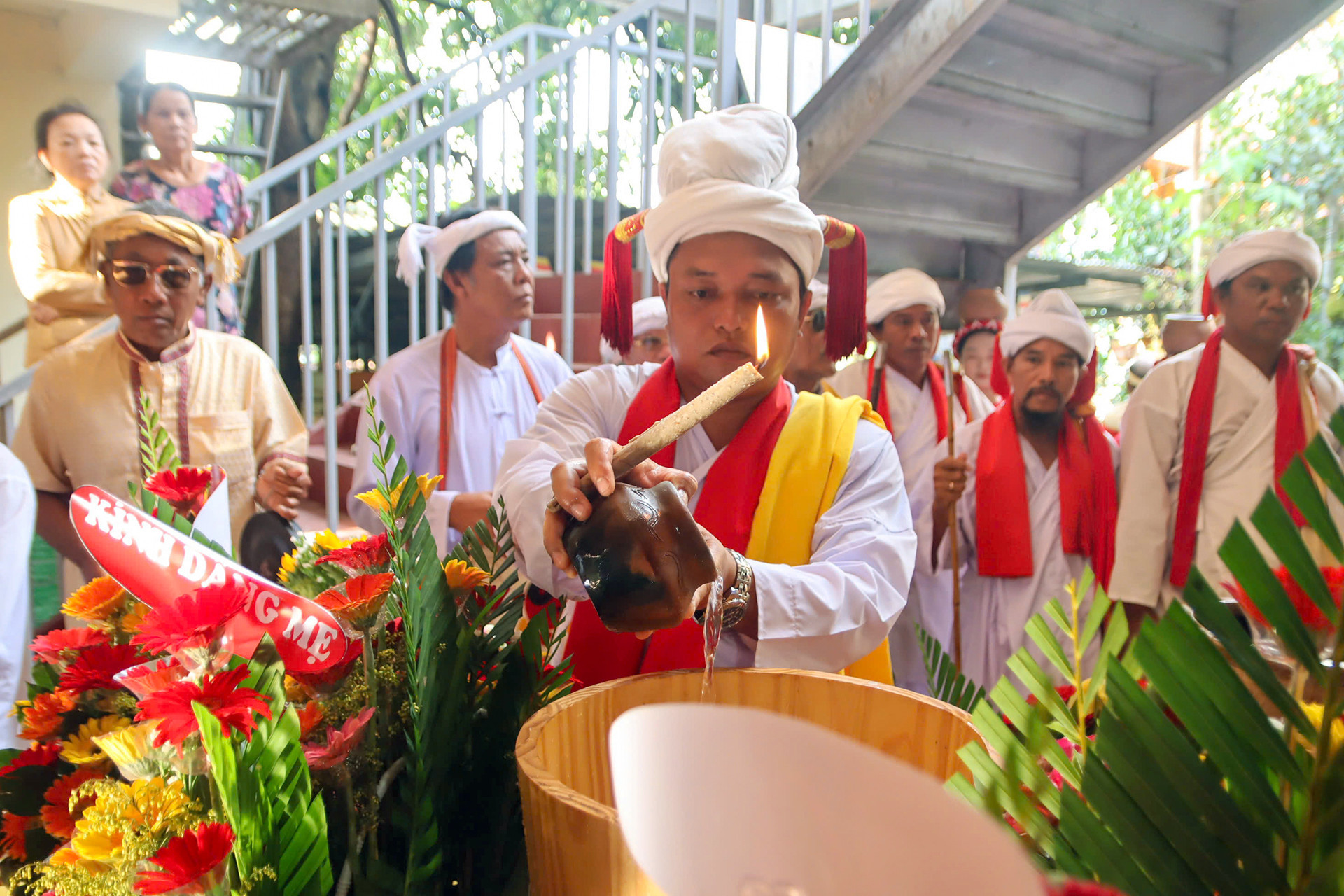
Dressed in traditional attire, the procession carried offerings and incense, accompanied by decorated floats and palanquins. The group moved from the Special National Relic site of Thap Ba Ponagar to Hai An Pagoda, also known as Hang Pagoda. There, the ritual leader offered incense and prayers to request sacred water, which was collected in Cham ceramic jars or bronze vessels, carefully covered before being brought back to the tower complex.
The water is later refined with white rice wine and fresh flowers such as yellow chrysanthemums and flamboyant blossoms for the Moc Duc ritual - the ceremonial bathing of the Goddess statue. This act symbolizes purification of the sacred space and prayers for peace and well-being for the people.
The pure water sourced from Hai An Pagoda, a site of deep spiritual significance to local residents, will also be used in the ritual of changing the Goddess’s attire, scheduled for May 6, the 20th day of the third lunar month.
Historical records note that the water procession is not only a ritual of purification and blessing, but also a profound expression of reverence for the Mother of the Land, Po Inu Nagar - also venerated as Thien Y A Na.
The Ponagar Tower Festival is held annually to honor both Thien Y A Na of the Vietnamese and Po Inu Nagar, the Mother Goddess of the Cham people. Its rituals embody a rich cultural identity and reflect the harmonious blending of spiritual traditions between the two communities.
Sharing the significance of the ceremony, Dang Tan Nien, a member of the Cham Brahman dignitaries council in the province, said that for the Cham people, the water procession at the beginning of the year is a prayer for favorable weather, prosperity and good health.
“We do not pray only for our own community, but also wish that all ethnic groups across Vietnam may enjoy warmth and prosperity,” he said.
This year, the Ponagar festival runs from May 5 to May 11 (from the 19th to the 25th day of the third lunar month) and is open to visitors free of charge. It features 12 main activities, including the water procession, the ritual of changing the Goddess’s attire, palanquin processions, requiem ceremonies, floating lanterns, prayers for national peace and prosperity, and incense offerings. The official opening ceremony will take place on the evening of May 6.
The Thap Ba Ponagar complex dates from the 8th to the 13th century. It preserves 14 royal decrees - including six issued by Nguyen dynasty emperors in honor of Thien Y A Na - along with ancient inscriptions in Sanskrit and Cham script. Beyond its architectural and historical value, the site stands as a vivid symbol of the enduring bond between the Vietnamese and Cham peoples through the sacred figure of Po Inu Nagar.
Xuan Ngoc
.svg)
