 Vietnamnet.vn

 Podcast



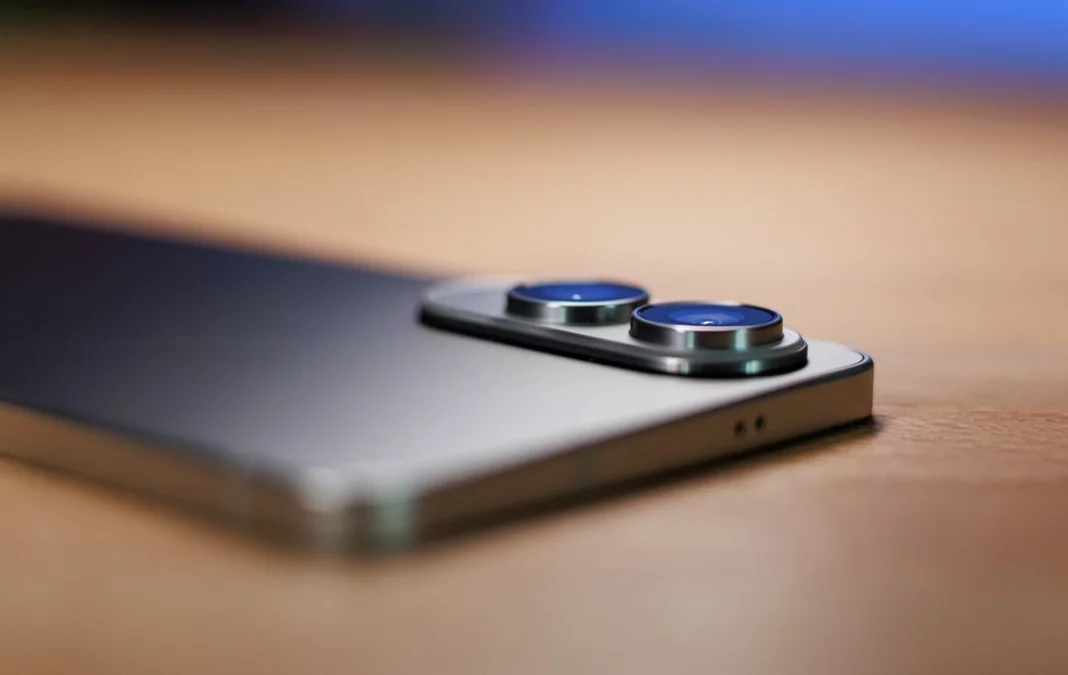
After the launch of the Galaxy S26 series, Samsung has unexpectedly confirmed the uncertain fate of two devices that once generated intense speculation: Galaxy S26 Edge and Galaxy Z TriFold 2.
Both models are currently on hold, with no final decision made regarding their commercialization.
The information was shared by Won-Joon Choi, head of Samsung’s Mobile Experience division, shedding light on the strategic calculations behind the company’s premium product portfolio.
Galaxy S26 Edge nearly shelved
For those hoping the Galaxy S26 lineup would include an ultra-thin variant to compete directly with the iPhone Air, it may be time to let go of that expectation.
According to the latest remarks, Galaxy S26 Edge, previously rumored to replace both Galaxy S25 Edge and S25 Plus, is almost certain not to debut this year.
The reason is not difficult to predict: sales of the Galaxy S25 Edge fell significantly short compared to other variants in the same lineup.
Although Choi described the sales figures only as “relatively low,” the phrasing is widely seen as indirect confirmation of earlier rumors that the ultra-slim model failed to resonate with the market as expected.
In theory, Samsung has not issued a final decision on when a successor to the S25 Edge might arrive.
However, the company’s emphasis that the product remains “under consideration” suggests that its chances of future commercialization are slim.
If Galaxy S26 Edge does not materialize, the prospect of a Galaxy S27 Edge next year to rival the next generation of iPhone Air also becomes increasingly unlikely.
This reality reflects a broader truth: while ultra-thin designs are aesthetically appealing, they pose substantial challenges in battery capacity, thermal management and production costs. Many consumers may not be willing to trade those essentials for a device that is only a few millimeters slimmer.
Expanding foldable ambitions
In contrast to the muted outlook for the Edge line, Samsung’s foldable segment appears more promising. Although no specific product was confirmed, Won-Joon Choi said the company aims to offer users “as many choices as possible” in foldable experiences.
That suggests the rumored “Galaxy Wide Fold,” a device expected to introduce a new folding format, is indeed under development.
As the world’s second-largest smartphone manufacturer, Samsung believes users increasingly seek differentiated experiences. The company wants to lead the trend rather than follow it.
Yet the future of Galaxy Z TriFold, the company’s first triple-fold concept device, is less bright.
Based on the executive’s remarks, the product remains under analysis, but its “technical complexity” and high production costs present formidable barriers. In practical terms, the likelihood of a Galaxy Z TriFold 2 arriving in the near future appears low.
Meanwhile, successors to Samsung’s established foldable lines are expected to continue. A new Galaxy Wide Fold, though not officially named, could debut alongside Galaxy Z Fold 8 and Galaxy Z Flip 8 next summer.
This signals that Samsung is not stepping away from foldables. On the contrary, it is seeking to further diversify its portfolio.
A delayed technology comes of age
Another noteworthy revelation concerns the standout feature of the Galaxy S26 Ultra: Privacy Display technology.
According to Choi, the feature was originally planned for the Galaxy S25 Ultra last year but was delayed for various reasons.
In fact, Samsung has quietly developed this technology for around three years.
That timeline helps explain why Privacy Display feels refined and mature from its very first commercial appearance.
Samsung is also considering expanding the feature to other models beyond the S26 Ultra.
However, the company has not disclosed a specific timeline or list of eligible devices. It maintains that only when the technology is deemed sufficiently “mature” will it be widely deployed.
Finally, Samsung sought to reassure users that the S Pen has not been discontinued, even though its feature set has gradually narrowed over successive generations.
The company is reportedly developing a slimmer S Pen that consumes less power and imposes “less burden” on supported devices.
In other words, Samsung envisions a stylus that is not only more compact but also enables future phones to become thinner and lighter without sacrificing excessive hardware resources.
While the concept sounds compelling, no concrete timeline has been announced for this advancement.
The remarks from Samsung’s leadership following the Galaxy S26 event suggest the company is entering a phase of strategic recalibration: willing to halt underperforming experiments like Edge, cautious about cost-intensive ideas such as TriFold, yet determined to expand foldable experiences and invest for the long term in core technologies like Privacy Display and S Pen.
In an increasingly competitive smartphone market, that flexibility may prove essential for maintaining its leading position in the years ahead.
Hai Phong
.svg)
