 Vietnamnet.vn

 Podcast



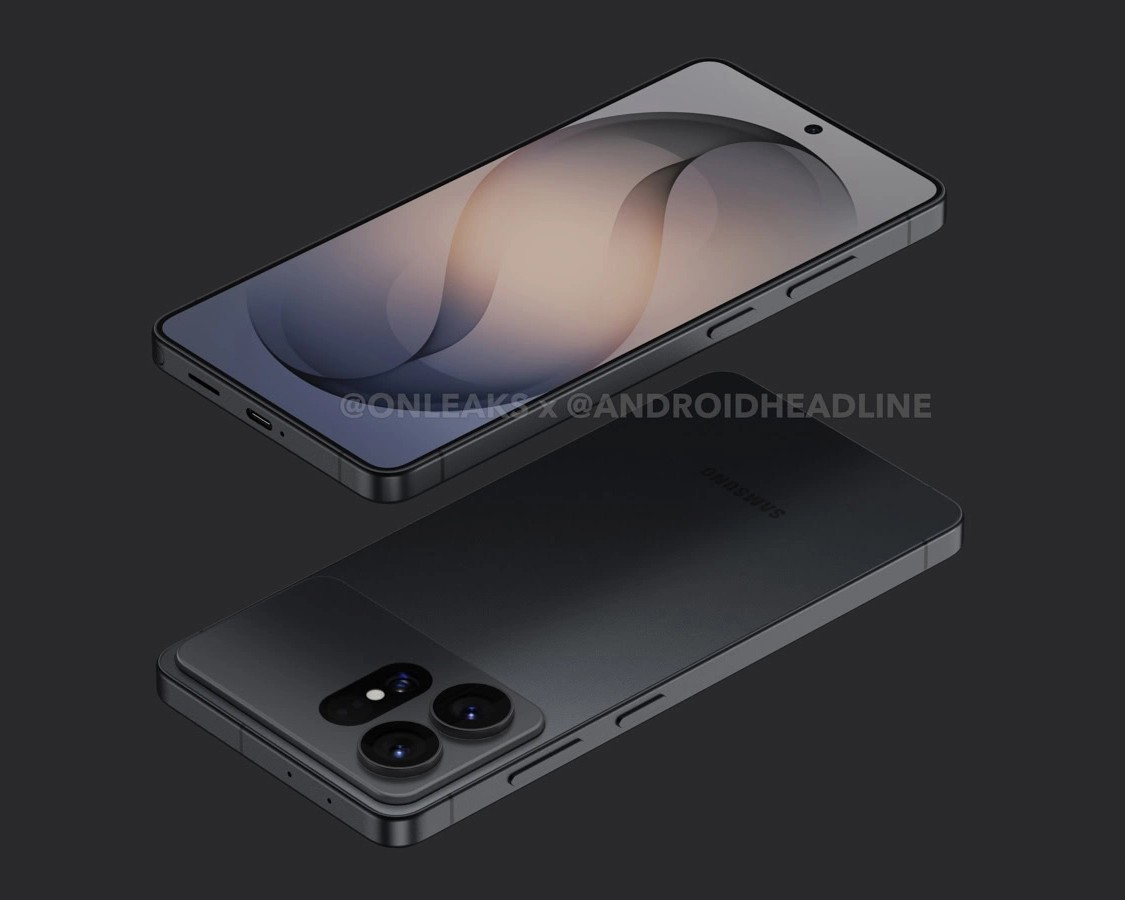
Samsung is reportedly preparing one of the most significant battery upgrades in the history of its Galaxy S Ultra lineup.
The Galaxy S27 Ultra could surpass the battery capacity of Apple's iPhone 18 Pro Max, but a larger battery may not be the only improvement in store.
Alongside the rumored increase in capacity over the Galaxy S26 Ultra, Samsung is said to be exploring a more efficient charging curve that would allow the device to maintain higher charging speeds for longer periods.
If the information proves accurate, the Galaxy S27 Ultra could reduce overall charging times without joining the race to push peak charging power to ever-higher levels.
Galaxy S27 Ultra could charge faster with a new charging curve
Samsung has maintained a 5,000mAh battery capacity across its premium Galaxy S Ultra smartphones for years.
However, recent rumors suggest the company may finally break that ceiling with the Galaxy S27 Ultra, potentially introducing a battery as large as 5,700mAh.
What makes the development particularly interesting is that Samsung may not be focusing solely on capacity.
According to tipster @WalleGalaxy on social media platform X, the Galaxy S27 Ultra could also deliver improved charging performance.
Rather than increasing maximum charging power to a new level, the phone may retain the existing 60W limit.
The real difference would lie in how the device manages power delivery throughout the charging process.
Samsung could reportedly optimize the charging curve to sustain higher power levels for a longer period during the early stages of charging.
This approach could significantly reduce the time needed to recharge the Galaxy S27 Ultra, even with its larger battery.
In other words, Samsung may be able to improve real-world charging performance without advertising a higher wattage figure.
Galaxy S27 Ultra could bring several major battery improvements
Samsung's efforts to improve charging performance are hardly surprising, given that the company continues to trail several Chinese Android manufacturers in both battery capacity and charging speed.
Chinese smartphone brands have moved quickly to introduce devices with increasingly large batteries and charging capabilities that far exceed the 60W offered by Samsung's Galaxy S Ultra models.
Against this backdrop, Samsung's reported decision to optimize the charging curve rather than simply increase peak power represents an interesting alternative strategy.
If successful, the approach could help the Galaxy S27 Ultra deliver a noticeable improvement over the charging performance of the Galaxy S26 Ultra.
Samsung's current flagship supports Super Fast Charging 3.0 at up to 60W.
According to Samsung, the Galaxy S26 Ultra can reach approximately 75% battery capacity after 30 minutes of charging.
In a detailed review of the Galaxy S26 Ultra, a tester named Victor recorded a 76% charge after 30 minutes, with the battery reaching 100% in approximately 49 minutes.
Those results were already better than the iPhone 18 Pro Max in a comparable charging test.
Apple's flagship reportedly reached around 71% after 30 minutes, before its charging speed dropped considerably. It required approximately one hour and eight minutes to reach a full charge.
A revised charging curve could therefore allow Samsung to build on its existing charging performance while accommodating an even larger battery.
Could Samsung follow Apple's battery technology?
Another important question is which battery technology Samsung might use to increase capacity in the Galaxy S27 Ultra.
Apple reportedly adopted metal-can battery technology in its two iPhone 18 Pro models, an approach covered by a patent the company received in 2020 and previously used in the Apple Watch Series 5.
This technology may be one of the factors allowing the iPhone 18 Pro models to accommodate larger batteries than their iPhone 17 Pro predecessors.
However, improved battery life is not simply a matter of fitting a larger cell inside the device.
Greater energy efficiency from newer processors also plays an important role in extending usage time.
Even so, significant differences remain between the battery technologies being pursued by Apple, Samsung and Chinese smartphone manufacturers.
Chinese companies are increasingly researching ways to combine metal-can battery designs with silicon-carbon technology, which has already been adopted in several premium Android smartphones.
If successful, this approach could pave the way for smartphones equipped with batteries exceeding 10,000mAh.
Such a breakthrough could eventually surpass even the capacities of devices that already stand out, including the Xiaomi 18 Pro Max with its reported 8,500mAh battery.
Will a 5,700mAh battery be enough to satisfy users?
The Galaxy S27 Ultra is rumored to deliver a battery capacity increase of approximately 14% compared with the Galaxy S26 Ultra.
Yet even that improvement may not be enough to satisfy some smartphone enthusiasts.
Discussions on Reddit suggest that while some users welcome Samsung's reported decision to increase battery capacity, many would prefer the company to take a more ambitious step.
In particular, they want Samsung to adopt silicon-carbon battery technology and introduce substantially larger batteries capable of competing more directly with Chinese Ultra-branded flagship smartphones.
These reactions reflect a broader shift in the premium smartphone market.
Battery competition is gradually moving beyond incremental increases of a few hundred milliamp-hours toward a much larger contest involving new battery technologies.
A 10,000mAh silicon-carbon battery may sound extremely appealing, but enormous capacity does not necessarily guarantee a better ownership experience throughout a device's lifespan.
What matters just as much is how effectively a battery retains its performance after two or three years of everyday use.
A smartphone that delivers slightly more than a full day of battery life while maintaining stable performance and battery health over several years may ultimately prove more useful than a device with a 10,000mAh battery that deteriorates rapidly.
This is an area where Samsung has maintained a relatively strong reputation over the years.
If the current rumors turn out to be accurate, the Galaxy S27 Ultra will therefore need to demonstrate more than just a larger battery.
It will also have to prove that it can charge faster, last longer between charges and maintain reliable battery health over time.
Hai Phong
.svg)
