 Vietnamnet.vn

 Podcast



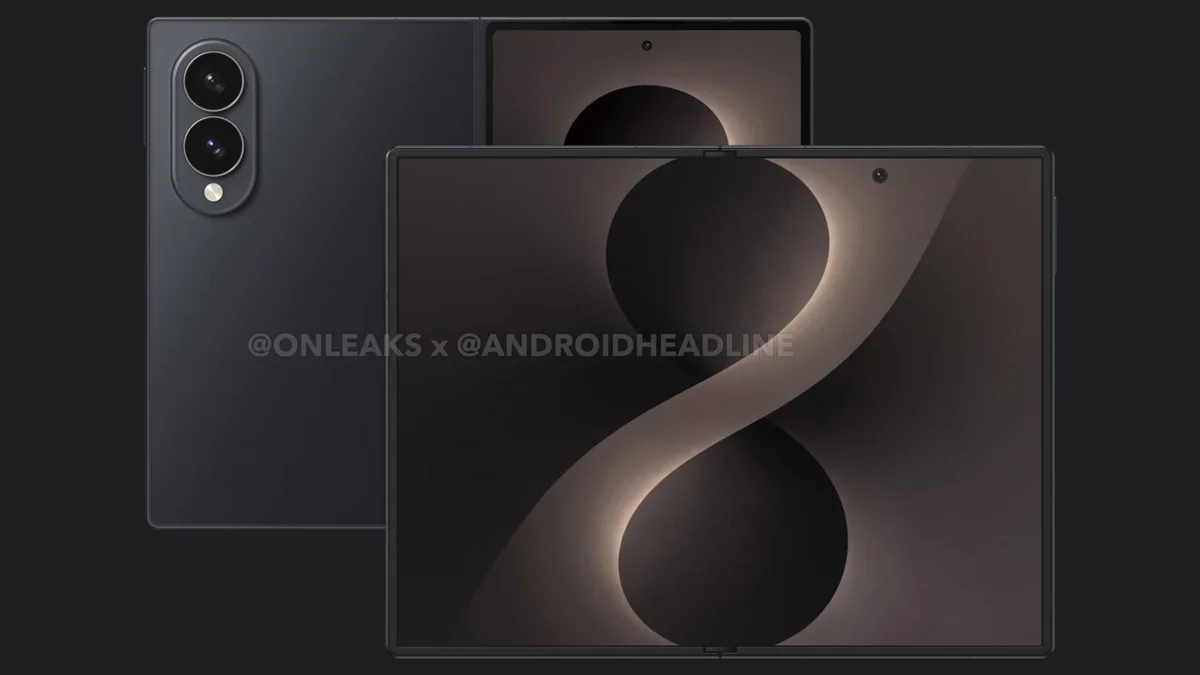
Fresh high-quality renders have surfaced, offering a compelling glimpse into what could be Samsung’s most unconventional foldable smartphone to date - a device widely referred to as the Galaxy Z Fold 8 Wide, expected to debut in the summer of 2026.
The images, reportedly based on factory CAD data, suggest a design direction that departs significantly from previous Galaxy Fold models. While the official name remains unconfirmed, the leak is considered highly credible, though minor details such as bezel thickness may still change before launch.
A direct response to Apple’s foldable ambitions
Rumors indicate that Apple is preparing to unveil its first foldable iPhone - often dubbed the “iPhone Fold” or “iPhone Ultra” - with a form factor resembling a compact tablet like the iPad mini, expected alongside the iPhone 18 Pro series this September.
Samsung appears unwilling to concede ground. Following its early move with the ultra-thin Galaxy S25 Edge ahead of Apple’s rumored iPhone Air, the company is now preparing a book-style foldable that closely aligns with Apple’s anticipated design language.
The Galaxy Z Fold 8 Wide is rumored to feature a 7.6-inch main display with a shorter, wider aspect ratio, paired with a 5.4-inch outer screen - noticeably smaller than the 8-inch inner and 6.5-inch outer displays on the Galaxy Z Fold 7, and also below expectations for the standard Galaxy Z Fold 8.
A new aspect ratio, a different experience
The most striking shift lies in the display proportions. Reports suggest the inner screen adopts a near 4:3 ratio, offering a more tablet-like experience that enhances video playback and multitasking. This change positions the device somewhere between a traditional smartphone and a compact tablet.
However, trade-offs are evident. The Galaxy Z Fold 8 Wide is expected to include only two rear cameras, compared to a likely triple-camera setup on the standard Galaxy Z Fold 8. This could put the “Wide” variant at a disadvantage in photography.
That said, the iPhone Fold is also rumored to feature a dual-camera system, potentially leveling the playing field.
Battery capacity may favor Apple, with expectations of up to 5,500 mAh, compared to around 5,000 mAh for Samsung’s device. In contrast, Samsung could maintain an edge in charging speed, with support for 45W fast charging - a notable figure in the foldable segment.
Physically, the device is said to measure 123.9 x 161.4 x 4.9 mm when unfolded, and 123.9 x 82.2 x 9.8 mm when folded - relatively compact dimensions that could appeal to users if hinge durability is well optimized.
Pricing may determine its fate
Ultimately, pricing could prove decisive.
Samsung’s earlier Galaxy S25 Edge launched at US$1,100, and many analysts believe a lower price might have broadened its appeal. That lesson could weigh heavily on the Galaxy Z Fold 8 lineup.
With the standard Fold 8 likely offering stronger hardware - such as an additional camera or larger battery - Samsung may need to carefully differentiate pricing between the two variants.
Meanwhile, the price of Apple’s foldable remains unknown. However, analysts expect it to sell in large volumes regardless, driven by the company’s strong brand appeal.
For Samsung, positioning the Galaxy Z Fold 8 Wide at a more accessible price point may be the most viable strategy to attract users in an increasingly competitive foldable smartphone market.
Hai Phong
.svg)
