 Vietnamnet.vn

 Podcast



However, turning this potential into reality requires stronger policies and greater use of science and technology.
Vietnam is one of the world’s biodiversity-rich countries, with more than 5,100 medicinal plant and fungal species, along with hundreds of animal and mineral species used in traditional medicine. From physician Tue Tinh’s principle of using local herbs to treat local people to the contributions of Hai Thuong Lan Ong Le Huu Tracn, one of the most prominent physicians in the history of Vietnamese traditional medicine, Vietnam has built a rich body of traditional medical knowledge.
Over the years, gene conservation networks in different ecological regions have preserved 964 genetic resources belonging to 642 medicinal plant species, including valuable species such as Ngoc Linh ginseng, Lai Chau ginseng, red fleeceflower root and golden camellia.
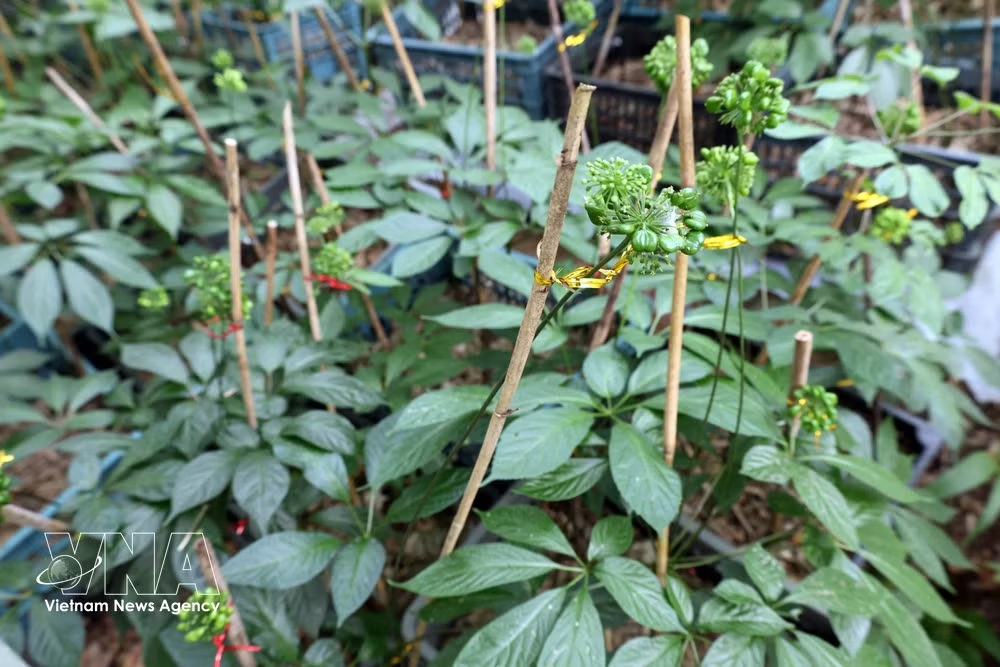
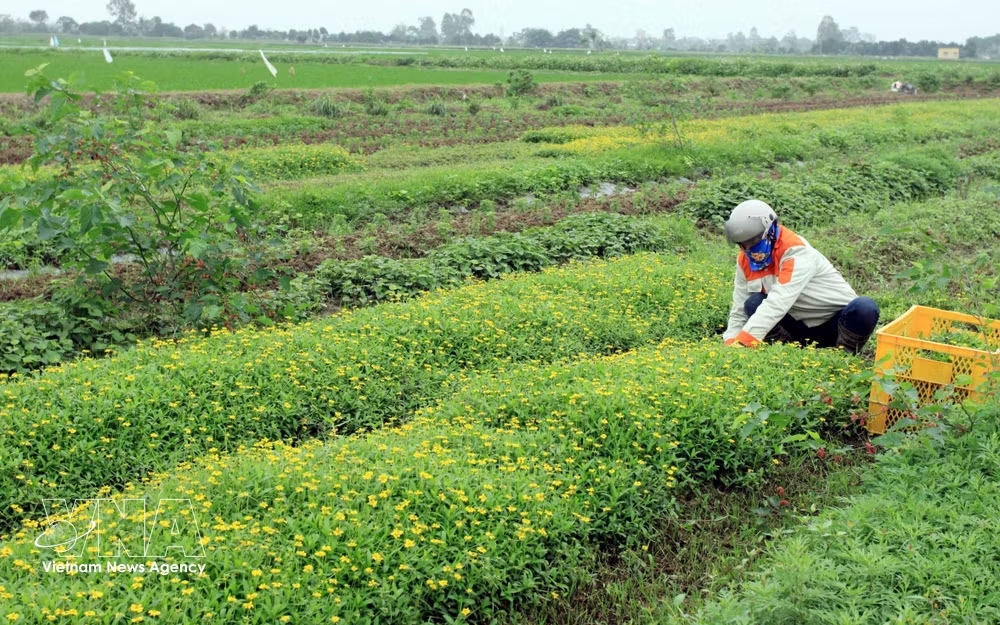
Research into restoration and propagation has also expanded. Around 70 species or groups of species have the potential for exploitation, with estimated reserves of 18,372 tonnes a year. The total area devoted to medicinal plants is estimated at 357,178ha, with about 150 species being cultivated.
However, only 58 medicinal plant species are currently cultivated under GACP-WHO standards, covering about 375ha with expected output of 1,400 tonnes a year. Most medicinal plants are still grown, harvested and preliminarily processed using traditional methods.
Dr Nguyen Minh Ngoc, Director of the National Institute of Medicinal Materials under the Ministry of Health, said medicinal raw materials for pharmaceutical production must meet strict requirements for chemical composition, active ingredients, purity and safety, in addition to being correctly identified by species and plant part.
The highest value lies in research into active ingredients and mechanisms of action, extraction, purification, standardisation and formulation, as well as scientific evidence on product efficacy and safety.
Vietnam has many medicinal plants but has yet to produce enough high-quality medicines from them, Ngoc said. High-value stages such as advanced extraction technology, modern formulation, scientific evidence, and intellectual property remain limited.
The application of GACP-WHO, Good Manufacturing Practice (GMP), Good Laboratory Practice (GLP) and Good Storage Practice (GSP) standards is also not yet consistent across the value chain. Research capacity, innovation and the commercialisation of research results remain limited, with some scientific projects stopping at publications or pilot models.
Nguyen Viet Hung, General Director of Gia Dinh Medicinal Materials Co., Ltd., said one reason was that the medicinal plant industry had not been fully recognised as part of the digital, green and circular economies. Medicinal plants are often viewed mainly as traditional remedies, while globally the sector is increasingly linked with biotechnology, pharmaceuticals, functional foods, smart agriculture, and the healthcare market.
Politburo Resolution No. 57-NQ/TW identifies science, technology, innovation, and digital transformation as breakthrough drivers for sustainable national development. Together with Resolutions No. 66-NQ/TW on reforming law-building and enforcement to meet the requirements of national development in the new era and Resolution 68-NQ/TW on the development of the private economic sector, Resolution No. 57-NQ/TW provides an important institutional foundation for knowledge-intensive sectors, including the medicinal plant industry, to shift from resources-based to technology- and innovation-driven development.
Ngoc said science and technology should be applied throughout the value chain, from genetic resources, varieties and cultivation areas to extraction, formulation, testing and pharmaceutical production.
He also called for the development of a national programme on medicinal plants and herbal medicines, linked with national strategies on science, technology, innovation and digital transformation./. VNA
.svg)
