 Vietnamnet.vn

 Podcast


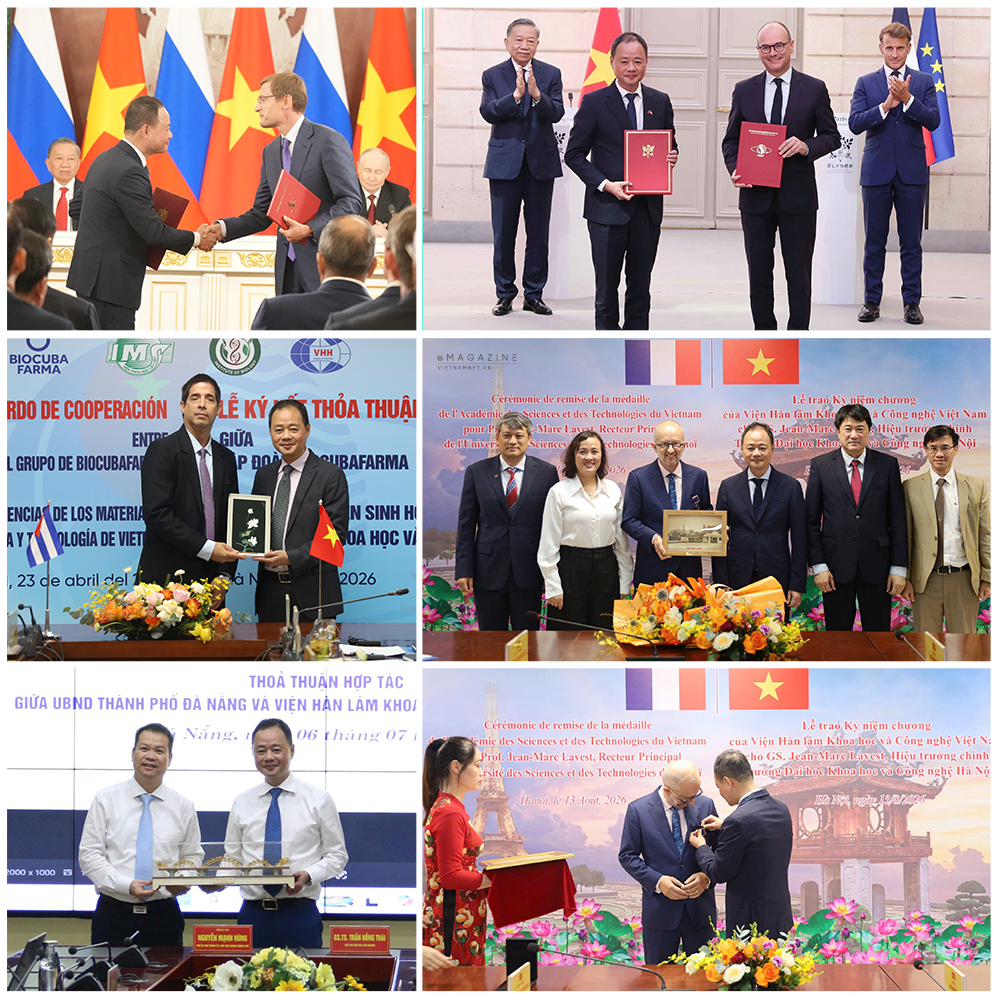
Prof. Tran Hong Thai, President of the Vietnam Academy of Science and Technology, said that, to attract and develop talents, Vietnam needs to create a strong research environment, assign major national tasks, and expand global knowledge connections.
Looking back at the journey from Prof. Tran Dai Nghia returning home in 1946 to today's generation of scientists, what serves as the common thread connecting Vietnamese intellectuals to the country?
I believe the common thread is the spirit of scientific dedication to socio-economic development, defense, security, and national protection.
Prof. Nghia was trained in France and returned following President Ho Chi Minh's call when the country faced extreme hardships. Working with poor, outdated research infrastructure, he and Vietnamese scientists developed practical products to serve the resistance and protect the nation.
Succeeding him were generations of scientists and scientific leaders such as Prof. Nguyen Van Hieu, Prof. Dang Vu Minh, and Prof. Chau Van Minh, along with tens of thousands of well-trained personnel educated in former socialist countries and around the world. They helped build the foundation for Vietnamese science and technology.
As General Secretary and President To Lam emphasized, the Academy stands as an essential intellectual pillar of the nation.
Today, with science, technology, innovation, and digital transformation designated as primary drivers of national development, the Academy's role becomes increasingly distinct. We must continue preserving the legacy of prior generations while integrating scientific advances into every industry and sector - enhancing productivity and accelerating the nation's growth.
Predecessors like Prof. Tran Dai Nghia and Prof. Nguyen Van Hieu returned under very different circumstances. What drives a scientist to dedicate the most crucial part of their career to the homeland?
It is often said that science knows no borders, but scientists have a homeland. I believe any scientist born in Vietnam feels proud to contribute to their home country.
Scientists possess a vital quality: a passion for research, discovery, and innovation. Dedicating scientific works and products to the country, serving society, and benefiting the community bring immense fulfillment.
Patriotism, love for the homeland, and creative passion form the foundation inspiring generations of Vietnamese intellectuals to contribute.
Reflecting on the story of Prof. Phung Ho Hai, who had opportunities to advance his career abroad but chose to return, how do you view talent attraction in Vietnam today? What determines whether a scientist not only returns but stays long term?
The primary factor remains patriotism, affection, and gratitude toward the homeland and environment that nurtured and trained them.
However, we must acknowledge that at times, domestic research conditions, infrastructure, and working environments were insufficient for scientists to fully realize their potential. Consequently, some chose to work abroad.
That does not mean they make no contribution to Vietnam. Many Vietnamese scientists have established international reputations and achieved globally recognized milestones, enhancing the standing and stature of Vietnamese science.
As Resolution 57 takes effect, Party, State, and Government leaders are placing significant emphasis on developing science, technology, innovation, and digital transformation. Vietnam now possesses conditions to invest more heavily in research infrastructure, build quality working environments, and set major challenges for scientists to solve.
With a favorable research environment, substantial tasks, and opportunities to demonstrate capability, talents will gain added motivation to return, commit, and contribute.
During the 500-day Campaign, the State assigned the task of identifying fallen soldiers' remains through DNA technology, involving an immense workload under a tight deadline. How did the Academy approach this special task?
It represents a great honor. First and foremost, this task holds major scientific significance with numerous new areas to research. For instance, current technology allows DNA analysis beyond maternal inheritance, expanding comparison capabilities, enhancing precision, and resolving complex cases.
Yet scientific significance is only one part. What matters most is honoring those who served the nation.
Some families have waited decades to find their loved ones. We consistently strive to shorten processing times and create opportunities for families to identify the resting places of fallen heroes.
It is a duty toward those who served the country and an expression of gratitude to those who sacrificed for national independence and freedom.
This sacred purpose drives Academy scientists to actively and meaningfully contribute to the mission.
to be continued...
Thai An - Van Nga - Nguyen Duc

