 Vietnamnet.vn

 Podcast


One forestry engineer hopes to turn these mysterious encounters into scientific evidence while preserving the forest's rich cultural heritage.
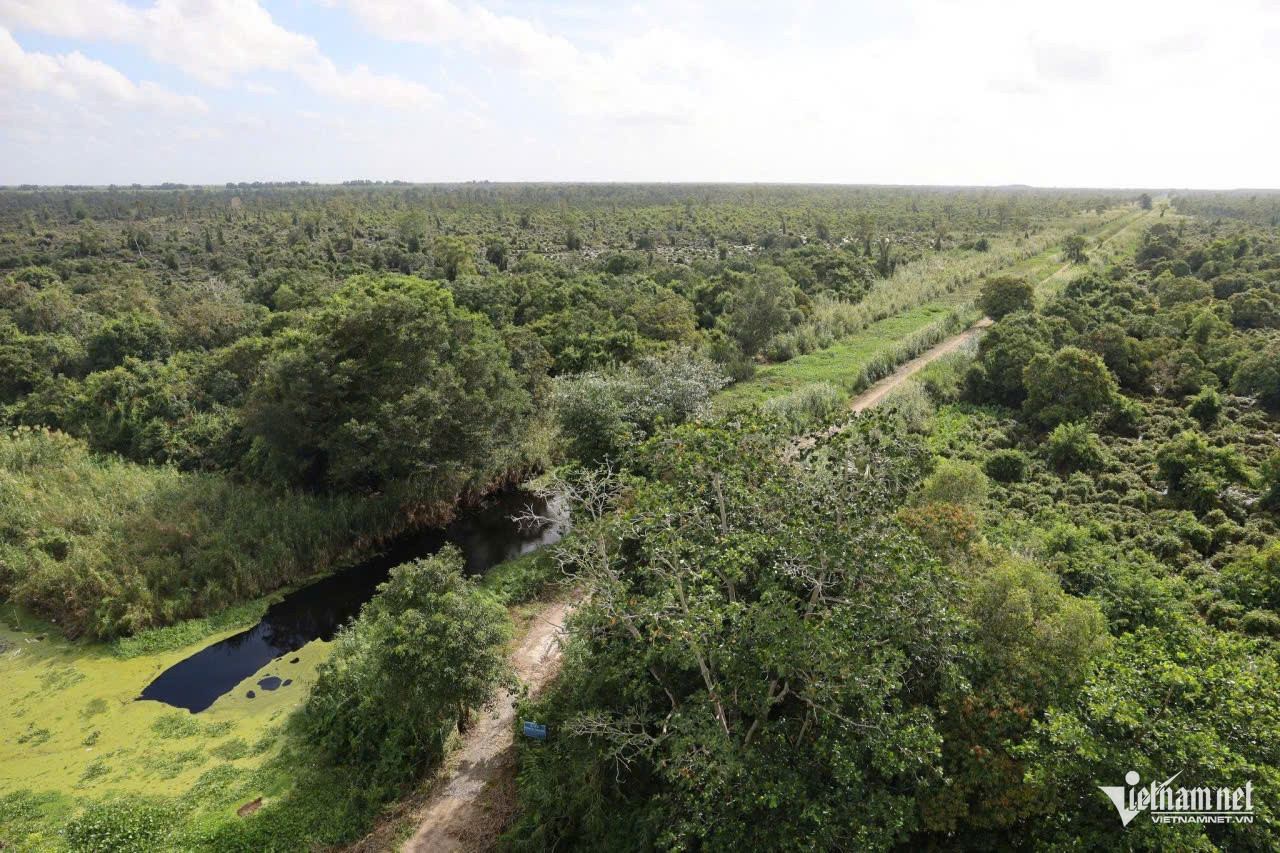
In search of U Minh Ha's mysterious 'forest god'
Beneath the dense canopy of U Minh Ha National Park in Ca Mau Province, stories of enormous snakes known locally as ran ho may have long circulated among forest workers.
Passed down through generations by people who claim to have encountered these creatures, the stories have gradually taken on legendary proportions. The giant snakes have even earned a name that reflects both fear and reverence: the "forest god."
Nguyen Tan Truyen, a forestry engineer and deputy head of the park's Forest Management and Protection Division, said crocodiles and snakes have traditionally been among the greatest dangers feared by those venturing into the forest.
He believes that near-fatal encounters with exceptionally large snakes may have inspired people to regard them as supernatural guardians of the forest, a way of expressing their awe, beliefs and respect for nature.
For Truyen, however, these oral accounts may also point to a scientific mystery that has yet to be explained.
For more than a decade, he has quietly collected and documented stories from forest workers, rangers and others who claim to have seen the giant snakes.
One account dates back several years and involves Le Thanh Binh, an enthusiastic fisherman from Ca Mau.
One morning, Binh and a friend entered the area around Forest Protection Post 23-100 in U Minh Ha National Park to go fishing.
Shortly after 10 a.m., noticing birds suddenly scattering in alarm, Binh turned his motorbike around and headed back toward their meeting point.
Along the way, he spotted what appeared to be a massive, grayish log lying across the road, thicker than the trunk of a banana tree.
As he approached, the supposed log suddenly moved, blocking half the road.
Terrified, Binh shouted a warning to his companions before turning his motorbike around and fleeing home.
Truyen has gathered accounts like this into a personal collection of records documenting the mysterious giant snakes of U Minh Ha.
He said numerous people, including forest workers and rangers, have reported encounters with unusually large snakes.
One particularly memorable incident occurred during the dry season in early 2014.
Ngo Van Khang, a forest protection officer in U Minh Ha, returned to the ranger station and told Truyen and his colleagues that he had just seen an enormous snake, as thick as a streetlight pole.
"We immediately got on our motorbikes and followed Khang to the exact location where he had seen the snake, deep inside a strictly protected section of the melaleuca forest," Truyen recalled. "But the snake had already disappeared. What remained was a fresh trail left by a massive body, with reeds broken and pushed aside on both sides."
U Minh Ha National Park is one of the Mekong Delta's few remaining protected wetland areas. UNESCO has recognized it as a core zone of the Mui Ca Mau World Biosphere Reserve.
Its defining landscape is a vast ecosystem of melaleuca forests growing in waterlogged, acidic conditions over peat soil, providing habitats for numerous rare and scientifically valuable animal species.
According to Truyen, after years of severe dry-season conditions and demanding forest fire prevention efforts, park rangers have no longer recorded encounters with giant snakes.
Nevertheless, his belief that the legendary "forest god" exists somewhere in U Minh Ha remains strong.
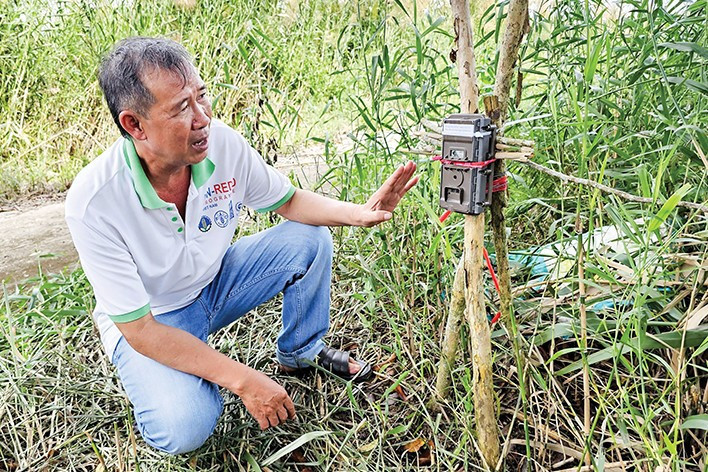
Hidden along the forest edges are small electronic devices that Truyen affectionately calls his "treasures."
Dozens of infrared cameras, capable of recording black-and-white footage at night, have been installed alongside motion-triggered cameras that can capture multiple images in rapid succession.
His objective is straightforward: with enough patience and a little luck, he and his colleagues may one day capture a photograph or video of the elusive creature.
Such evidence could transform generations of oral accounts into verifiable material for scientific research.
Following the legacy of Bac Ba Phi beneath the melaleuca canopy
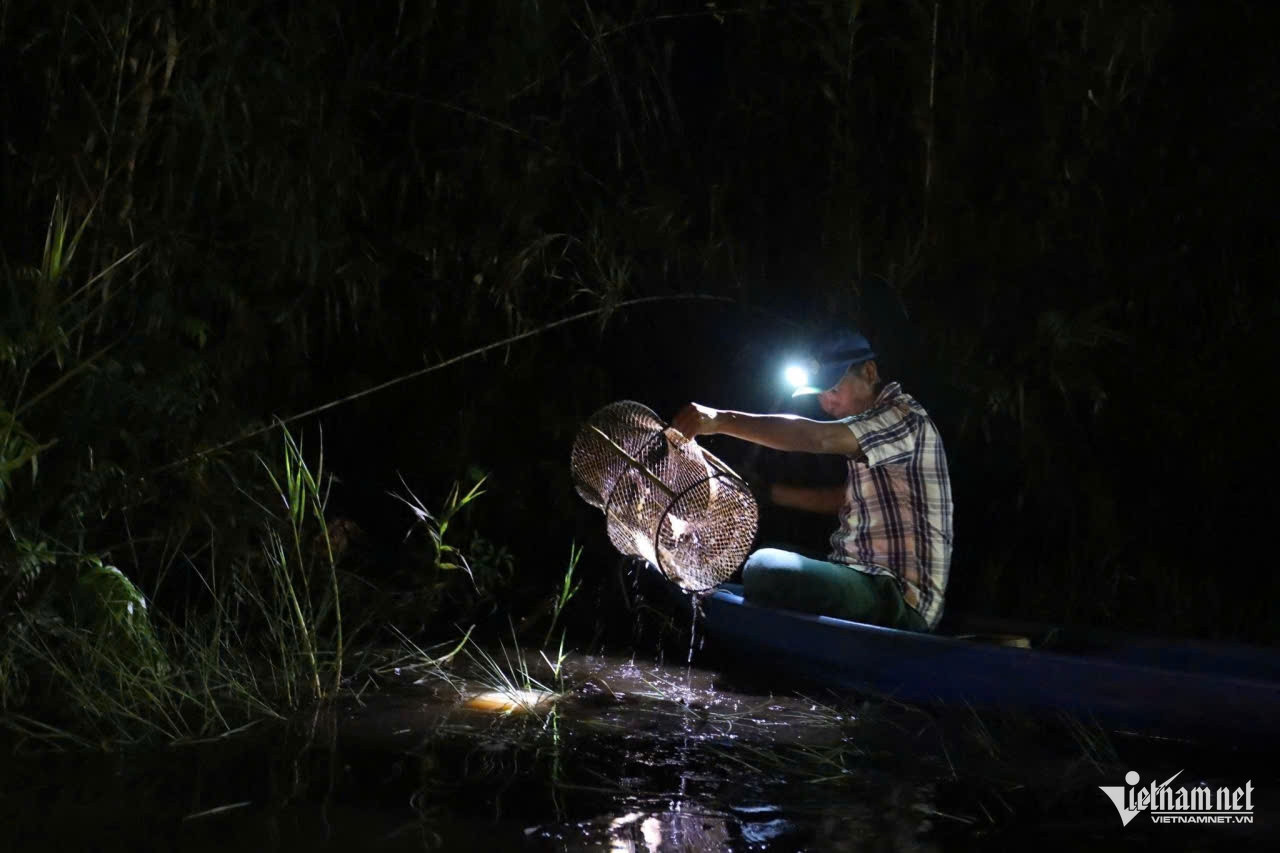
As night falls, U Minh Ha settles into an extraordinary stillness.
A small motorboat glides through the narrow canals winding across the national park, where local residents continue to catch fish using traditional bamboo traps known as lop.
The technique has long been part of everyday life in Vietnam's Mekong Delta, where waterways and wetlands provide both food and livelihoods.
Snakehead fish, climbing perch and catfish are among the freshwater species that can be caught along the journey.
Truyen explained that these are naturally occurring fish species and that the traditional, manual fishing methods do not harm the surrounding ecosystem.
Ca Mau Province plans to pilot a tourism experience called "Legendary U Minh Night" toward the end of 2026.
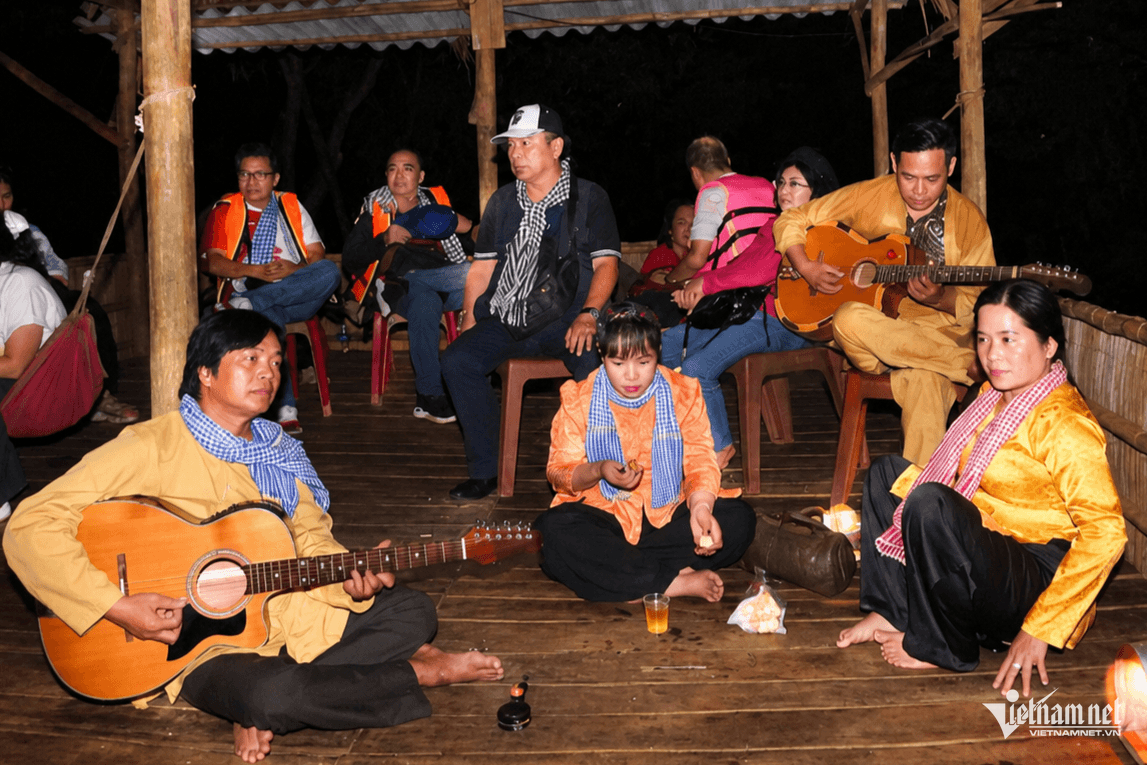
The initiative is expected to offer visitors a chance to explore the melaleuca forest after dark, listen to traditional tales about Bac Ba Phi, enjoy don ca tai tu (southern Vietnamese traditional chamber music) performed aboard boats, observe wildlife and sample local cuisine.
Local authorities hope to turn the region's distinctive cultural traditions into memorable visitor experiences while generating additional income for residents.
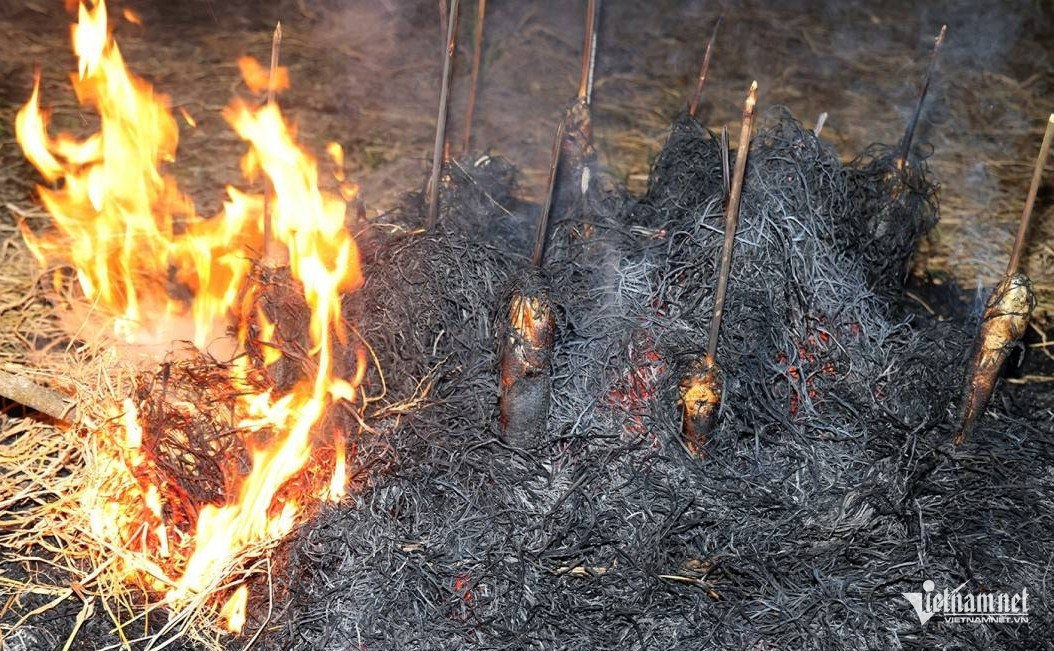
Around a campfire, stories about Bac Ba Phi come to life once again.
A night in the forest, a meal of freshly caught fish grilled over an open fire, and seemingly simple stories offer a different way to experience U Minh Ha.
Bac Ba Phi is a legendary figure in southern Vietnamese folklore, celebrated for his humorous, often exaggerated tales of life in the Mekong Delta.
Yet recalling his stories is about more than revisiting familiar folk humor.
Behind the laughter lies the memory of generations who lived off the forest, depended on its resources and learned to survive in a landscape that could be both generous and unforgiving.
Bac Ba Phi has become part of that collective memory, transformed over time into a lasting element of local cultural identity.
Truyen believes forest conservation cannot be separated from preserving and promoting the cultural heritage associated with the landscape.
For ecotourism to develop sustainably, he said, it must be grounded in biodiversity protection and respect for indigenous and local cultural traditions.
That includes preserving stories about the people, animals and plants that have shaped the region's identity.
Nighttime boat excursions, traditional wild-honey harvesting, meals prepared from natural forest products and storytelling sessions about Bac Ba Phi are therefore more than activities designed to entertain tourists.
They offer a window into a landscape that has sustained generations of communities living alongside the forests of U Minh Ha.
Perhaps one day, one of Truyen's camera traps will finally capture an image of the enormous snake described by generations of forest workers.
Or perhaps the mysterious "forest god" will continue to remain hidden in the deepest reaches of the forest.
What is certain is that every story preserved today adds another piece to U Minh Ha's collective memory.
Following the traces left by earlier generations through this vast wilderness ultimately becomes a journey to rediscover the forest's soul.
Yet the forest itself faces serious environmental challenges.
According to preliminary assessments by U Minh Ha National Park, more than 300 hectares of forest have suffered severe degradation, while approximately another 400 hectares are showing signs of deterioration.
The Ca Mau Department of Agriculture and Environment said it has proposed that the provincial People's Committee approve a scientific research initiative involving U Minh Ha National Park, Ho Chi Minh City University of Agriculture and Forestry, and a sponsoring organization.
The proposed project would focus on conserving and restoring the national park's wetland ecosystems, helping protect the natural environment that has inspired so many generations of stories.
Tao Dat

