 Vietnamnet.vn

 Podcast



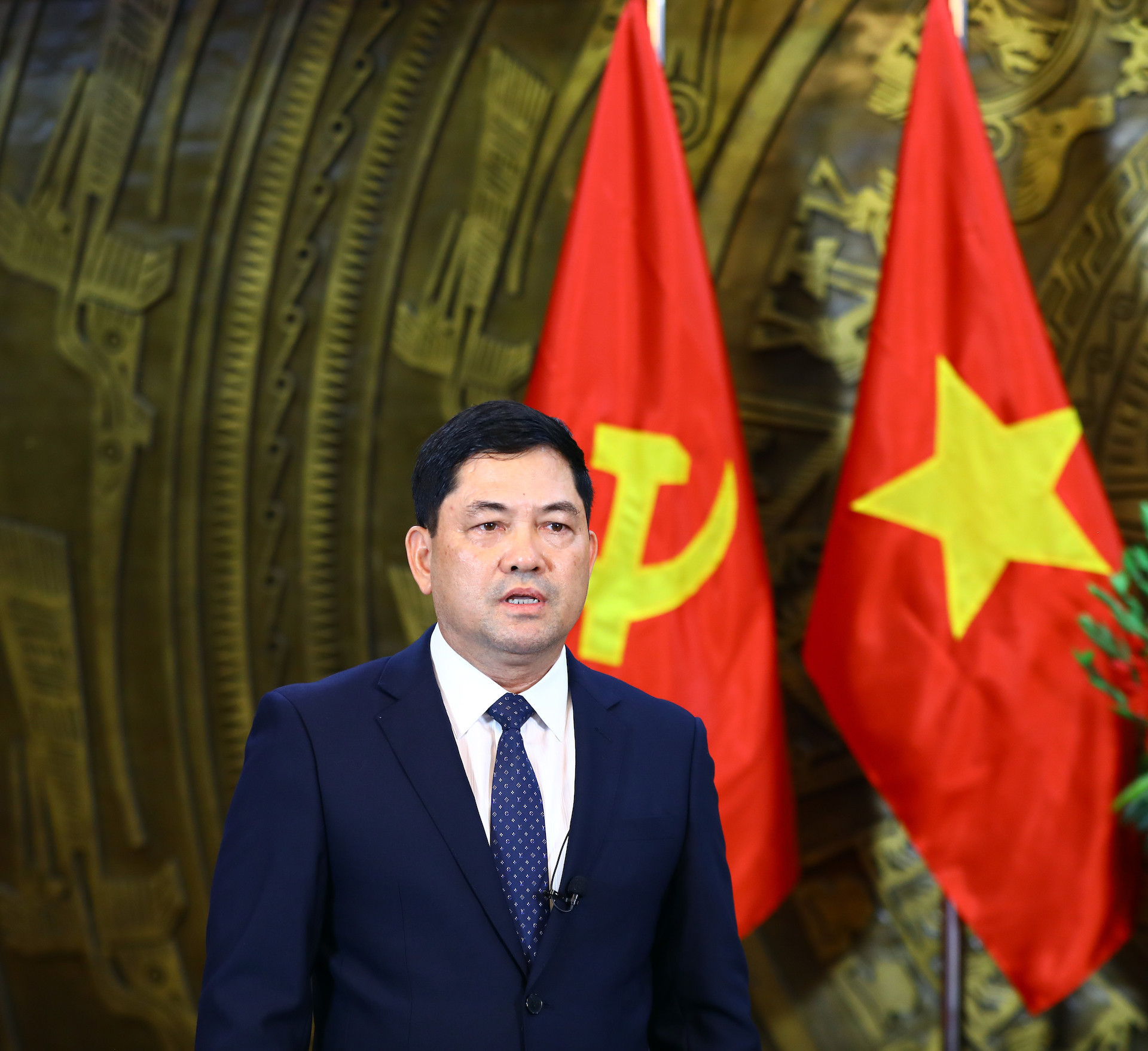
On the threshold of the 14th National Party Congress, as the entire Party, people, and army focus on preparing major orientations for the country's new development period, establishing a vision, goals, and development roadmap for each locality is of particular importance.
With an aspiration for breakthrough, Bac Ninh Province aims to become a centrally-run city before 2030. This is not merely an administrative shift but a comprehensive process of elevating the growth model, governance capacity, and people's quality of life.
Provincial Party Secretary Nguyen Hong Thai gave an interview to VietNamNet on the vision, goals, and major orientations to build a Bac Ninh that is fast-growing, sustainable, modern, and rich in identity.
After merger, Bac Ninh possesses larger space and resources
The 14th Party Congress establishes new development orientations for the country in the next phase. Within that overall context, what vision has Bac Ninh defined to develop rapidly and sustainably?
Following the merger, Bac Ninh Province has entered a new development stage with expanded space, greater potential, larger resources, and higher governance requirements. The province's consistent vision is to build a Bac Ninh that develops rapidly yet sustainably; modern yet rich in identity; where economic growth is closely linked with social progress, environmental protection, and improving citizens' lives.
The province identifies science-technology, innovation, and digital transformation as key drivers; places people and businesses at the center; treats Kinh Bac culture as the spiritual foundation and intrinsic strength; and uses the discipline, order, and effectiveness of the political system as the guarantee.
This is the path for Bac Ninh to move fast in speed, solid in foundation, and sustainable in the long term, ensuring it has sufficient capacity and conditions to become a centrally-run city before 2030.
What do you think are the growth drivers continue to be promoted, and what will be decisive for the province to maintain high growth while shifting strongly toward depth, quality, and sustainability?
Bac Ninh continues to maintain high and stable growth among the national leaders. In 2025, its GRDP at current prices is estimated at over VND522 trillion, an increase of 10.27 percent, placing it among the localities with double-digit growth rates.
The economic structure has shifted positively, with industry continuing its role as the main driver; total import-export turnover reached $182 billion, accounting for nearly 20 percent of the country's total, making Bac Ninh one of the two largest import-export hubs in Vietnam.
The FDI in Bac Ninh and state budget revenue remain among the top, affirming the attractiveness of the investment environment and creating important resources for development.
Alongside economic growth, the socio-economic development picture of Bac Ninh is becoming more comprehensive and harmonious.
Trade and services are thriving alongside urbanization and economic expansion. Transportation, urban, and digital infrastructure continue to receive synchronous investment, opening new room for development. Agriculture is shifting toward ecological, high-tech, and multi-value models. Cultural, educational, medical, and social security fields receive comprehensive attention; the material and spiritual lives of the people are improved, creating a solid social foundation for sustainable development.
To develop rapidly and sustainably in the coming period, the province identifies the need to create decisive new drivers. The focus is on shifting strongly from growth in scale to growth in quality, efficiency, and depth.
First, the province will soon review, adjust, and issue the provincial planning for 2021-2030, with a vision to 2050, and establish the general urban planning for Bac Ninh to 2050, with a vision to 2075, ensuring consistency with regional and national planning to create new space for development.
Second, the province focuses on restructuring the economy toward high-tech industry, green industry, supporting industries, and the digital economy, forming a modern industrial ecosystem linked to innovation and deeper participation in global value chains.
Third, the province continues to invest in infrastructure and urban development, focusing on completing inter-regional and international transportation routes: Gia Binh International Airport, roads connecting to Hanoi, Ring Road 4, Ring Road 5, and railways such as Lao Cai - Hanoi - Hai Phong and Hanoi - Lang Son - Hai Phong - Quang Ninh - Mong Cai. This will form large industrial zones, urban areas, synchronous logistics systems, and modern Inland Container Depots (ICD).
Fourth, the province aims to treat the development of the private sector, enhancing domestic enterprise capacity, increasing localization rates, and fostering links between FDI and domestic enterprises as an important driver.
Fifth, the province is promoting comprehensive digital transformation across government, businesses, and society.
to be continued...
Thanh Hue
.svg)
