 Vietnamnet.vn

 Podcast


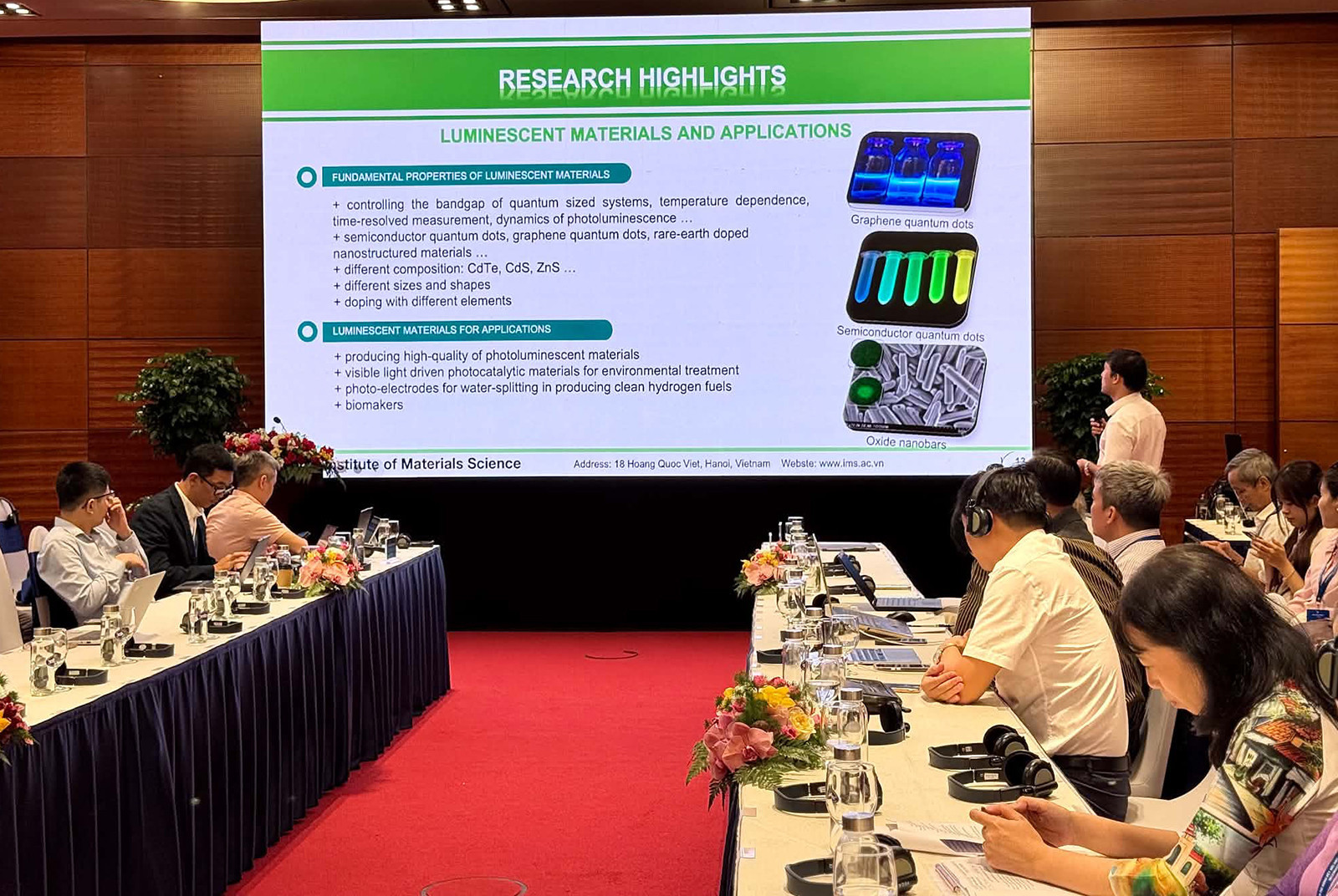
Vietnam's $60 million semiconductor cleanroom is a major investment, but it cannot support an entire chip production line, highlighting the need for international cooperation, an expert said.
A representative of Vietnam National University, Hanoi, said a VND1.5 trillion ($60 million) cleanroom, despite its substantial scale, is not sufficient to complete an entire chip production line and can only accommodate selected equipment and manufacturing processes.
Dr. Bui Duy Hieu of the Institute of Information Technology at Vietnam National University, Hanoi acknowledged that developing strategic technologies such as semiconductors does not allow Vietnam to simply "leapfrog" stages of development.
Instead, the country must shorten the time needed to accumulate technological capabilities from 20 years to 10 years, or even five to seven years, through cooperation.
The likelihood of international corporations establishing cleanroom for semiconductor manufacturing in Vietnam is very low because manufacturing processes are core technological secrets that underpin national competitive advantages, as seen in advanced 7nm and 2nm processes in Taiwan (China).
Even with substantial investment, infrastructure requirements and operating costs remain formidable challenges.
The VND1.5 trillion cleanroom project (approximately $60 million) on the campus of Vietnam National University, Hanoi, in the Hoa Lac urban area is a major investment but still insufficient to complete an entire chip production line. It can only accommodate selected equipment and manufacturing processes.
Notably, Hieu cited estimates showing that maintaining a research cleanroom costs approximately 2 million to 6 million euros annually, covering only electricity, water, clean gases and maintenance. This is considered an enormous expense relative to the budgets of domestic research institutions.
Dr. Dao Nguyen Thuan of the Institute of Materials Science under the Vietnam Academy of Science and Technology said Vietnamese scientists perform very well in basic research and prototype development but frequently encounter bottlenecks at the evaluation and scale-up stages.
"This is precisely where the 'valley of death' exists, and research projects often come to a standstill," Dr. Dao Nguyen Thuan said. "We hope to receive support from the Ministry of Science and Technology and the NAFOSTED Foundation to help scientists overcome this 'valley of death' and move on to the next stage."
Mastering core technologies
Experiences from pioneering organizations show that technological self-reliance does not mean independently handling every stage of production within a closed system. Rather, it means mastering core technologies while connecting with open global supply chains.
Associate Professor Le Son of Phenikaa University said that in autonomous robotics, Phenikaa-X has developed its own computer vision systems, artificial intelligence and positioning solutions to adapt to Vietnam's distinctive traffic conditions, where motorbikes dominate the roads. However, the company has also partnered with STMicroelectronics, Nvidia and Intel to address challenges involving sensors and hardware.
"A robot integrates a wide range of technologies. We cannot do this alone. We need cooperation and collaboration, not only within a single company or university but also across countries," Le Son said.
Similarly, to capitalize on the semiconductor industry's growth, a research team at Vietnam National University, Hanoi, spent two years negotiating under strict confidentiality commitments to gain access to TSMC's 16nm fabrication technology and Arm's resource network. The team also took advantage of free chip fabrication (tape-out) programs offered by IEEE SSCS and IEEE CASS.
Research Excellence Center
For international cooperation to deliver meaningful results, experts said the government must urgently address domestic institutional and policy bottlenecks.
Dr. Bui Duy Hieu pointed out that current science funding is primarily allocated through short-term research projects lasting two to three years, while approval procedures take one to two years, causing high-tech research to lose its relevance as technologies advance rapidly.
Drawing on his experience working in Singapore, Belgium and the US, Dr. Dao Nguyen Thuan proposed establishing a Research Excellence Center in Vietnam, equipped with comprehensive shared infrastructure and long-term funding commitments spanning 10 to 15 years, provided that it pursues strong research questions.
He also called for greater cross-border academic exchange and for leading researchers from around the world to be invited to work in Vietnam, following Singapore's example. This would allow Vietnamese scientists and students to learn directly from international experts and quickly catch up with the world's most advanced technological trends.
Finally, funding from corporations and businesses is needed to support pilot-scale trials and complete prototypes before they proceed toward commercialization in Vietnam and globally.
Alongside this, a "three-party" cooperation mechanism involving the State, research institutes and universities, and businesses should be developed. This would encourage technology spin-offs, following models such as Phenikaa-X and France's C2N incubator.
Du Lam

