 Vietnamnet.vn

 Podcast


On November 3, Vietnam reached an important milestone in its efforts to master semiconductor technology with the official launch of the VGC v1.0 security chip, designed entirely by Vietnamese engineers.
More than the outcome of a scientific and technological research project, the chip represents a strategic advance in Vietnam's pursuit of technological self-reliance, laying the groundwork for the development of future semiconductor products.
One mission, two solutions
Tasked by the Ministry of National Defense with developing a security chip, Viettel and the Government Cipher Committee set their sights on a longer-term goal: creating a technological platform capable of supporting not only VGC v1.0 but also successive generations of security chips.
The reasoning was straightforward. Each security product requires a chip tailored to its specific functions. Yet these chips share many fundamental building blocks, including processors, encryption modules, key-generation units and secure boot mechanisms.
Developing every chip independently would force engineers to rebuild these components from scratch each time.
Instead, Viettel and the Government Cipher Committee decided to establish a robust common foundation that could be reused across future designs.
The automotive industry has long followed a similar approach. A car manufacturer may use the same chassis platform for several models, each with its own appearance but sharing an underlying structure that has already been developed and tested.
The security semiconductor platform operates on the same principle. It consists of a foundational design, a library of reusable security functions and a standardized verification process. Protecting chip design files has also become an established step in the development workflow.
VGC v1.0 is the first product built on this platform.
According to its developers, subsequent generations of chips will no longer need to start from scratch, potentially shortening development cycles.
This approach reflects established practices in the global semiconductor industry.
Professor Don Bouldin of the University of Tennessee in the United States once estimated that preparing a component for reuse requires approximately 50% more effort initially but can reduce the design effort for subsequent applications by around 70%.
In other words, the additional investment in building a reusable platform can pay off as early as the second chip.
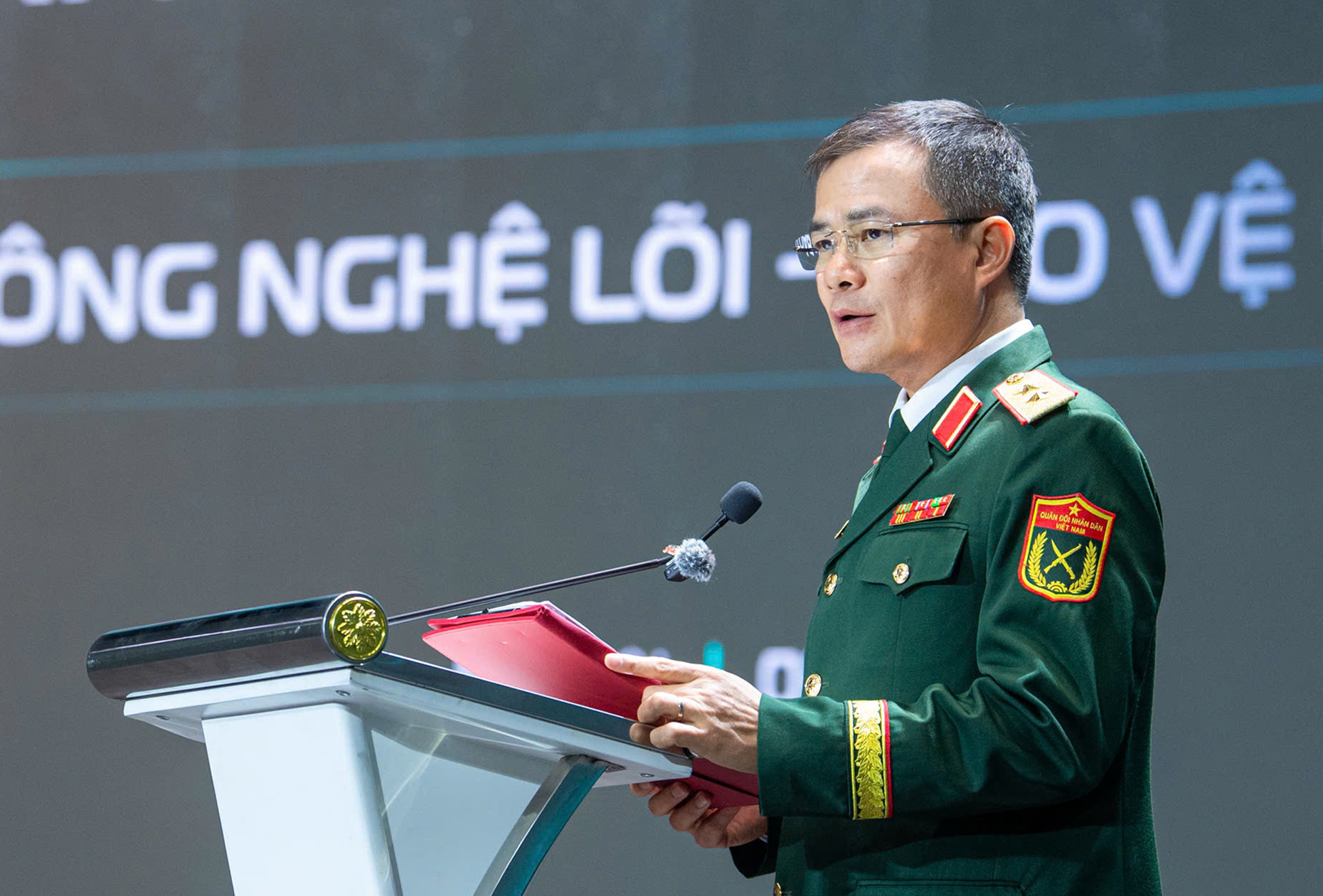
Lieutenant General Tao Duc Thang, a member of the Communist Party of Vietnam Central Committee and Chairman and CEO of Viettel Group, emphasized the challenges involved in developing security semiconductors.
"Researching, designing and developing security semiconductor chips is an extremely difficult field that requires the long-term accumulation of knowledge, technology and highly skilled human resources," he said. "However, we believe that being a latecomer does not mean accepting dependence. With the right strategy, focused resources and persistent commitment, we can gradually narrow the gap and ultimately master strategic technologies of national importance."
Thang said the development of VGC v1.0 and its underlying security semiconductor platform represented an initial achievement in implementing the Politburo's Resolution 57 and the Central Military Commission's Resolution 3488.
Open architecture as the key to independent chip design
For the platform to support long-term development, it needed to be built on an architecture that Vietnam could freely use and modify.
That requirement led Viettel engineers to select RISC-V, an open and royalty-free processor instruction set architecture developed at the University of California, Berkeley, in 2010.
RISC-V can be compared to a shared set of grammatical rules. Anyone can use the rules, but the content created with them remains entirely up to the author.
Using this architecture, Viettel engineers independently designed a processor tailored to their requirements and integrated cryptographic algorithms developed by the Government Cipher Committee directly into the chip.
For a security product, this capability is particularly important. Engineers can understand and verify every component of the chip and make modifications whenever necessary.
Europe provides a useful example of why the underlying platform can be just as important as the finished chip.
Since 2013, ETH Zurich in Switzerland and the University of Bologna in Italy have jointly developed the Parallel Ultra-Low Power (PULP) platform based on RISC-V.
The research team has since completed more than 70 chip fabrication runs using manufacturing processes ranging from 65nm to 7nm, relying on reusable design blocks and templates.
The principle is simple: develop once and reuse repeatedly.
This approach has gained momentum across the semiconductor industry.
The €240 million Digital Autonomy with RISC-V in Europe (DARE) project, coordinated by the Barcelona Supercomputing Center, brings together 38 partners from 13 countries.
The initiative aims to reduce Europe's dependence on foreign hardware and software technologies, particularly proprietary processors supplied by companies in the United States and Asia.
Like VGC v1.0, the project uses RISC-V to develop processors under European control.
Major semiconductor companies, including Bosch, Infineon, NXP and STMicroelectronics, have also invested in a joint venture pursuing a similar direction.
These initiatives share a common objective: technological autonomy.
Open architectures allow developers to examine the internal workings of their chips while reducing dependence on individual technology suppliers.
Beyond a single security chip
Despite measuring just 10 × 10 mm in its packaged form, VGC v1.0 contains approximately 300 million transistors and is manufactured using a 28nm CMOS process.
Testing results indicate that the chip performs encryption and decryption approximately 15 times faster than a purely software-based solution handling the same tasks.
In the first quarter of 2026, the initial batch of chips passed technical testing requirements and received certification for use in socioeconomic applications.
These results demonstrated that the underlying platform was operational.
More importantly, Viettel and the Government Cipher Committee are already planning the next stages of development.
At the launch ceremony, the two organizations signed a cooperation agreement covering the mass production of VGC v1.0 and the development of a multicore security semiconductor platform.
The planned architecture would allow multiple processors to operate on a single chip while incorporating specialized cryptographic components for large-scale applications.
Potential uses extend across several critical sectors.
One application involves Vietnam's national digital signature authentication system, which currently has more than two million digital certificates in circulation.
Other applications include protecting records, contracts and customer information in banking and financial services.
The technology could also help secure connected devices such as surveillance cameras, environmental sensors and monitoring stations.
Another priority is protecting information systems supporting critical infrastructure, including electricity, water supply, oil and gas, and telecommunications.
Each application presents different technical requirements, but all could be developed from the same foundational platform.
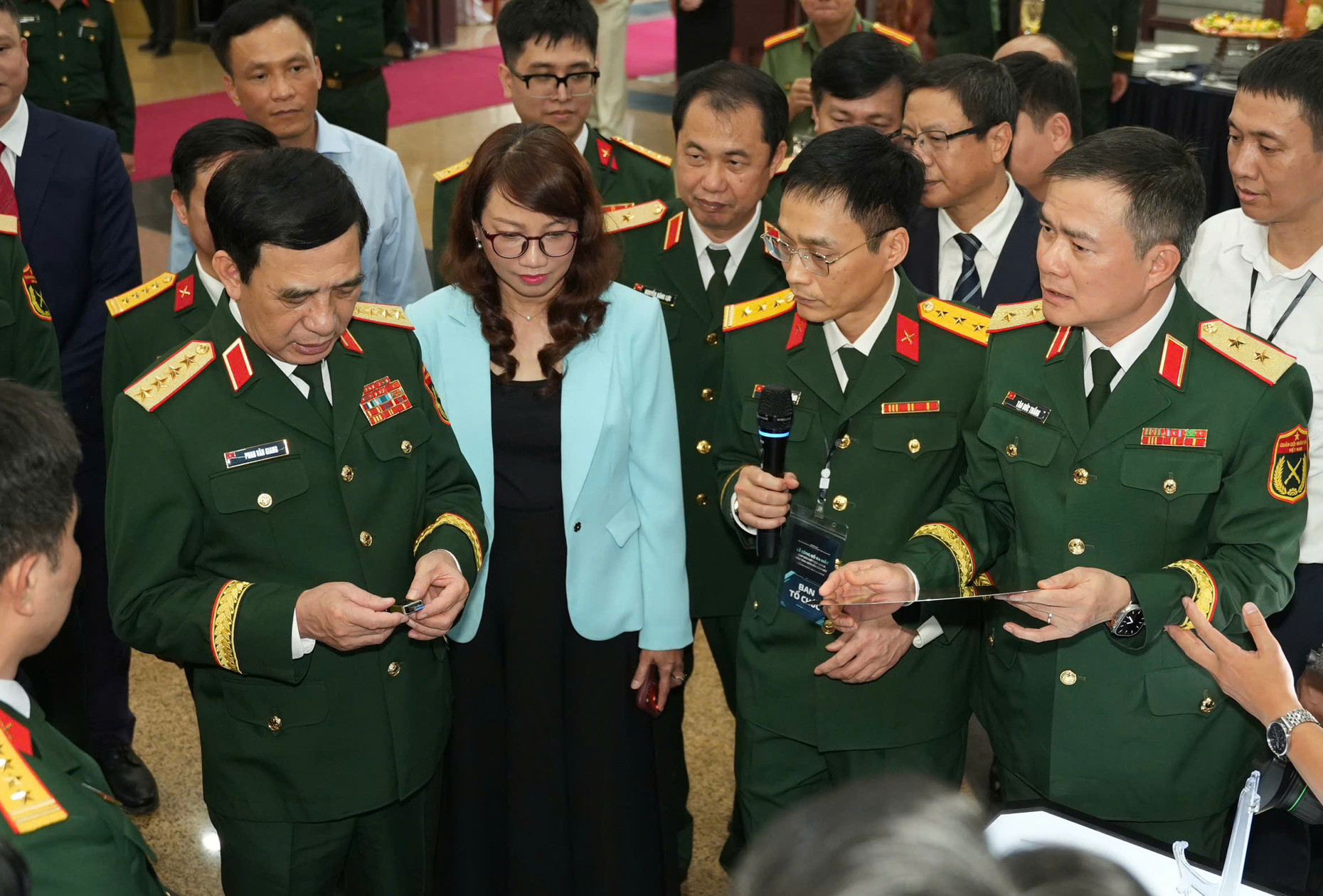
At the launch, General Phan Van Giang, a Politburo member, Deputy Prime Minister and Minister of National Defense, stressed the importance of mastering core technologies.
He described semiconductor chips as the "heart" of digital devices and cryptography as the "shield" protecting information and a fundamental tool for safeguarding data.
Without mastering semiconductor chips, he argued, it would be difficult to achieve full control over cryptographic technologies.
Conversely, without mastering cryptography, Vietnam would face challenges in protecting its digital sovereignty and ensuring national security.
Giang emphasized the determination to tackle difficult and previously unexplored technological challenges.
Although Vietnam entered the semiconductor industry later than many other countries, he said that did not mean it had to advance slowly. The ambition was to catch up and eventually move ahead.
This distinction captures the difference between producing an individual product and developing an independent technological capability.
Engineers and specialists from Viettel and the Government Cipher Committee have created a foundational design, a library of reusable functional blocks and standardized development processes that future chips can inherit.
Crucially, these technological assets are entirely controlled by Vietnamese engineers.
VGC v1.0 demonstrates that Vietnam has established an initial design foundation for its security semiconductor industry.
The ultimate measure of success, however, will be the generations of chips developed on that foundation.
Thai Khang

