 Vietnamnet.vn

 Podcast



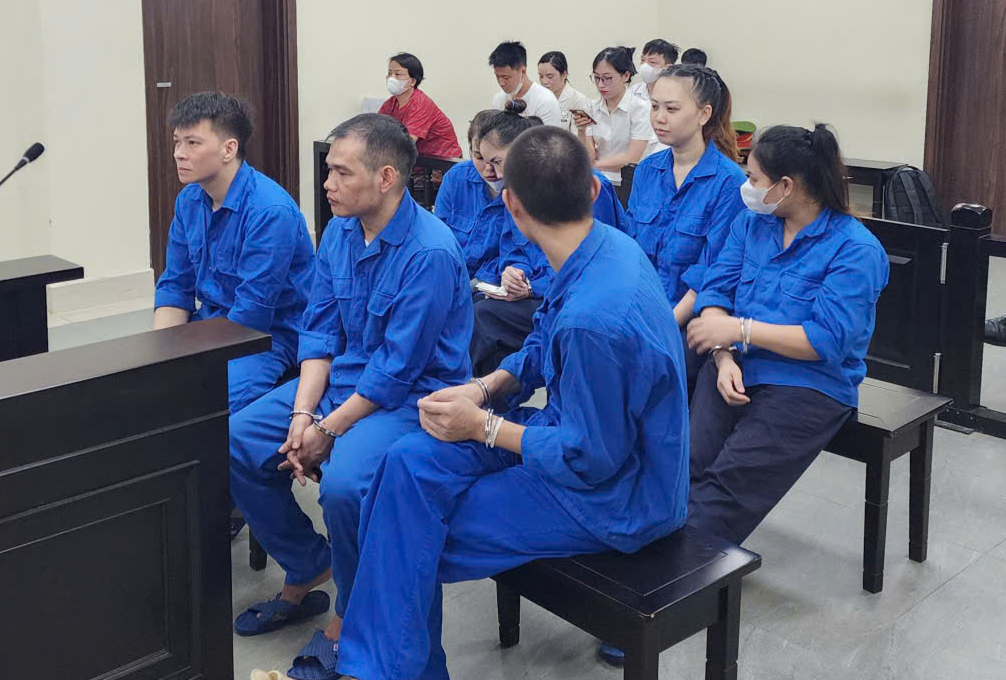
According to prosecutors, Hung had no stable job and needed money for personal expenses. Having previously sold one of his own kidneys, he was familiar with the procedures used to facilitate organ transplants under the guise of voluntary donation.
Using that knowledge, Hung developed a plan to broker kidney sales for profit.
Because arranging kidney transactions involved multiple stages, Hung recruited several other defendants to assist him.
Investigators determined that Hung, together with Ba, Thao, Thuy, Hoa and Thanh, agreed to use Facebook accounts to join groups and forums focused on kidney buying and selling in order to locate potential sellers and recipients.
Once they identified interested parties, the defendants informed Hung, who coordinated funding to cover medical expenses and living costs for kidney sellers. Members of the group were assigned to accompany buyers and sellers for health screenings, compatibility testing and other medical procedures required for transplantation.
The defendants also instructed participants on how to complete paperwork so the transactions would appear to be humanitarian organ donations. Travel, accommodation and medical testing costs for sellers were paid from a common fund contributed by members of the group.
Between October 2024 and September 2025, Hung, Ba, Thao, Thuy, Hoa, Thanh and Ngan successfully brokered six kidney transactions.
One of those cases took place in November 2024. Lo Thi T. (born 1992, from Lao Cai), who needed money, decided to sell a kidney. She joined a Facebook kidney-trading group and was contacted by Hoa.
Hoa negotiated a sale price of VND500 million (USD19,100) and instructed T. on how to prepare documentation for the donation process.
Hoa then informed Hung, Ba, Thuy and Thao that a kidney seller had been found and invited them to contribute funds to facilitate the transplant.
At Military Hospital 108 in Hanoi, Hoa and Thuy accompanied T. through registration, medical examinations and HLA testing, which is used to assess donor-recipient compatibility. T. was later housed in rented accommodation while waiting for the procedure.
In December 2024, through another Facebook kidney-trading group, Hung connected with Bui Duc C. (born 1994, from Hung Yen), a patient suffering from kidney failure who required a transplant.
Hung sent T.'s compatibility information to C. and negotiated a kidney purchase price of VND970 million (USD37,000). C. agreed to proceed.
On January 6, 2025, T. and C. underwent transplant surgery at Military Hospital 108. Following the operation, C.'s family transferred VND970 million (USD37,000) to Hung.
T. received VND500 million (USD19,100), while the defendants divided the remaining amount among themselves.
Investigators said all kidney sellers involved in the case were facing financial hardship and lacked sufficient means to support themselves. Although they sold parts of their own bodies, authorities determined that their actions did not meet the legal threshold for prosecution on charges of trading in human body parts.
T. Nhung
.svg)
