 Vietnamnet.vn

 Podcast



Floodwaters rise rapidly in Bac Ninh as residents stay awake through the night
According to VietNamNet reporters on August 24, local authorities and emergency forces were deployed across low-lying residential areas, monitoring vulnerable locations, evacuating residents, carrying out rescue operations and delivering essential supplies to isolated communities.
In Trai Mit village, Luc Nam commune, rising floodwaters submerged many roads around residential areas. Residents had to move furniture and household belongings to higher ground to minimize damage.

Do Thi Van, 68, a resident of Trai Mit village, said days of heavy rain had sent water surging downstream from Lang Son and Son Dong, causing local streams to rise rapidly.
“I barely slept last night. I just sat there watching the water so I could move our belongings somewhere dry in time. This is the second time the water has risen this high. It started coming up yesterday morning, then rose very quickly during the night,” Van said.
Local residents said floodwaters continued to rise as persistent heavy rain made travel and daily life increasingly difficult. Several roads were deeply submerged and impassable to vehicles.
Beyond homes and infrastructure, the flooding has also caused serious damage to local agricultural production.

Floodwater entered the home of Do Thi Van on the night of August 23, forcing her to stay awake through the night to watch over her belongings.
Nguyen Van So of Trai Mit village said several days of heavy rain caused floodwaters to rise sharply from the evening of August 23, submerging his family's rice fields, lychee trees and other crops.
Water also entered the residential area and flooded the basement of his home. His family was without electricity and had no access to clean water for daily use.
“Our family has no electricity, and we don't have clean water to use, while the floodwater is still rising. With weather this severe, we residents simply don't know what else we can do,” So said.
Across Bac Ninh province, 644 drainage pumps have been operating around the clock, focusing on removing water from residential areas, farmland and locations at risk of severe flooding.

Widespread inundation has put large areas of crops at risk of being completely lost unless the water recedes soon. Residents have been concentrating on protecting property, livestock and anything else that can still be moved out of flooded areas.
In the Luc Ngan area, formerly part of Bac Giang province, prolonged heavy rain has also severely disrupted residents' daily lives and travel.
Nguyen Van Khanh, a resident of Deo Gia commune, said flooding had cut off several roads, leaving some residents unable to return home.
With the flood situation remaining complicated, local authorities and emergency forces are continuing to inspect areas at risk of deep flooding and landslides while proactively evacuating residents from dangerous locations.



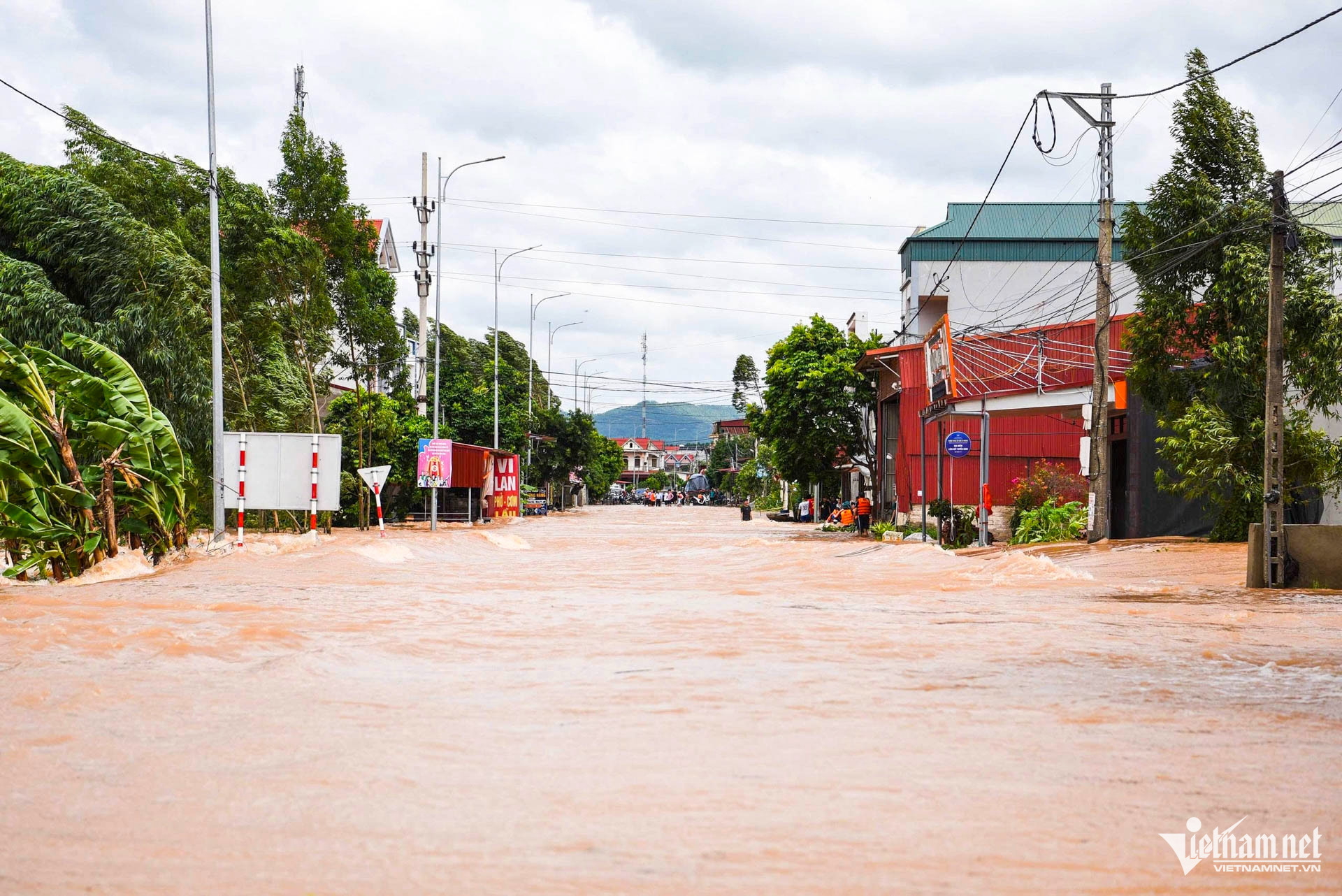
By the afternoon of August 24, rain had stopped in Bac Ninh, but floodwaters had yet to recede.
Cat Ba in Hai Phong deeply flooded, roads cut off
Also on August 24, heavy rain associated with Storm Narra's circulation affected many parts of Hai Phong. Flooding was reported across the Cat Hai special zone, particularly in the Cat Ba area.
Some homes were flooded as high as their roofs, while roads leading across the island were also inundated as water levels rose rapidly. Water cascading down from the mountains poured onto roads, prompting authorities to deploy personnel to monitor affected locations, regulate traffic and keep residents safe.
The Cat Hai special zone People's Committee instructed relevant forces to implement emergency response measures, assist residents with evacuation and protect lives and property. On-site reports showed many residential areas and roads under 40-60cm of water. In some locations, floodwater entered homes and rose as high as the roofs.
The road between Cat Ba National Park and Gia Luan village was locally submerged, with water at one point reaching nearly one meter, temporarily disrupting travel.



Flooding cuts off roads and severely inundates a number of homes.



In response, the Cat Hai special zone People's Committee ordered border guards, military personnel, police and local officials to mobilize their full available forces in affected areas to assist residents.
Emergency teams helped residents raise furniture and move property and household belongings to safer places to limit flood damage. Households with elderly people, young children and other vulnerable residents were given priority for evacuation. People and livestock in potentially unsafe locations were also moved to higher ground.
Hai Phong authorities have also arranged food and temporary accommodation for residents forced to leave their homes because of the flooding.
Across Hai Phong, more than 8,600 hectares of rice and other crops had been flooded as of August 24. More than 50 hectares were affected by water overflowing embankments, although no damage had yet been recorded there. Landslides and debris flows have blocked roads, while several dike slopes and parts of the city's dike system have also sustained damage.
Bao Khanh – Hoai Anh
.svg)
