 Vietnamnet.vn

 Podcast



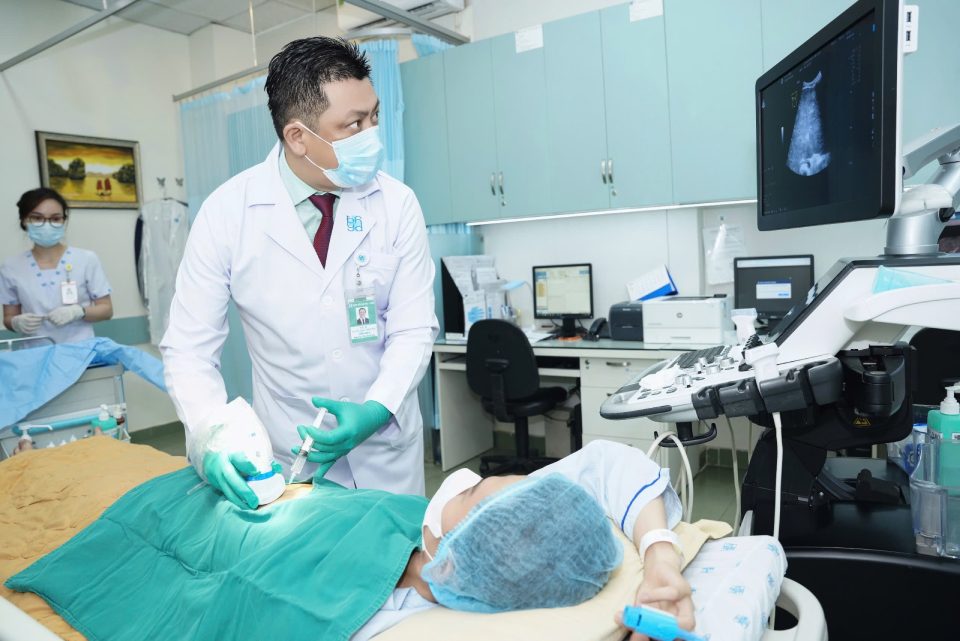
Few people know that he once went through a six-month suspension from practice, a turning point that reshaped his approach to medicine.
At the end of 2025, a man named Vinh, 35, from Thanh Hoa, was diagnosed with liver cancer with a 10cm tumor. After visiting multiple hospitals in northern Vietnam, he fell into despair. He and his wife gathered all their savings and spent hundreds of millions of VND seeking treatment opportunities abroad, only to return home disappointed.
Fate later brought Vinh to Dr Duong, currently Deputy Head of the Diagnostic Imaging Department and Head of the Visceral Interventional Radiology Unit at the University Medical Center HCMC.
There, he received detailed consultation and a tailored treatment plan. After a period of treatment, the tumor shrank and his indicators gradually stabilized. It was not a miracle, but it was a chance to prolong his life and allow him to keep hoping.
The distinct choice
Graduating from the University of Medicine and Pharmacy at HCMC in 1997, when many colleagues chose to emigrate abroad, Duong chose a different path: studying in the US with the sole purpose of returning to Vietnam. This direction forced the young doctor to calculate practically: what to study to apply immediately in Vietnam.
Initially, Duong wanted to pursue a clinical field like sexology but soon realized that the path would be long and difficult to apply domestically. Conversely, diagnostic imaging, especially ultrasound, opened a highly feasible direction.
In the late 1990s, technologies such as CT and MRI were still very limited in Vietnam, while ultrasound was common but lacked systematic training.
Dr Duong became one of the few Asian students admitted to study diagnostic imaging at El Centro University in Dallas, Texas, where he pursued comprehensive ultrasound training covering general imaging, cardiovascular, obstetrics, neurology and vascular imaging. As a result, he became one of the few doctors certified to perform ultrasound “from head to toe.”
In 2003, Dr Duong returned to Vietnam, working at the University Medical Center HCMC while also teaching. With strong expertise and English proficiency, he quickly became an important figure in developing the diagnostic imaging field. The hospital leadership applied many policies supporting professional development.
The six-month suspension
A major incident more than 15 years ago completely changed Duong’s approach to medicine. It involved a liver cancer intervention performed with the participation of foreign experts, using new materials that followed global trends, and carried out during a weekend, a time when coordination between specialties was incomplete.
The initial complication was not too severe, but due to the lack of timely support, one problem triggered another like a domino effect, and the patient eventually died.
As the physician directly performing the intervention, Duong was the first to bear responsibility and was suspended from practice for six months.
“It was a massive shock, a horrific haunting. For an interventional radiologist, having your needles suspended is no different from a surgeon having their scalpel confiscated. Yet, it was precisely this crisis that forced me to re-evaluate my entire way of practicing medicine,” he shared.
After that case, he not only refined his techniques but also changed his mindset: Every procedure must fully evaluate, from the environment, timing, interdisciplinary coordination and the patient’s level of understanding.
Minimally invasive intervention
From 2004, as the University Medical Center HCMC invested in modern hardware, Duong pursued advanced training in Japan, South Korea, and the US, expanding into endovascular intervention.
If diagnostic radiologists previously stood "behind the scenes" merely reading imaging results, interventional radiology fundamentally changes that role, allowing doctors to treat conditions directly, such as ablating liver tumors, performing vascular interventions, and managing lesions across multiple organs.
In 2007, he proposed establishing an interventional imaging unit. It was not only a professional milestone but also helped affirm the role of diagnostic imaging physicians in treatment.
Minimally invasive intervention offers many benefits: less pain, fewer complications, faster recovery and more reasonable costs. For example, small liver tumors that previously required surgery can now be ablated through the skin, allowing patients to leave the hospital the same day. However, he emphasized: “Minimally invasive does not mean risk-free.”
Many patients, especially liver cancer patients, come to see Duong when treatment options have become limited. He carefully records and responds to their messages and concerns. He always provides complete information without favoring any particular method. Patients need to clearly understand every option: surgery, intervention, medication - together with the benefits, risks and costs.
Phuong Thuy
.svg)
