 Vietnamnet.vn

 Podcast



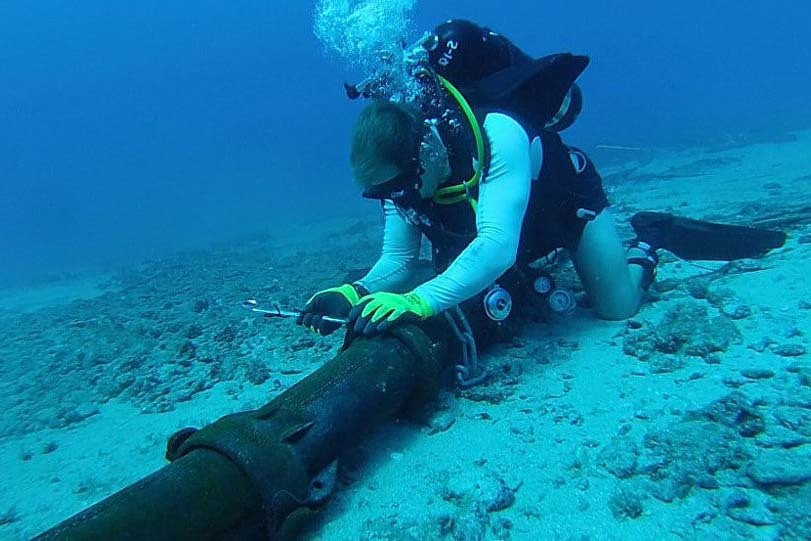
The SJC2 fault was identified on the S4 segment near Chung Hom Kok in Hong Kong (China), while AAE-1 lost connectivity following an incident on its S1.H2 segment. With two major systems going down at the same time, Vietnamese telecom operators have lost a significant portion of their total international bandwidth.
The latest incidents bring the number of submarine cable systems currently experiencing problems to three, as an earlier fault on the AAG cable has yet to be fully repaired.
SJC2 has a total designed capacity of 126 Tbps, of which VNPT owns 9 Tbps. The AAE-1 submarine cable system has a reported total designed capacity of around 40 Tbps, with Viettel holding 2.5 Tbps.
The simultaneous failures of SJC2 and AAE-1 are therefore estimated to affect about 30% of Vietnam’s international Internet traffic, with the disruption impacting most of the country’s telecommunications companies.
A VNPT representative said the operator immediately began balancing and rerouting traffic through its remaining connections after the incidents occurred, seeking to optimize available capacity, minimize disruption and maintain the best possible service quality for customers.
However, with faults now affecting three major submarine cable systems, users may notice some impact when accessing international Internet services during peak hours.
International services such as web browsing, video streaming and gaming on overseas servers could be slightly slower at busy times, although the network should remain generally stable thanks to backup infrastructure on other routes.
“This is a force majeure incident that affects all Internet service providers in Vietnam,” the VNPT representative said.
A Viettel representative said the SJC2 and AAE-1 cable failures had affected around 30% of the company’s international Internet traffic.
However, because submarine cable faults occur relatively frequently, Viettel maintains a high level of backup capacity for its international connections. Following the incidents, the operator switched traffic to its reserve capacity and said its service quality was therefore unaffected.
CMC Telecom also noted that submarine cable incidents have occurred frequently in recent years. The company said it had anticipated such disruptions and put backup arrangements in place, meaning the latest incidents have had little impact on its operations.
Vietnam currently relies primarily on six submarine fiber-optic cable systems for its connections to the global Internet: AAG, IA, AAE-1, APG and the two newer systems, ADC and SJC2.
Despite their critical role, submarine cables remain vulnerable to disruption. Statistics since 2022 show that nearly 40 incidents have occurred.
SJC2 is a submarine fiber-optic cable system in which VNPT is the Vietnamese investor, with its landing point in Quy Nhon.
AAE-1 is the fourth submarine cable system that Viettel has participated in building, with the company investing a total of US$50 million. Viettel is the sole partner responsible for operating the AAE-1 cable landing station in Vietnam.
AAE-1 is the first submarine cable system to connect Asia, the Middle East, Africa and Europe while providing low-latency connectivity between these regions. The system connects to some of the world’s major data center hubs, including Hong Kong, Singapore and France.
Thai Khang
.svg)
