 Vietnamnet.vn

 Podcast



Nguyen Hong Dao, representing a small business household in Can Tho, questioned tax authorities about whether households and individual businesses with annual revenue under VND500 million are allowed to issue e-invoices.
In practice, many clients, especially government agencies, require invoices for settlement and reimbursement. Without invoices, businesses may struggle to operate as they cannot meet customer requirements.
In response, the Can Tho Tax Sub-department cited Clause 5, Article 8 of Government Decree No. 68/2026 stating that those with annual revenue below VND500 million are not subject to using e-invoices.
Many tax authorities, such as Tax Unit 3 of Khanh Hoa province, Tax Unit 7 of Dak Lak province, and Tax Unit 1 of Quang Ngai province, have all notified business households in their areas about stopping the use of e-invoices for households and individual businesses with revenue below VND500 million/year.
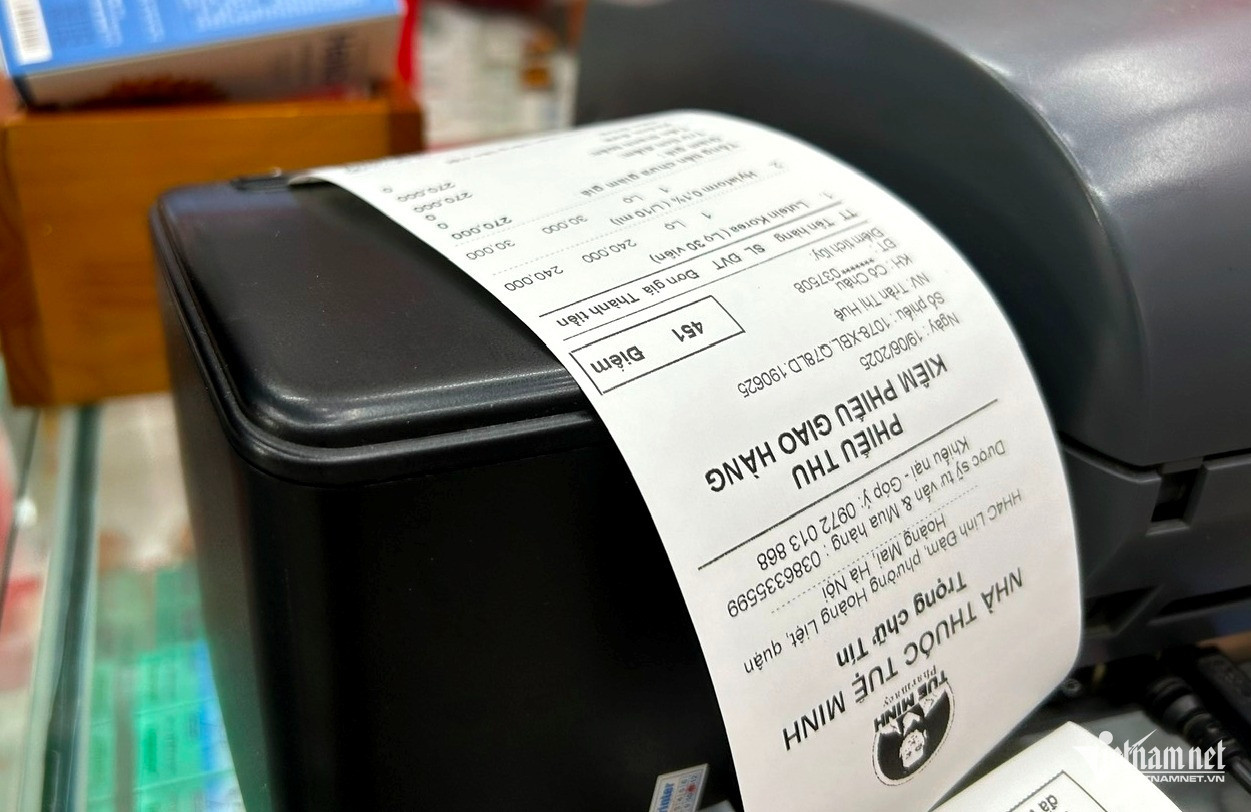
N.T.T (Hanoi), the owner of a business household in pharmacy with revenue below VND500 million/year, said that when the regulation on switching from flat-rate tax to declaration and invoice usage starting from June 2025 was released, she spent money to buy invoice software initiated from a cash register.
Now, having become accustomed to using it, she must stop because she belongs to the subjects with low revenue which don’t have to pay tax.
Expressing anxiety as policies constantly change, T. said that if she cannot issue invoices, her shop will lose the group of customers thar are enterprises needing invoices when purchasing goods.
Some tax agencies now allow business households to self-determine; if they determine their 2026 annual revenue will be above VND500 million, they can write a commitment and continue to issue invoices.
No official ban
Nguyen Ngoc Tu, a lecturer at Hanoi University of Business and Technology, said that business households and individual businesses with a revenue of VND500 million/year or less are identified as subjects not liable for VAT and do not have to pay personal income tax.
This is major reform, raising the tax threshold to nurture revenue sources and reduce the procedural burden for small-scale business households.
However, the fact that the households and individuals with less than VND500 million/year in revenue are not allowed to use e-invoices and are not granted invoices on a transaction-by-transaction basis is a new consequence, a “step backward”.
“If invoices are not applied, enterprises buying goods from business households with revenue below VND500 million/year will have no documents to account for costs,” he explained.
Under a new regulation, individual consumers will soon be able to deduct expenses such as education and healthcare when calculating personal income tax. It will be difficult for them to obtain invoices when using services from this sector (small business households). This puts business households under VND500 million/year at a competitive disadvantage,” Tu said.
Meanwhile, in principle, invoices are a universal form. Government Decree 123/2020 on invoices and documents also clearly states the principle: once goods are sold or services provided, the seller must issue an invoice to the buyer. This is a right of the business household, while whether they are tax-exempt or not is a different matter.
He emphasized that invoices are a fundamental part of commercial transactions. Government Decree 123/2020 clearly states that sellers must issue invoices when providing goods or services. The right to issue invoices is separate from tax obligations.
“Invoices ensure transparency in financial flows. Only with invoices can authorities determine whether a business exceeds the VND500 million threshold for tax purposes. So, small businesses should be encouraged to issue invoices,” he added.
Tu proposed that the Ministry of Finance revise policies to encourage small businesses under the threshold to issue invoices, noting that no legal document explicitly prohibits them from doing so.
As a short-term solution, he suggested that small businesses contact tax authorities to ask for the right to issue invoices on a per-transaction basis when needed, and fulfill corresponding tax obligations. Small businesses under the threshold still have the right to issue invoices.
Nguyen Le
.svg)
