 Vietnamnet.vn

 Podcast



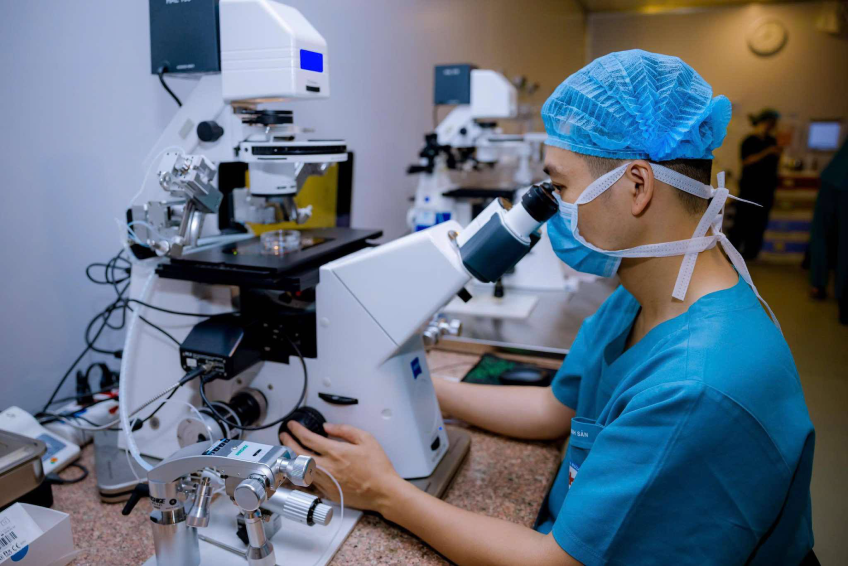
On the sidelines of a recent reproductive health project launch in Hanoi, Dr. Nguyen Thanh Trung, an OB/GYN specialist, cautioned that alcohol and tobacco have become "silent killers," stripping many young couples of their dream of becoming parents.
Alarming statistics
According to the World Health Organization (WHO), infertility affects approximately 8 to 12 percent of couples. Vietnam is among the countries with the highest rates of infertility globally.
Most concerningly, about 50 percent of infertility cases occur in individuals under the age of 30. It is estimated that 1 million couples in Vietnam, about 7.7 percent of the population and 8 percent of total couples, struggle with infertility or subfertility annually.
Causes of infertility are now evenly split between men and women, each accounting for 40 percent, 10 percent due to combined male and female factors, and 10 percent of cases with unknown causes.
Reports from hospitals show that the number of patients seeking specialized infertility treatment is rising rapidly.
“The number of patients coming in for consultations is increasing steadily month by month, quarter by quarter, and year by year, by an average of about 10 percent annually. What is worrying is that infertility is increasingly affecting younger people. Today, it is no longer rare for patients aged just 19 or 20 to seek infertility treatment,” Trung said.
“Some couples marry very early, and even couples who are not married but have cohabited for a long time also discover problems when they decide to have children,” he added.
He cited a case involving a young couple, with the husband born in 2005, who wanted to have a child but were unsuccessful after one year of marriage. Tests showed that the husband’s sperm quality was very poor, making natural conception difficult, while the wife was completely healthy.
“Despite their very young age, the couple had to undergo in vitro fertilization (IVF),” Trung said.
The silent killers
Trung identifies several factors contributing to the rise of infertility in youth, including early sexual activity and multiple partners, which increase the risk of sexually transmitted infections (STIs).
In addition, unhealthy lifestyles, especially obesity, chronic stress, and the abuse of alcohol and tobacco, are the primary culprits.
"Studies show that alcohol and tobacco cause severe damage to reproductive health, especially in men. Tobacco and alcohol contain numerous toxins and free radicals that directly attack sperm, causing DNA fragmentation," Trung said.
"This not only reduces the chances of natural conception but also complicates assisted reproductive treatments, increasing the risk of failure," he explained.
Specifically, a man smoking 10 cigarettes a day for 10 years is almost certain to face health issues, including reproductive ones. Similarly, consuming 200–500 ml of alcohol daily over a long period severely degrades sperm quality and morphology.
He also recounted treating a couple who had been married for six months. The wife was healthy, but the husband, only 21 years old, had a very low sperm count with a high rate of abnormalities. Medical history showed that he had been smoking since secondary school, combined with an unhealthy diet and being overweight.
After being advised to change his lifestyle - gradually quitting smoking, abstaining from alcohol, losing weight, and taking supportive medication—his sperm quality improved markedly after just two to three months. After six months, the couple was able to conceive naturally.
From these cases, Trung advised young people to adopt a healthy lifestyle, stay away from tobacco, limit alcohol consumption, and maintain proper diet and daily habits to protect their reproductive health and their future as parents.
In April 2025, in Hanoi, the launch ceremony of the Hope Fund was held by the IVF Center of Hanoi General Hospital in coordination with Gia Dinh Viet Nam magazine, aiming to share the financial burden and open new hope for infertile couples on their journey to having children.
The fund seeks to help disadvantaged families access modern treatment without cost barriers, thereby narrowing the gap in the journey toward welcoming a child for infertile families.
Phuong Thuy
.svg)
