 Vietnamnet.vn

 Podcast



Editor's note: Although Vietnam has made significant progress in improving living conditions in ethnic minority and mountainous areas, meeting people's basic needs - including housing, farmland, electricity, clean water and sustainable livelihoods - remains one of the region's most persistent challenges.
In Directive No. 19/CT-TTg, issued on May 12, 2026, on implementing the national ethnic affairs strategy for 2021-2030 with a vision to 2045, and at the first meeting of the Central Steering Committee overseeing national target programs on July 9, 2026, the prime minister instructed ministries and local authorities to prioritize resolving these bottlenecks.
Drawing on decades of policy implementation, VietNamNet presents the series "Identifying the unique bottlenecks in implementing ethnic minority policies," examining obstacles to delivering support for housing, production land, electricity, clean water and livelihoods in ethnic minority and mountainous communities.
Under Decision No. 417/QD-BNNMT, support for domestic water supply during the 2026-2030 period has been incorporated into Component 2 of the first package of the National Target Program on New Rural Development, Sustainable Poverty Reduction and Socio-economic Development in Ethnic Minority and Mountainous Areas.
The Ministry of Agriculture and Environment is responsible for implementing the policy, which aims to ensure that by 2030 all ethnic minority households have access to hygienic domestic water, with at least 20% receiving water that meets national clean water standards.
Achieving that goal will require more than continued investment. It will also depend on addressing long-standing weaknesses in policy implementation.
Decades of policy, but water shortages persist
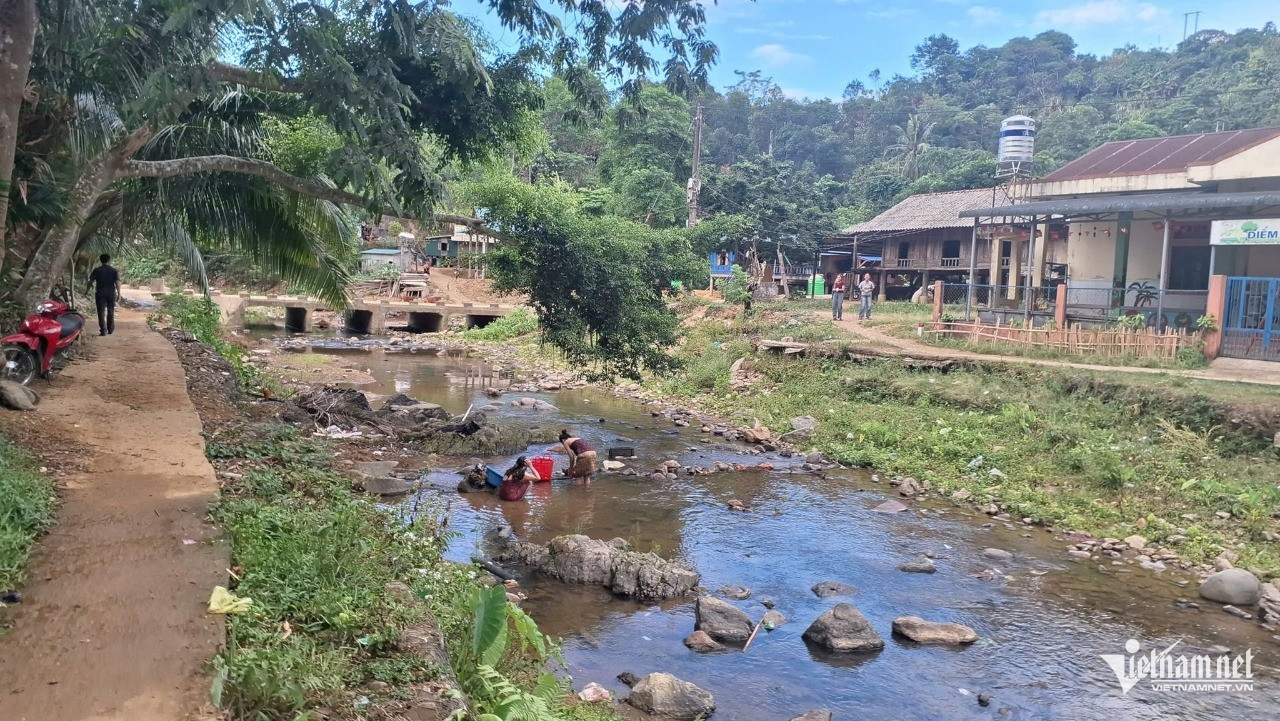
Government support for domestic water has continued through a series of national programs, including Program 135, Program 134, Program 30a and National Target Program 1719. Yet access to reliable water remains an urgent concern across many ethnic minority communities.
One example is Krong Duan village, one of the most disadvantaged communities in Dak Pxi Commune in Quang Ngai Province.
According to village head A Xim, the community's most pressing need is a reliable water supply.
Although the village has a gravity-fed water system, years of operation have left the infrastructure deteriorating. During the dry season, all 262 households frequently face water shortages, particularly the 50 families living at the end of the distribution network.
Dak Pxi is not the only community facing the problem.
According to commune chairman Phan Van Cuong, several villages continue to experience seasonal shortages, particularly those formerly belonging to Dak Ha District in the old Kon Tum Province before administrative restructuring.
Nearby Dak Rve Commune has also proposed building a new water supply system for six villages, where more than 4,000 residents depend entirely on gravity-fed systems that run short during the dry season and become muddy during heavy rains.
These cases highlight a gap between infrastructure investment and reliable service delivery.
Between 2021 and 2025, Quang Ngai invested in 85 centralized rural water supply projects and provided decentralized water support to 18,597 households through National Target Program 1719, according to Report No. 170 issued by the provincial Department of Ethnic and Religious Affairs.
Infrastructure alone is not enough
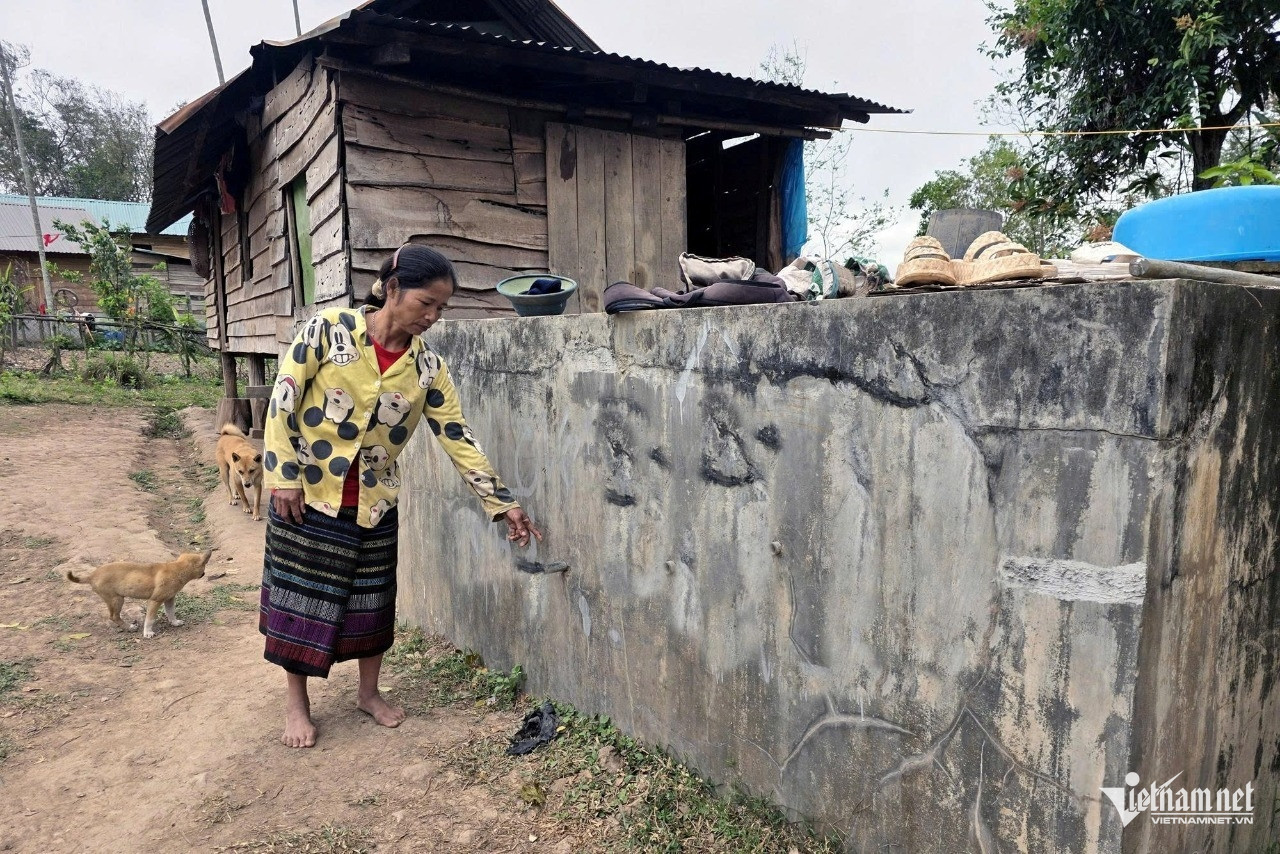
The challenge extends well beyond Quang Ngai.
According to the Ministry of Ethnic and Religious Affairs, 809 centralized rural water projects were built across ethnic minority regions between 2021 and 2025, while 479,358 households received decentralized water assistance.
Despite these efforts, only 55.1% of households receive water from centralized supply systems, with sharp regional disparities.
The Red River Delta records a coverage rate of 75.1%, while the Mekong Delta reaches 72%. In contrast, the northern mountainous region stands at just 17.7%, and the Central Highlands only 12.7%.
These figures reflect substantial government investment but also underscore why water shortages remain widespread.
The issue increasingly lies not in the number of projects built, but in how they are managed and maintained.
Before its merger with Quang Ngai Province, the former Kon Tum Province had 315 rural water supply systems. Of these, 32.7% operated below sustainable standards and 9.2% had ceased functioning altogether.
Nationwide, the Ministry of Agriculture and Environment reports that Vietnam has 18,109 centralized rural water supply facilities. Only 32% are considered sustainably operated, while 26.3% perform relatively well. The remaining 41.7% either operate poorly or are no longer functioning.
According to Luong Van Anh, Deputy Director General of the Department of Irrigation Infrastructure Management and Construction under the ministry, around 6,000 small-scale systems remain in operation across the country.
Many rely on simple stream diversions and pipelines that provide inconsistent water quality and limited capacity. Around 72.5% of these systems are managed by commune authorities or local communities, where funding and technical capacity for maintenance are often insufficient.
The experience demonstrates that success cannot be measured solely by the number of water projects completed. Without sustainable financing, regular maintenance and effective management, reliable access to clean water will remain elusive.
From emergency water access to sustainable water services
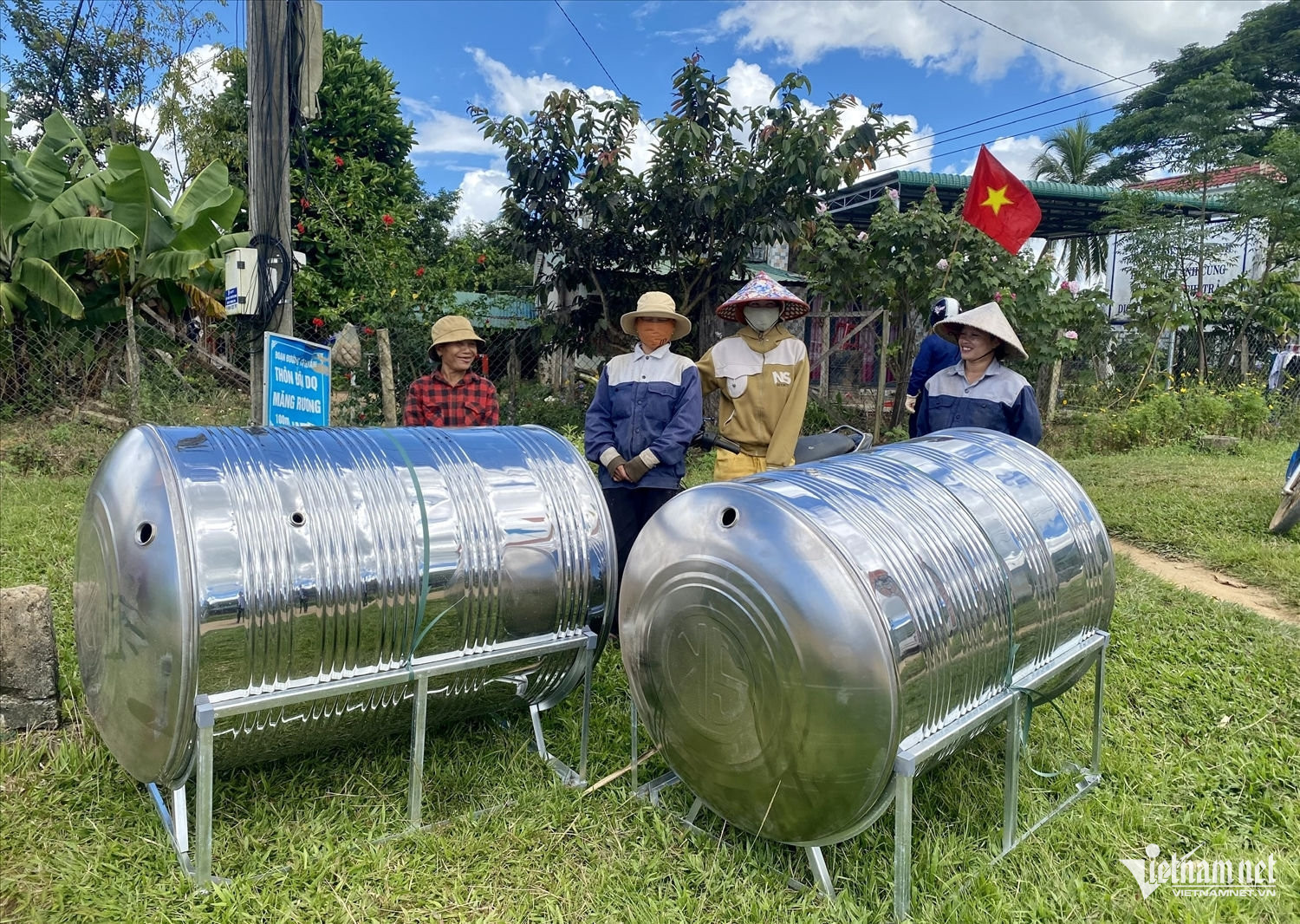
The Ministry of Agriculture and Environment will continue leading water support policies under the new national program.
Meeting the 2030 goal of universal access to hygienic domestic water will not be easy.
According to the 2024 survey on the socio-economic conditions of Vietnam's 53 ethnic minority groups, the country has nearly 3.88 million ethnic minority households. While 93.6% already have access to hygienic water, approximately 248,000 households - 6.4% of the total - still lack safe domestic water.
Most of these households live in remote, scattered communities that are difficult to connect to centralized water networks.
As a result, policymakers must not only allocate greater resources but also adopt more flexible solutions suited to local geography and settlement patterns.
Another ambitious target is ensuring that 20% of ethnic minority households have access to water meeting national quality standards by 2030.
This marks a shift in policy thinking - from simply providing water to ensuring that water is consistently safe.
Nguyen Thanh Luan, Director of the National Center for Rural Water Supply and Environmental Sanitation, said achieving this goal will be particularly challenging in mountainous areas because the latest Ministry of Health regulations require compliance with 99 technical quality indicators.
Reducing regional disparities remains difficult. Only about 18% of rural residents in mountainous areas currently use water that meets national standards, with provinces such as Cao Bang and Dien Bien recording rates of just 11% and 12%, respectively.
After decades of implementation, Vietnam's water policy for ethnic minority communities has entered a new phase.
The challenge is no longer simply how many facilities to build or how many households to support. Instead, it is about creating systems that continue functioning sustainably despite dispersed populations and increasingly unpredictable water resources in mountainous areas.
The goal of ensuring universal access to hygienic domestic water by 2030 will only be achieved if policy shifts decisively - from focusing on infrastructure construction to delivering sustainable water services, and from meeting investment targets to ensuring communities enjoy reliable, long-term access to safe water.
Only by addressing these structural bottlenecks can the long-standing water shortage in Vietnam's mountainous ethnic minority communities finally be overcome.
Sy Hao
.svg)
