 Vietnamnet.vn

 Podcast



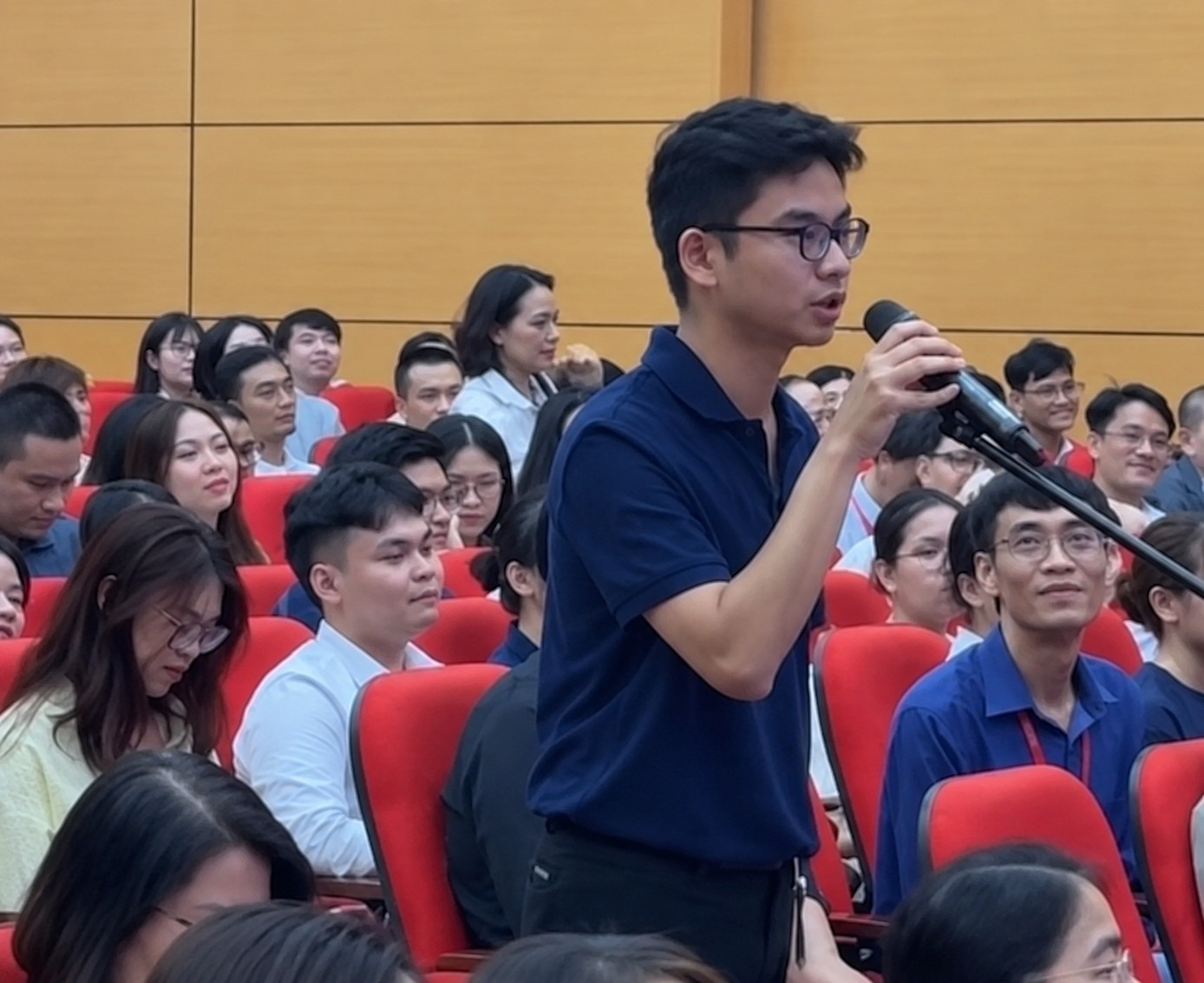
At the 51st Match Day of Hanoi Medical University on September 9, when number 45 was called, young doctor Tran Huu Trung stepped forward to choose the specialty his father has devoted 20 years to: emergency and critical care.
Trung is the son of Dr. Tran Huu Thong, Deputy Director of the A9 Emergency Center at Bach Mai Hospital in Hanoi. In 1998, Thong himself began residency training in emergency and critical care at Hanoi Medical University.
“What moved me most was that my son chose to enter the profession willingly”
Thong said he was delighted, moved and proud when he heard his son choose emergency and critical care. However, his happiness was accompanied by some concern because, after more than 20 years in the field, he understands that it is a demanding path involving pressure, sacrifice and many difficulties.
What the family did not expect was that a video capturing the moment Trung made his choice would quickly attract attention on social media.
“This was something we never expected. For someone like me who has worked in emergency care for more than 20 years, Trung choosing emergency and critical care was actually not much of a surprise,” Thong said.
From an early age, Trung had witnessed to some extent the family's life revolving around shifts, emergency calls and times when his father had to put responsibility for patients ahead of his personal affairs.
What moved Thong most was that his son understood those hardships but still chose to enter the profession willingly, driven by his own passion.
Before choosing his specialty, Trung discussed the choice with his family. But Thong and his wife did not want their son to choose a career simply because his father worked in the field.
He spoke frankly to his son about the harsh realities of emergency and critical care, including the high workload, long shifts, pressure to make decisions within a very short time and the need to constantly face the fragile line between life and death.
“I wanted my son to fully understand what he was choosing rather than choose a career simply because his father works in the field,” he said.
After all those discussions, however, Trung still chose emergency and critical care. To Thong, the decision was not simply about following in his father's footsteps, but about choosing a path that matched his own aspirations and professional ideals.
Thong and his wife have never asked their son to study medicine or follow in his father's footsteps. What they want to pass on to him is not a specific career choice but a responsible way of life, compassion for others and a serious attitude toward his work.
After more than 20 years in emergency care, father offers three heartfelt lessons
According to Thong, professional expertise alone is not enough. Emergency physicians also need courage, stamina and the ability to withstand pressure.
In emergency care, doctors do not always have enough time or complete information. They must identify what is threatening the patient's life, prioritize treatment and anticipate what may happen next.
Emergency and critical care is also not the work of one individual. Every critically ill patient requires coordination among doctors, nurses, technicians and specialists from different fields. Therefore, physicians need not only professional expertise but also the ability to work as part of a team, humility and a commitment to lifelong learning.
Medical knowledge is constantly changing, while every patient presents a different situation. Therefore, Thong believes those working in the field need to hold on to three things: a clear mind, a compassionate heart and a commitment to lifelong learning.
The father hopes his son will study seriously, develop resilience, continuously strengthen his professional expertise and value the guidance of teachers and senior colleagues as well as the support of his co-workers. Above all, he hopes his son will understand one thing: the more experienced a doctor becomes, the more humble he should be.
“Behind every professional decision are a patient's health, life and trust,” he said.
Phuong Thuy
.svg)
