 Vietnamnet.vn

 Podcast



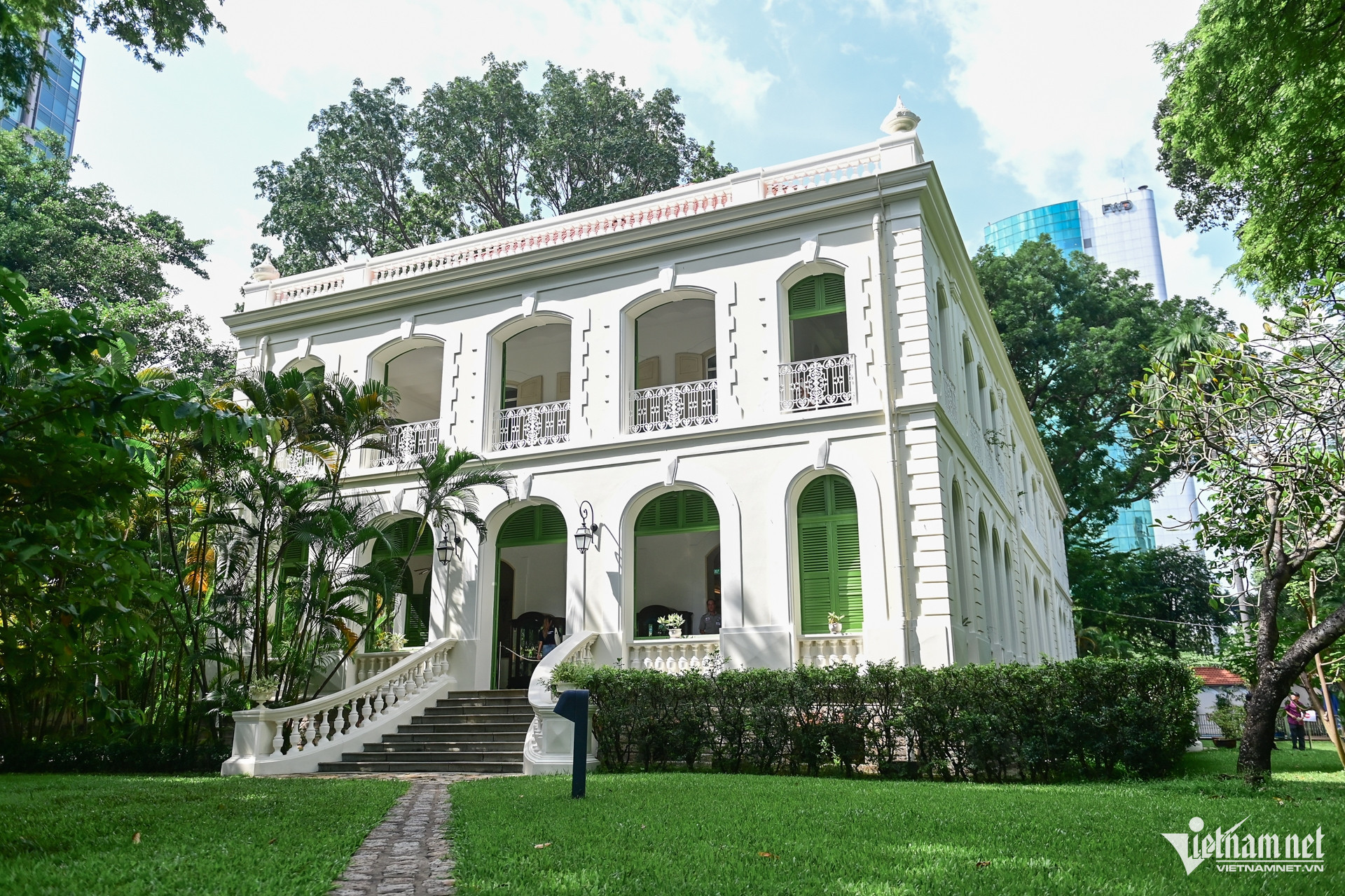
The French Consul General’s residence in Ho Chi Minh City, built in 1872, is an iconic example of Indochinese architecture. It houses many valuable artifacts and artworks from Vietnam and France, and opens to the public only on rare occasions.
Located on Le Duan Street in Saigon ward, the French Consul General's residence was constructed in 1872, contemporaneously with Notre-Dame Cathedral, Independence Palace, and the Central Post Office. On September 20, to mark European Heritage Days, the residence opened its doors to welcome approximately 1,500 visitors.
Young visitor Dang Thi Ut Pha expressed her excitement at being able to tour the historical residence for the first time. “I’ve been wanting to visit for a long time, and I had to register quickly to make sure I didn’t miss this rare opportunity,” she shared.
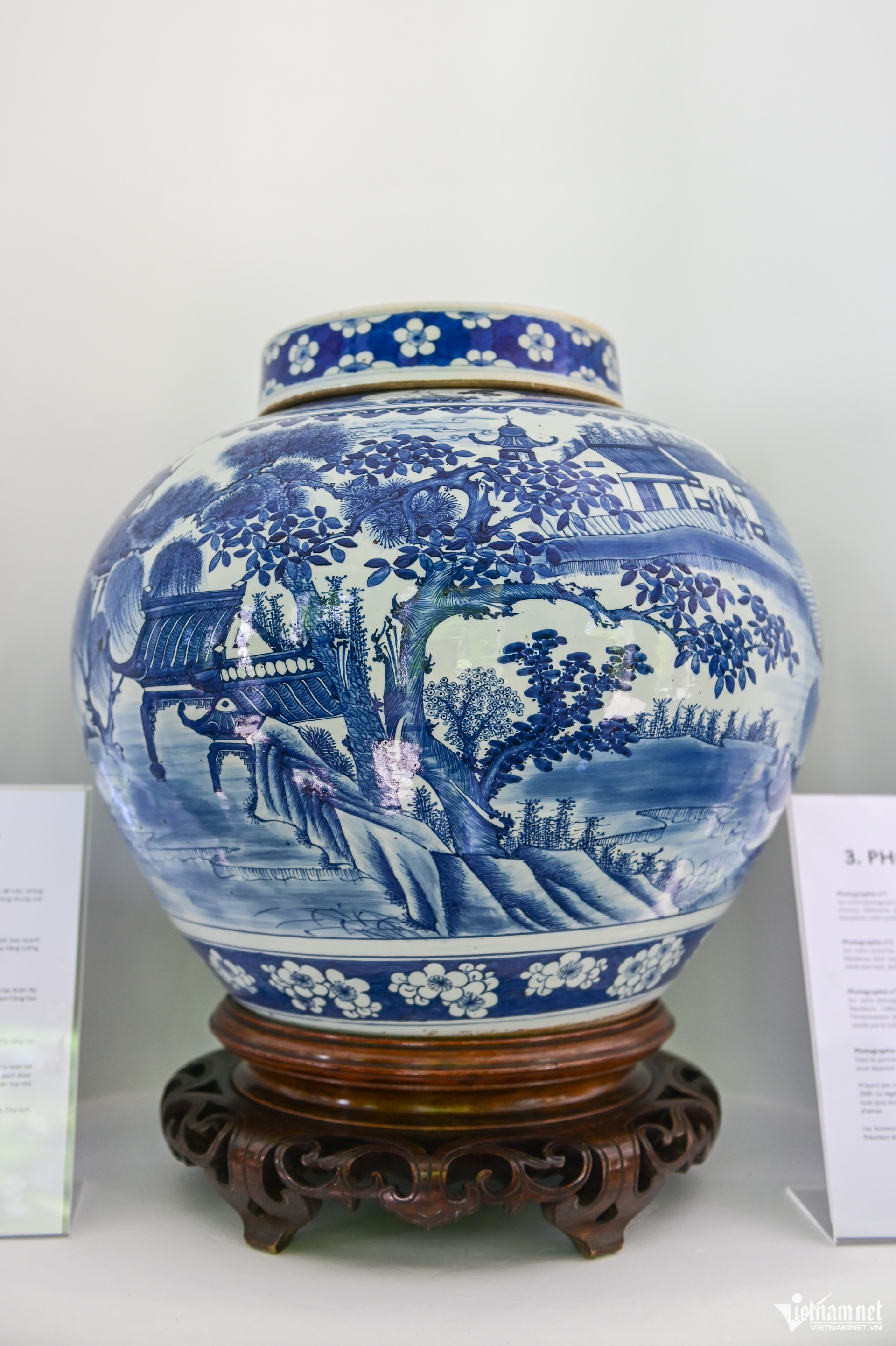
Artifacts are displayed along the corridor, including ceramic pieces believed to have been crafted in Vietnam during the 19th and 20th centuries.
At the heart of the residence is the ceremonial room, where events hosted by the French Consulate are held. The interior design fuses Eastern and Western cultural aesthetics.
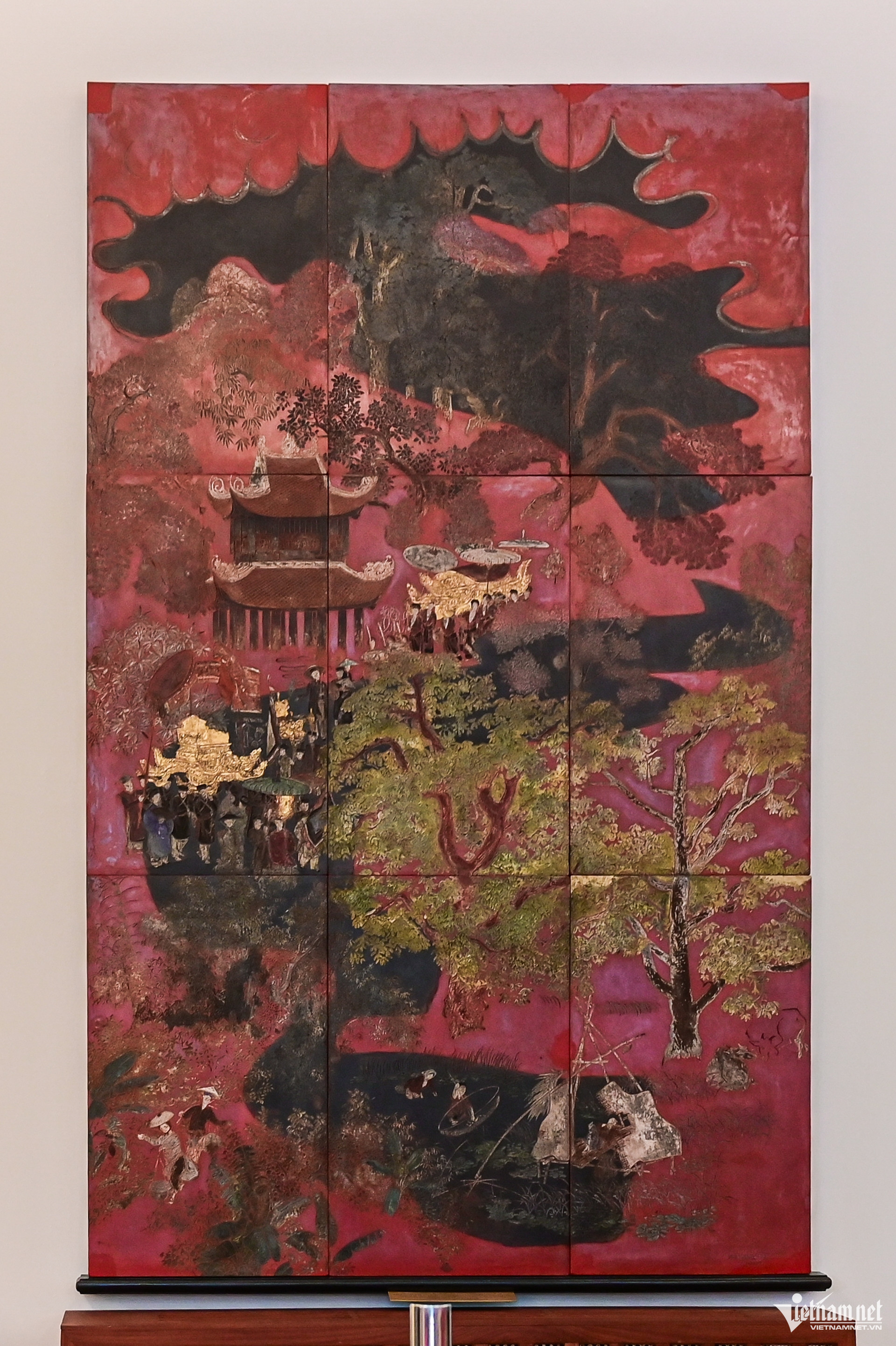
A standout feature is the large lacquer painting titled The Procession in the Village by artist Nguyen Gia Tri (1908–1993), completed in 1939. The artwork consists of nine panels, measuring 3 meters by 1.8 meters, and was restored in 2013 with funding from the French community living and working in Vietnam.
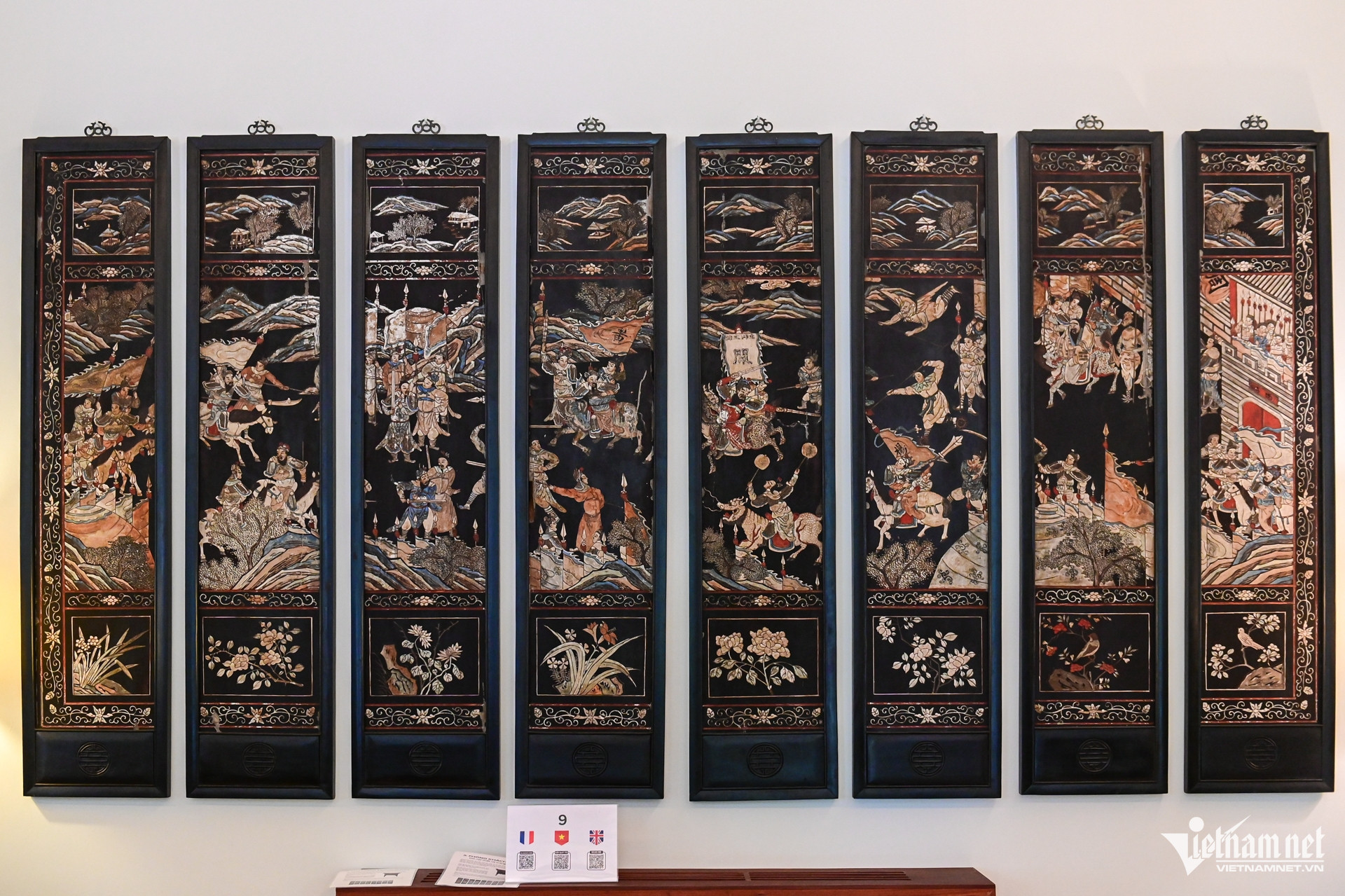
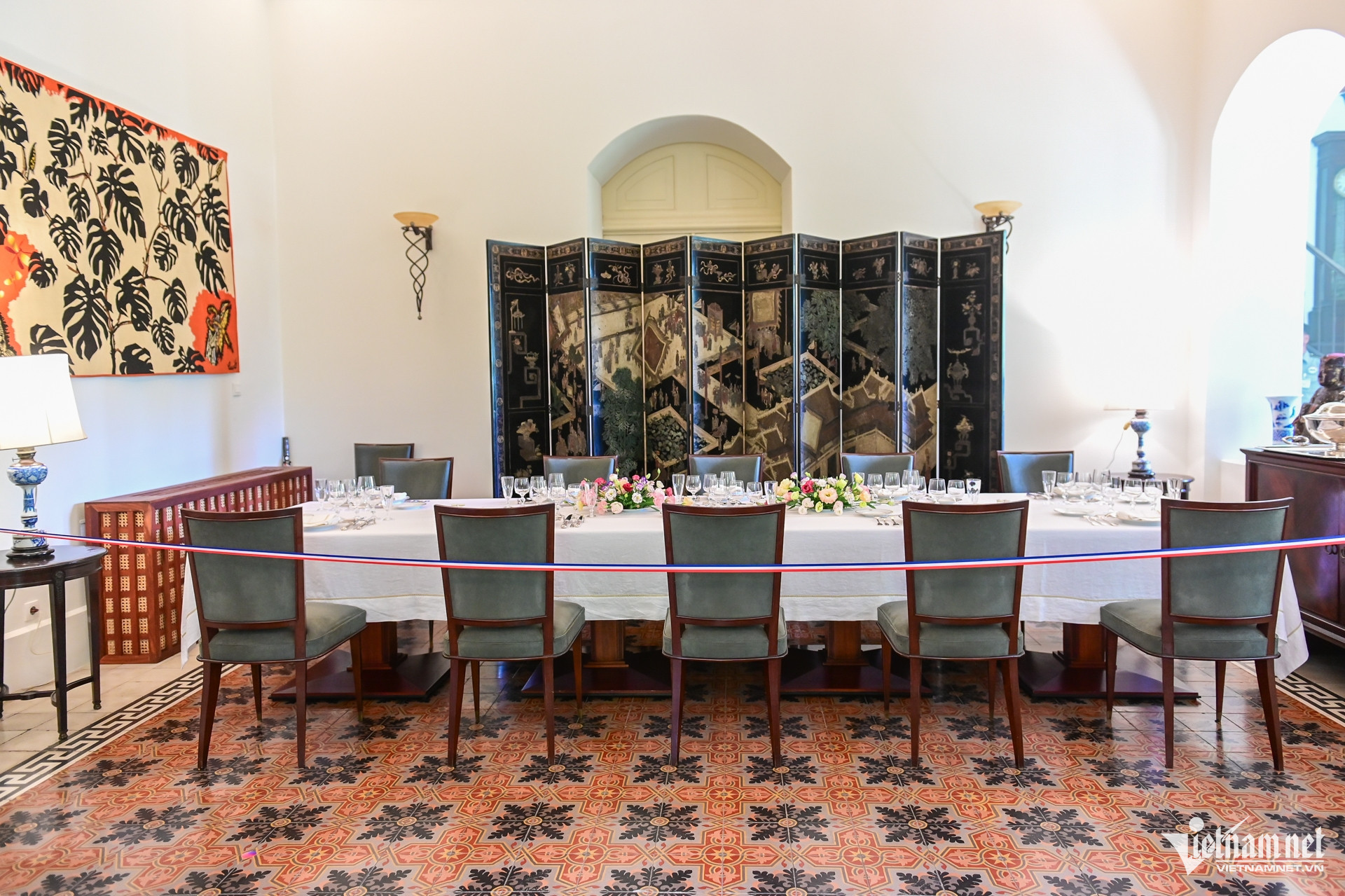
Also on display is a lacquered wooden screen composed of eight individual panels, mounted on a wall in the ceremonial room.
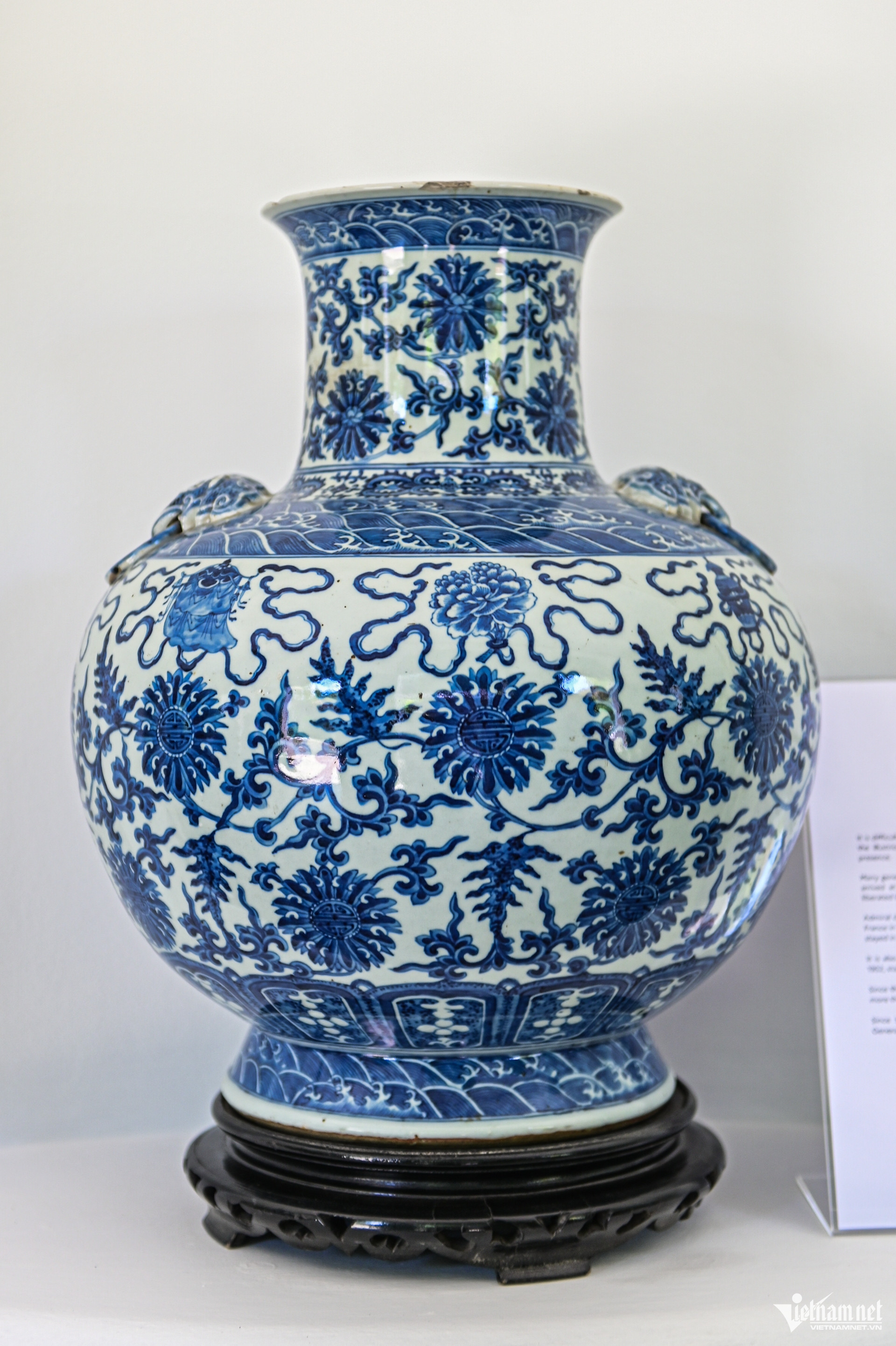
A smaller dining room showcases cobalt blue porcelain displayed on wooden furniture in a style referred to as “Hue blue.” Each porcelain item features unique designs, reflecting the refined aesthetic of the royal court.
The residence's main dining room, where the consul hosts formal banquets, gives visitors a glimpse into traditional French table settings and etiquette.
Various kitchenware and dining sets brought from France are also on display. These silver items are engraved with initials that correspond to the periods in which they were made.
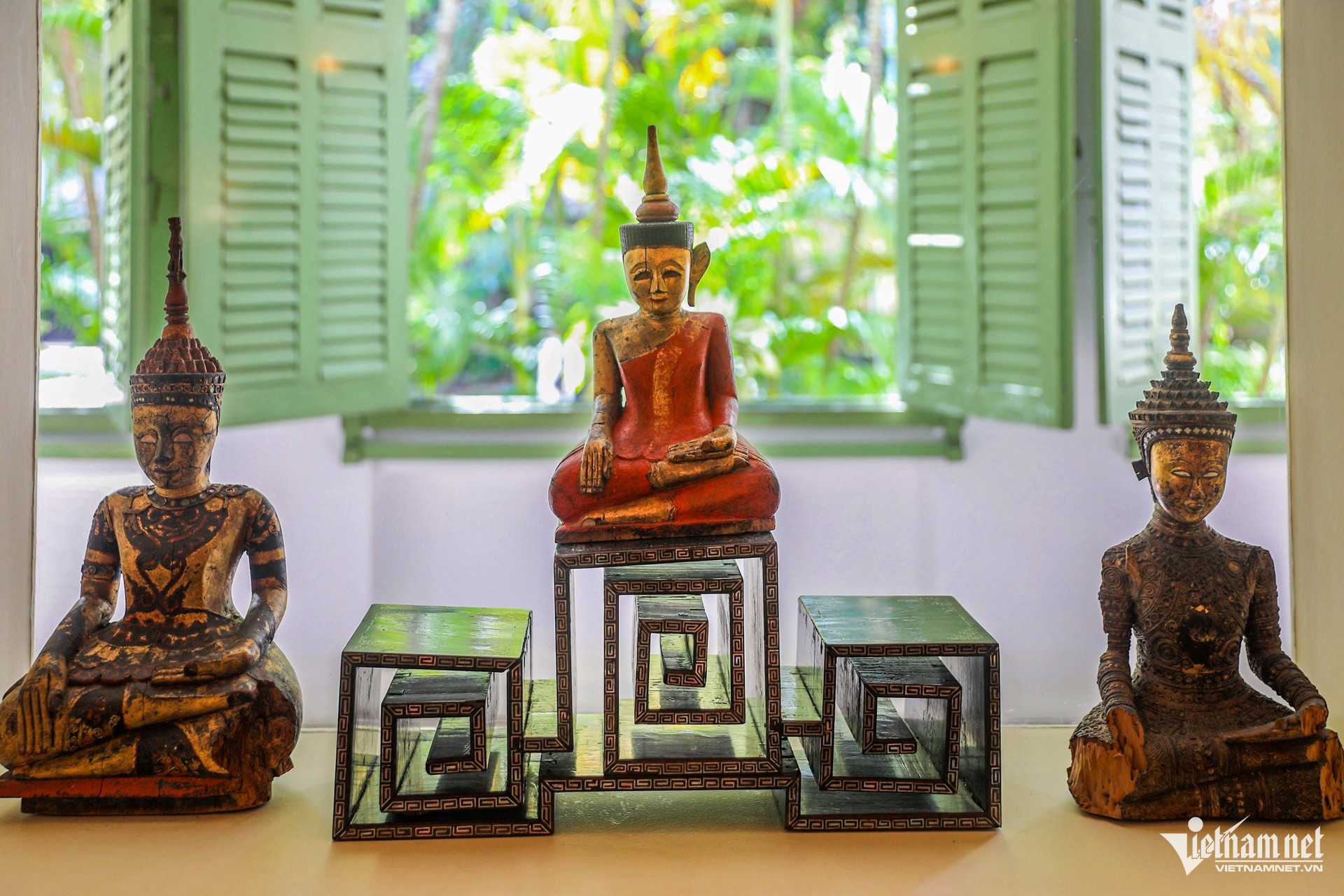
Several seated Buddha statues, made of gilded lacquered wood, are placed in the main dining room. These works are believed to originate from Thailand.
A spiral staircase in the kitchen area was originally part of a ship before being dismantled and installed in the residence. Its structural design is consistent with works by architect Gustave Eiffel, famed for the Eiffel Tower in Paris.
Visitors Van and Thao were especially taken by the green window shutters of the residence, particularly the adjustable slatted panels that can be opened or closed.
Outside, the lush 1.5-hectare garden was renovated in 2000, coinciding with the building’s restoration.





Van and Thao were impressed by the green shutter windows and adjustable slats.

Nguyen Hue
.svg)
