 Vietnamnet.vn

 Podcast



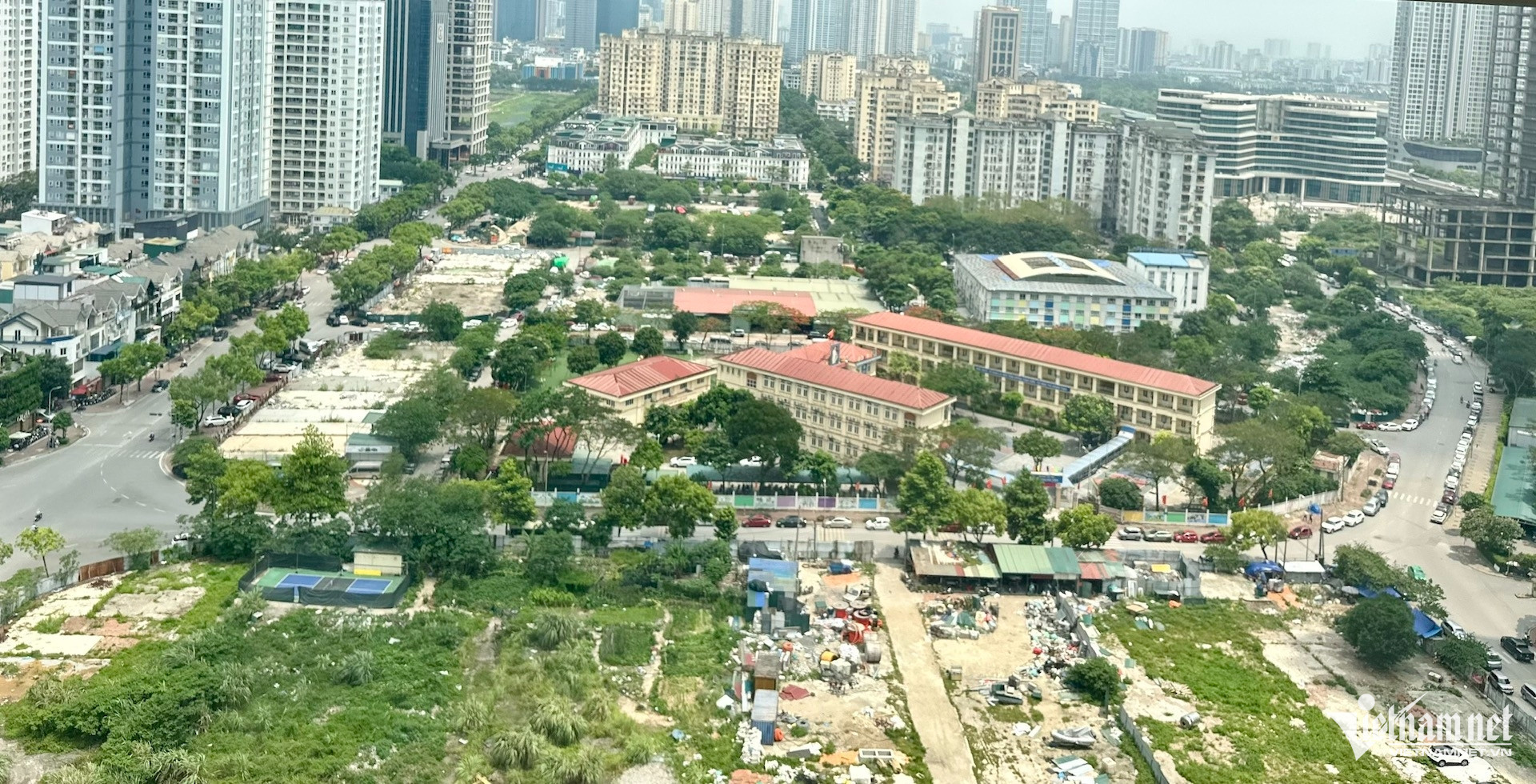
Relying solely on a plot's current condition to levy taxes risks allowing speculators to slip through the cracks.
Resolution 21 of the Central Committee of the Communist Party sets forth the requirement to develop tax and financial policies with a roadmap to ensure economical and efficient land use. The focus rests on resolving land vacancy, delayed land development, speculation and land hoarding that distort the market and push land and housing prices far beyond actual housing needs and citizens' affordability.
The resolution also emphasizes designing policies that render land hoarding without usage costlier than speculative gains. It further calls for studying mechanisms to regulate differential rent from real estate business surpluses, and imposing higher tax rates on vacant, unused land to curb speculation, combat waste, and foster a healthy real estate market.
Lawyer Truong Anh Tu, chair of TAT Law Firm, argued that this represents a suitable direction amid increasingly scarce land funds and numerous plots remaining vacant for years. However, the policy's objective must make land hoarding less attractive than bringing land into operational use.
"Taxes must target the right subjects and the right behaviors, rather than looking strictly at whether land is currently vacant," the lawyer emphasized.
According to Tu, using criteria such as "whether a plot has structures" or "whether it has been put to use" to impose taxes will trigger numerous shortcomings.
He said an individual owning only one or a few plots but lacking capital to build houses on the plots cannot be viewed the same as someone holding dozens of plots for years solely awaiting price gains.
"Looking strictly at a plot's current status carries a high risk of letting real speculators slip through," he said.
Given this reality, Tu suggested that at least three groups must be clearly categorized:
First, those who deliberately hoard land for years to profit from price differences.
Second, cases where land cannot be developed due to planning bottlenecks, administrative procedures, disputes, or other real causes.
Third, individuals who intend to use the land but temporarily lack the financial capacity to execute projects.
"These three groups possess completely different natures. Applying a single criterion of whether land is utilized to impose a uniform rule is unfair," he observed.
According to Tu, a lack of capital cannot serve as a justification for holding land indefinitely, as land-use rights carry the responsibility to bring land into reasonable exploitation.
However, individuals who are not yet eligible to deploy within a specific timeframe must be distinguished from active speculators, as the motives and social impacts of the two behaviors differ entirely.
Taxes must drive behavioral change
Tu said policy effectiveness should not be measured by budget revenue collected, but by its capacity to encourage land to be channeled into production, business, leasing, joint ventures, or transferred to parties capable of more effective exploitation.
Taxation criteria should be built on an evaluation of multiple factors rather than looking strictly at whether structures have been built.
Essential considerations include the duration land remains unused, reasons for delayed development, the scale and quantity of real estate held by a single entity, transaction history, actual utilization levels, and indicators pointing to deliberate land hoarding awaiting price increases.
In particular, Tu emphasized that ownership scale should serve as a critical indicator.
"A person holding two plots of land who lacks capital to build cannot be treated like someone owning 20 plots for years just waiting for prices to rise. The degree of social resource occupancy and market impact in these two cases are completely different," he said.
The lawyer proposed designing a multi-tiered tax policy rather than applying mechanical criteria.
Citizens could be granted a reasonable grace period starting from when land-use rights are issued or when a project becomes eligible for execution. Delays caused by administrative procedures, planning adjustments, or verifiable reasons should also be excluded.
Under his proposal, following this period, tax rates could progressively increase based on the duration land remains unused, while higher rates would apply to entities holding multiple real estate assets and showing signs of hoarding to await price increases.
Legitimate forms of exploitation, such as leasing, investment cooperation, production, or usage aligned with planning, must also be recognized as active land use.
Hong Khanh
.svg)
