Once barren, Tho Binh now grows over 400 hectares of tea, earning farmers hundreds of millions of dong annually.
In the past, Tho Binh Commune (formerly Binh Son Commune) in Thanh Hoa Province was known for its arid hills and poor yields. But today, its rolling green slopes tell a new story - that of a thriving tea-growing region that brings in hundreds of millions of dong for local households each year.
When it comes to Vietnamese tea, people often think first of Thai Nguyen or Phu Tho. But nestled in Thanh Hoa’s rugged hills, Tho Binh has quietly become the province’s new “tea capital,” thanks to the restoration of native varieties and smart community investment.
According to Le Van Thanh, a farmer in Dong Tranh Hamlet, the region’s tea journey began some 30 years ago when a national program encouraged afforestation. Residents started planting tea, but outdated techniques and weak market access led many to abandon the crop.
Lush green tea hills in Tho Binh Commune, Thanh Hoa. Photo: Le Duong
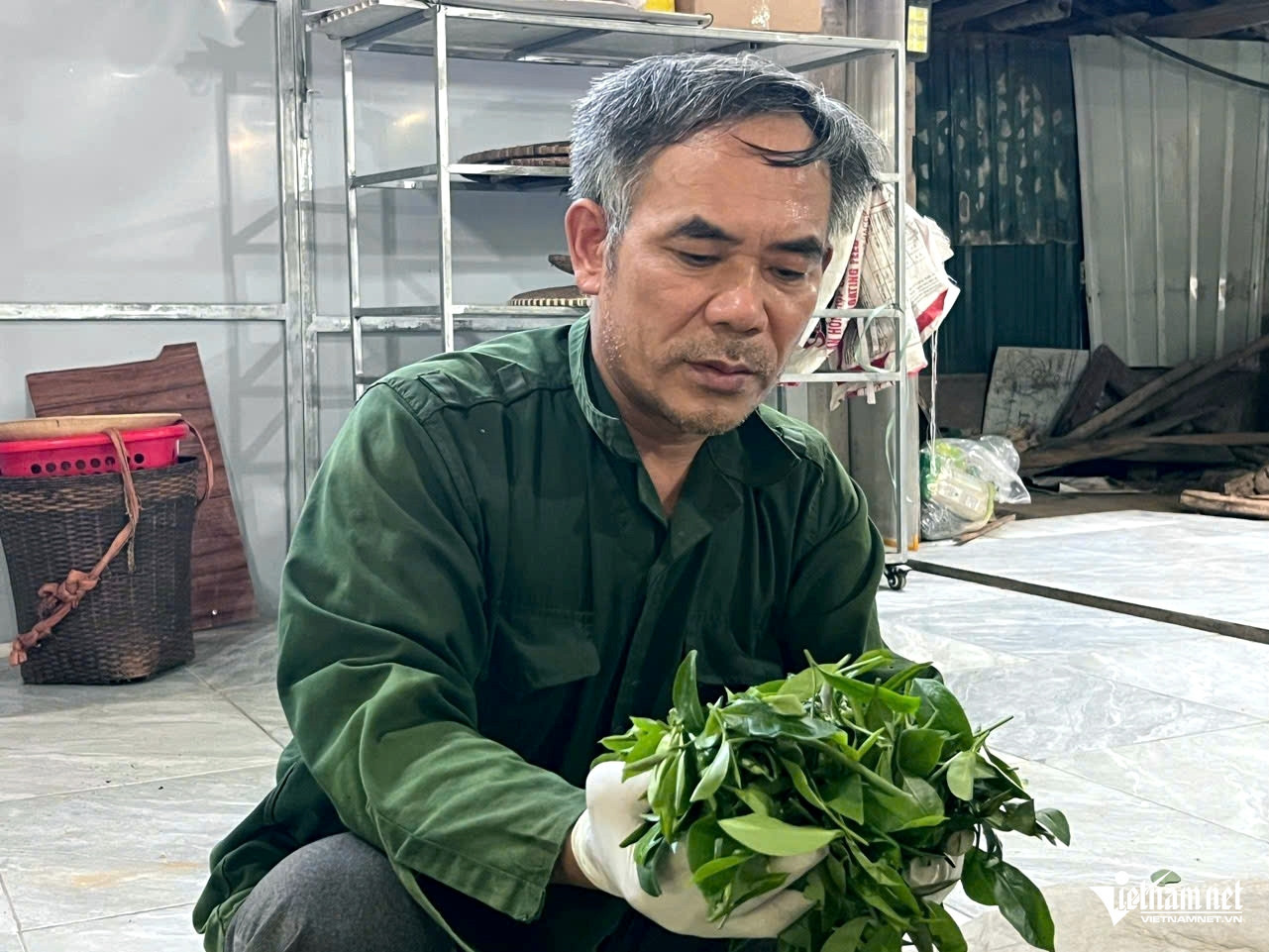
Thanh was one of the few who persisted. He explains that while Binh Son tea is aromatic and of high quality, the lack of buyers long kept profits low. Now, with over 1.5 hectares of tea, Thanh harvests more than 10 tons of fresh tea annually, yielding about 2 tons of dried tea.
By investing in vacuum packaging machines, tea-drying equipment and branded labeling, Thanh has been able to increase product value and earn around USD 16,400 (400 million VND) per year.
In 2016, Le Dinh Tu and several other households formed the Binh Son Agricultural Cooperative, aiming to revive traditional tea branding and implement value-chain production. Today, the cooperative manages nearly 80 hectares of tea - 12 of which meet VietGAP standards. It has 20 official members and over 100 linked households.
Its main products, such as dried loose tea and tea bags, are well-received in the market. In 2019, Binh Son’s dried tea was awarded a 3-star rating under the national OCOP (One Commune, One Product) program, which helped expand the brand’s reach and allowed many members to earn hundreds of millions of dong annually.
Farmer Le Van Thanh earns hundreds of millions of dong annually from tea. Photo: Le Duong
Currently, Tho Binh has nearly 400 hectares of tea, with 315 hectares in stable production - making it the largest tea-growing zone in the province. About 400 households are involved in tea cultivation, 100 of which specialize in tea buds, while the rest focus on tea leaves.
According to commune officials, apart from the cooperative - which buys and distributes roughly 20% of the total harvest - there are no major enterprises offering guaranteed purchasing contracts. To adapt, many households have turned their homes into mini-factories, investing in tea-processing equipment, vacuum sealing machines, logo printing, and packaging to enhance quality and market access.
The vast green tea hills not only bring in solid annual incomes but are also sparking ideas for community-based tourism.
“Beyond its economic value, Binh Son tea is opening doors to cultural tourism,” said a local leader. “We are working on community experiences such as tea picking, processing, and tasting to create a new income stream for locals”.
 Vietnamnet.vn

 Podcast




.svg)
