 Vietnamnet.vn

 Podcast



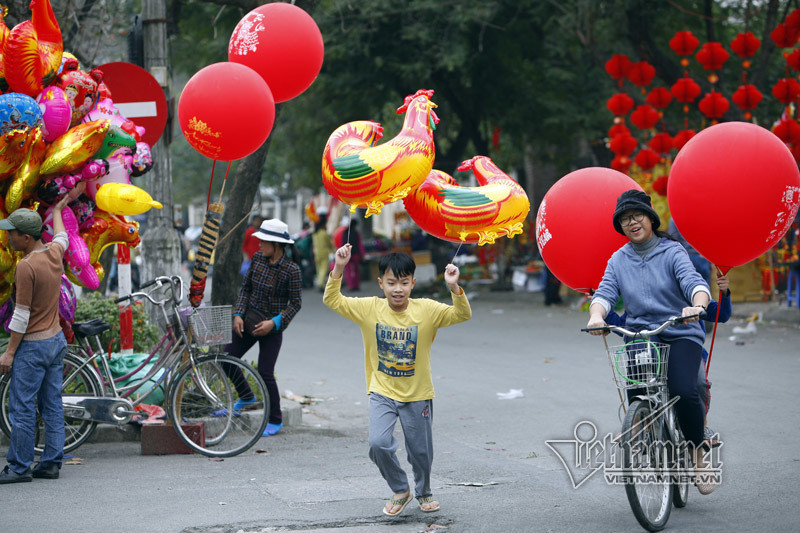
Nhung, a resident in Hanoi, has a daughter in grade 12 preparing for university entrance exams. Hearing her daughter say she would “stay put” during Tet and spend the entire holiday revising for exams, Nhung felt both sympathy and concern. Her daughter has recently registered successfully for the first round of the aptitude test organized by Vietnam National University, Hanoi, scheduled to take place just a few weeks after Tet.
“I understand the pressure my child is under, but this is also the last Tet of her ‘childhood’. It would be a pity if she only buries herself in books and misses visiting grandparents and relatives. I encourage her to keep a balance: study a few hours a day to avoid gaps in knowledge, and spend the rest of the time resting and enjoying family moments,” Nhung shared.
Hoang Phuong Ly, also from Hanoi, who has a daughter in grade 8 and a son in grade 4, said she has never forced her children to study during Tet. Her only requirement is that they finish any unfinished homework before the holiday, which is usually not much.
According to Ly, Tet is a time for the whole family to rest. Children can help parents clean the house, go Tet shopping, wrap banh chung, or visit relatives in their hometown. She believes that bonding, sharing, and helping children understand their roots are lessons far more valuable than textbook knowledge.
“I don’t want to force my children to sit at the desk unwillingly, doing homework just to get it done without focus. Turning a Tet holiday, which should be associated with joy, into ‘extra school days’ is not a way to help children progress. It can even trigger resistance,” she said.
Instead of forcing children to study, Ly believes there are many other ways to help them learn. For example, parents can suggest that children calculate their lucky money, then guide them in allocating it into jars for savings to buy a guitar, or purchase books. This helps children practice math skills and learn basic financial management.
Sharing the same view, Huynh Trang from Hanoi was candid: “Tet holidays should be spent bringing children together with their families. In just a few short days of Tet, children cannot suddenly become much better students. Forcing them to stay glued to their desks is simply pointless,” she said.
Having witnessed many families arguing over their children’s studies, Trang recalled that children are sometimes excited to go Tet shopping with their parents, but end up staying home because they have not finished their homework.
“Even if parents let them come along, they keep reminding them: ‘Go ahead and play, but you’ll have to study when we get home’. The joyful Tet atmosphere is lost because of that,” she said.
Trang’s daughter is studying at a private primary school in Hanoi. She said she feels fortunate that the school assigns very little homework during Tet, allowing students to fully enjoy a comfortable and warm holiday.
In some classes, teachers may still assign a few light tasks, but these are often experiential activities aimed at developing soft skills.
For instance, instead of traditional exercises, teachers may ask students to complete experiential tasks during Tet, such as making a short English presentation video about their family’s Tet activities, or writing reflections or diary entries to record meaningful moments during the holiday.
According to Trang, such assignments help children practice language skills, encourage observation and emotional awareness, and also strengthen family bonds.
“A few days of Tet are not enough to determine the success or failure of an exam. Therefore, Tet should not be filled with homework, commands, and stress. Otherwise, children may lose their enthusiasm for learning. Having a proper break helps them return to school with a more relaxed and confident mindset,” she said.
So, during a long Tet holiday that falls close to major exams, should children be allowed to rest properly, or should they continue studying to avoid falling behind? Does forcing children to study increase stress and lead to counterproductive results? Or is a light review rhythm enough to help them stay connected and ease their return to school?
In reality, each family faces different circumstances. Final-year students are under heavy exam pressure, while younger children need time to rest and fully experience the Tet atmosphere. Therefore, the issue is not simply about “studying or resting,” but about how to balance discipline and relaxation, long-term goals and childhood itself.
Le Huyen
.svg)
