 Vietnamnet.vn

 Podcast



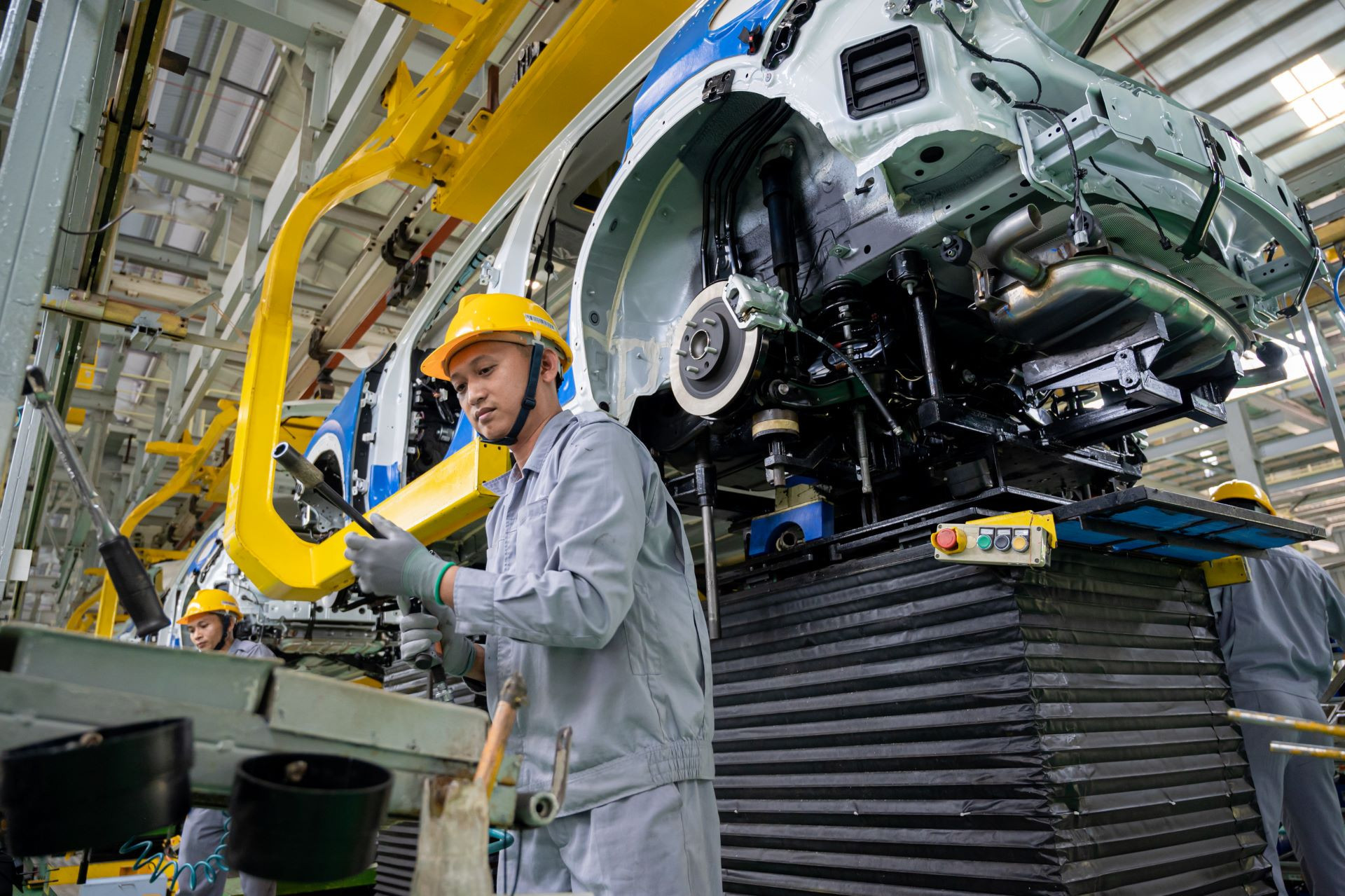
The information has quickly stirred discussion among car users in Vietnam. It signals a new direction for the automotive industry, marking a shift from assembling and distributing foreign vehicles to building a homegrown passenger car brand.
Specifically, in Message No. 21 for 2026, Tran Ba Duong stated that “based on the experience and success of Thaco-branded buses and trucks, Thaco Auto will introduce and sell Thaco-branded minibuses in June 2026, and Thaco-branded passenger cars in 2027.”
He emphasized a focus on product development tailored to specific customer requirements and personalization, while boosting export sales and expanding spare parts services.
Under the newly announced orientation, Thaco Auto will also continue to expand its retail network, including multi-brand passenger car showrooms and systems for light trucks and mass-market passenger vehicles at commune and ward levels.
Currently, Thaco Auto is one of Vietnam’s largest automotive enterprises, operating a production and assembly complex in Chu Lai, Quang Nam. The company assembles and distributes international brands such as Kia, Mazda and Peugeot; it also assembles and distributes BMW and distributes MINI in the premium segment.
In the commercial vehicle segment, Thaco develops trucks, buses and specialized vehicles under the Thaco brand, with localization rates reaching up to 70 percent.
According to sales data from the Vietnam Automobile Manufacturers’ Association (VAMA), brands assembled and distributed by Thaco have at times accounted for around 30 to 35 percent of the domestic passenger car market, depending on the year. However, all of these products carry foreign brand names.
For 2026, Thaco Auto targets sales of more than 96,600 vehicles, revenue of VND65,500 billion, export revenue exceeding US$30.5 million, a workforce of about 13,000 and investment spending of more than VND1,000 billion.
In 2027, projected revenue is expected to reach VND72,000 billion, aligned with the company’s entry into the self-branded passenger car segment.
At present, Vietnam has only one enterprise developing passenger cars under a Vietnamese brand - VinFast, established in 2019 and focused on an electric vehicle strategy.
For the past three decades, Vietnam’s auto market has largely been dominated by foreign brands such as Toyota, Honda, Ford and Mercedes-Benz. More than ten automobile manufacturers operating in Vietnam follow assembly and distribution models for overseas brands, with supply chain decisions and product strategies controlled by parent companies abroad. Other mass-market and luxury passenger vehicles are fully imported.
Thaco’s announcement of a roadmap to develop its own passenger car brand is therefore seen as a notable move. At the same time, it raises significant challenges related to research and development capability and competitiveness once the products officially enter the market.
Meanwhile, the Ministry of Industry and Trade is drafting and finalizing a strategy for the development of the automotive industry to 2030, with a vision to 2045. According to the latest draft, a key objective is to develop domestic vehicles, raise the domestic consumption rate to 80-85 percent and gradually master the supply chain and automotive industry.
Pham Huyen
.svg)
