 Vietnamnet.vn

 Podcast



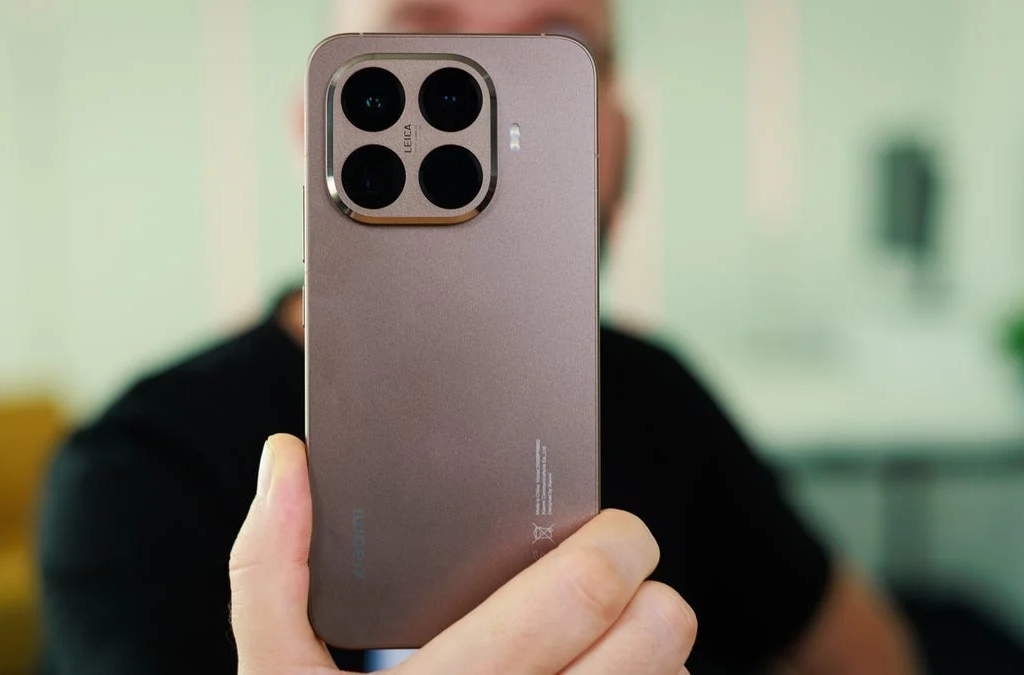
We’re living in an age where “everything is powered by AI,” and few areas have felt the impact more than mobile photography. The reason is simple: slim smartphones can’t physically house large sensors or lenses, so what hardware can’t do, software now tries to fix.
At first, it was about sharpening, noise reduction, and basic HDR to brighten shadows and retain highlight details. Then came more advanced HDR for better contrast and clarity. Now, we’ve arrived at the final boss: AI-enhanced photos.
The controversy erupted when several smartphones claimed to capture ultra-sharp images of the Moon. But it turned out the AI had simply recognized the Moon and overlaid a high-quality template image - creating a beautiful photo that wasn’t actually taken by the user.
Was it a lie? Or a “reimagination of reality”? That debate still lingers, even as things have gone much further.
AI now interferes in countless ways. In one case, a user zoomed 100x to photograph a storefront, which had a fridge in view. When the phone processed the image, the fridge handle had changed entirely. The AI recognized it as a fridge handle - but instead of restoring true detail, it drew a prettier, sharper version.
While technically impressive, the question arises: Are modern smartphone photos still “real” or just AI renderings?
When AI redraws the world, and the photo is no longer a photo
Online tech forums reveal that many users desperately want a clear “AI off” toggle in their camera apps. Xiaomi, along with its Poco and Redmi brands, has responded by allowing users to disable or drastically reduce AI Enhancements with a familiar button next to the HDR toggle.
Some believe that switching to RAW or Pro mode solves the issue. But that’s not quite true.
Starting with the iPhone 14 Pro, enabling ProRAW or shooting in 48MP actually triggers stronger image processing. Even Apple’s so-called Linear DNG files have been touched by Smart HDR and Deep Fusion. While users get more room for editing, they can’t completely escape AI’s fingerprints.
Samsung offers two paths: Expert RAW and Pro Mode. Expert RAW is a standalone app that uses extensive multi-frame processing. The latest version allows HDR to be turned off and sharpening reduced, but trust depends on real-world results.
In contrast, the default Pro Mode is much “cleaner,” with minimal scene optimization, artificial color boosts, or aggressive HDR. While it still uses some multi-frame processing and limits resolution, it currently offers the fairest shot at authenticity.
Google has been synonymous with computational photography since the first Pixel. Even when shooting RAW on the Pixel 10, the camera uses HDR+ pipelines to compensate for small sensors. While Ultra HDR can be disabled and the Pixel saves both a polished JPG and a minimally processed DNG, the latter is still not truly untouched.
Nobody denies that post-processing makes smartphone photos brighter, less noisy, sharper, and social-media ready. But there’s a cost. Many users now find smartphone images too artificial - like comic book illustrations, with neon skies, plastic skin, and unnaturally perfect grass.
Users want honesty. Can the tech giants deliver it?
Between 2024 and 2025, a nostalgic trend swept through young users: rediscovering early-2000s compact digital cameras. While some were drawn by vintage vibes, many simply wanted photos that looked more “real,” “raw,” and emotionally resonant.
With flash on, party shots from these older cameras feel moodier and more alive than the sterile perfection of modern Portrait Mode. Shooting with digicams also forced users to cherish the moment, rather than spam dozens of shots only to forget them on the cloud.
The movement has even spilled into other areas - like MP3 players - as a kind of rebellion against “fast-consumption culture.”
Smartphones are unlikely to get significantly larger sensors due to size constraints. That means some degree of post-processing is here to stay. But AI has crossed a line, and what users want now is simple: the right to choose.
A clear, honest toggle to reduce AI would bring photos closer to the real world. The growing interest in vintage iPhones and digicams isn’t about wanting uglier photos - it’s about wanting truthful ones, with soul.
In 2026, if Samsung, Google and Apple want to keep their users’ trust, it’s time they get serious about offering a real “AI switch.” Not just for show - but to give control back to the photographer.
Hai Phong
.svg)
