 Vietnamnet.vn

 Podcast



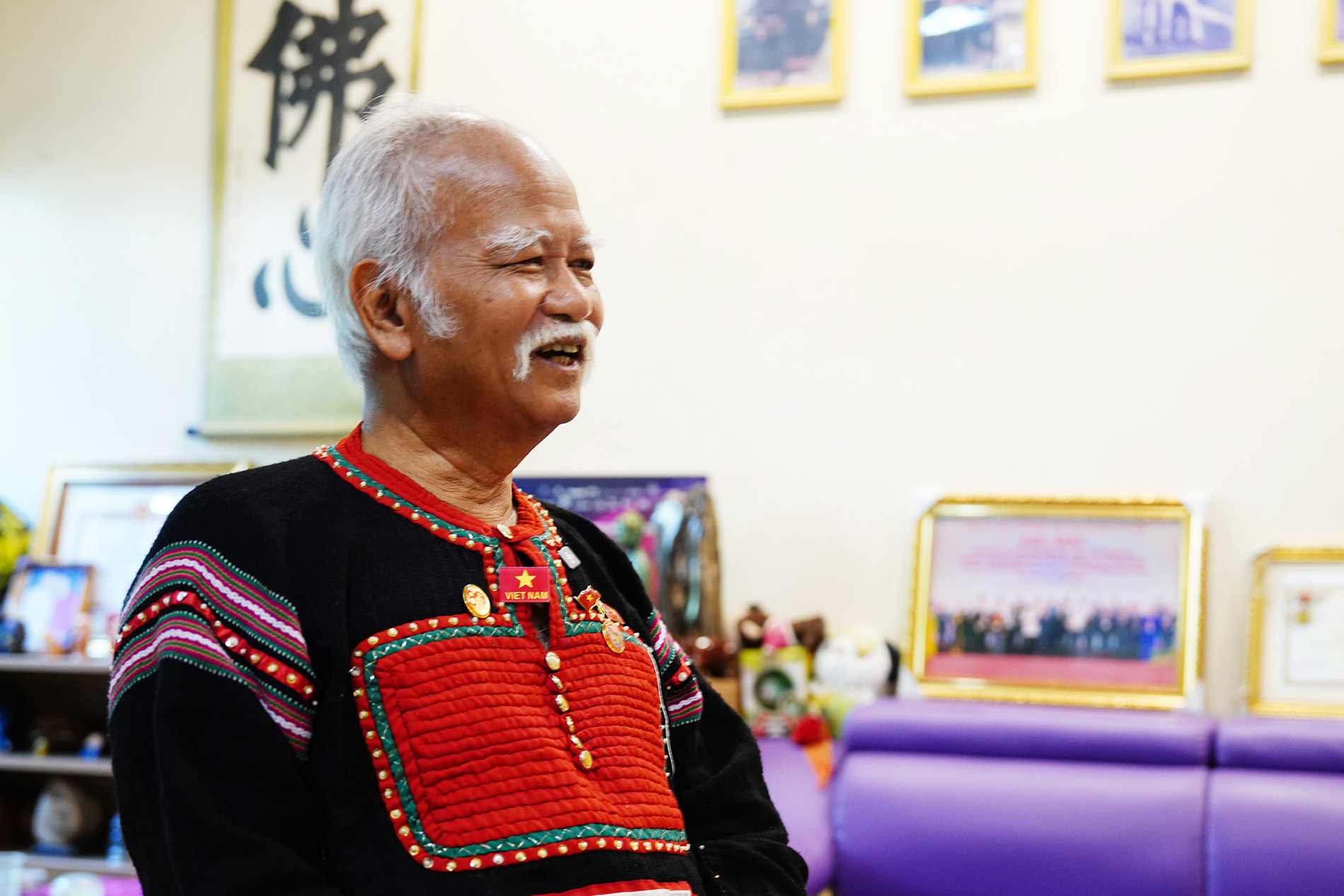
For Ksor Phuoc, that paper was a letter he wrote himself, requesting his superiors to consider disciplinary action against him following the riots that erupted in Gia Lai in 2001.
At the time, he was the Secretary of the Gia Lai Provincial Party Committee. A major upheaval occurring in the heart of the Central Highlands was not just an issue of security and order. It was a wound in the hearts of the people, a question posed to the entire political system, and particularly to the local head.
Remarkably, the incident was not small; in Ksor Phuoc's words, it involved "thousands of participants and took place across many districts and towns." Nguyen Tan Dung, who was then the Permanent Deputy Prime Minister, directly came to the area to direct operations. Ksor Phuoc then was given 10 days to resolve the matter.
"I asked for seven days, but only after just three days, Gia Lai had fundamentally stabilized the situation. We settled it smoothly, and the people agreed and supported us. The Politburo and the Standing Committee of the Politburo back then unanimously agreed that Gia Lai's handling of the situation was very good," Ksor Phuoc recalled.
After working alongside the collective provincial leadership to satisfactorily handle the situation, he wrote a letter to accept responsibility.
He recounted: "I wrote a letter to voluntarily accept a disciplinary measure and sent it to the Central Government. In the morning, General Secretary Le Kha Phieu called me. In the afternoon, Pham The Duyet, a member of the Standing Committee of the 8th Politburo, also discussed with me directly. The leading comrades acknowledged that Gia Lai had resolved the issue very well, very quickly. They did not raise the issue of considering disciplinary action and encouraged me to confidently continue managing the work of the Gia Lai Provincial Party Committee at that time."
The price of peace
That spirit of facing facts head-on and not dodging responsibility was forged during his years as a police officer in the volatile Central Highlands. Leaving school, he joined the police force when ethnic minority areas still faced many burning national security issues.
He said: “We had a battle to protect national security that was extremely arduous at the time. Those were not peaceful years. There were ambushes, landmines, attacks on vehicles, and officials were kidnapped and killed. In my unit, seven comrades died and nine were wounded in combat…” For him, that is a memory of the price of peace.
From those hard years, Ksor Phuoc, who was then a security officer in charge of countering FULRO in Dak Doa District, now Dak Doa Commune, Gia Lai Province, understood that keeping the Central Highlands safe could not rely on orders alone. You had to win the people’s hearts, make them trust you, and work with them to address the root causes of instability.
Doing both combat duty and mass mobilization work, he came to know nearly every road, house, and upland field here. Some forest paths took forever to reach a village. In the rainy season, mud caked your feet; in the dry season, red dust covered you. Many villages had no electricity, and at night, there was only the flicker of fire in the stilt houses.
In that context, police officers didn’t just carry a gun. They also brought the light of information. He recalled that the provincial police organized film projection teams to go deep into remote areas to show films for ethnic people.
In the dirt yard of a village, a white screen was put up, and villagers gathered as if welcoming something new from the outside world. It wasn’t just a movie screening - it was a way to bring trust, policy, the government’s closeness to the people.
He and his comrades persuaded those who had gone astray to return. Some came out of the deep forest filled with guilt and fear; some were still doubtful, not yet trusting. But instead of only confronting them, he chose to win their hearts: persuading, reforming, and then letting those who had returned continue to mobilize others to come back to the villages. He called this a "new way of fighting", the one driven by perseverance, tolerance, and faith in the people.
To him, peace is not a concept seen in a document. Peace is the first light turned on inside a stilt house, a child being able to attend class, a person who returns, and a village hearing a rooster crow after a long night without feeling anxious.
Thai An
.svg)
