 Vietnamnet.vn

 Podcast



Nearly 300 years old, Ong Voi communal house in Hoi An (Da Nang) stands out with its unique two-story rear sanctuary, a pair of majestic elephant statues in the front courtyard, and the preservation of ten imperial edicts. It has become a remarkable cultural and spiritual landmark for the people of the ancient town.
Hoi An communal house, commonly known as Ong Voi communal house, was built in the 18th century. More than just a community gathering place, it also serves as a significant religious space for Hoi An residents.
According to the Hoi An Center for Cultural Heritage Conservation, the communal house is uniquely valuable in terms of its scale, structure, and decorative artistry. Its overall layout includes a gate, pillar posts, perimeter walls, a spacious front yard featuring elephant statues, a ceremonial hall, a stone-paved central courtyard, east and west wings, the main hall, and a two-story rear sanctuary.
The standout architectural feature is the two-story rear sanctuary - a design element exclusive to Ong Voi communal house and rarely found in other communal houses in Hoi An.
Its interior worship system is also more elaborate than those of many village communal houses. The main deity worshipped is Dai Can, along with guardian deities of water, praying for peace and prosperity for fishermen and traders. Within the courtyard lies a three-room shrine dedicated to the village deity, the Ba Ba goddesses, and the Five Elements deities.
Significantly, the communal house still preserves 10 imperial decrees bestowed by Nguyen Dynasty emperors, ranging from the 7th year of Minh Mang's reign (1826) to the 9th year of Khai Dinh's reign (1926).
According to Mr. Pham Cong Toan, a site manager, the name “Ong Voi” (Mr. Elephant) comes from the pair of kneeling elephant statues placed in the front courtyard. These large statues are intricately carved, dressed in ceremonial attire, and adorned with detailed embellishments.
The elephant imagery is not only visually striking but also symbolically represents strength and wisdom in folk culture. In Buddhism, elephants symbolize mental strength and are associated with many traditional tales.
Despite undergoing several restorations in 1818, 1907, 1942, 1953, 1996, and 2007, Ong Voi communal house has retained its distinctive architectural and artistic value.
Some images of this unique ancient communal house in Hoi An:

Ong Voi communal house features a "mouth"-shaped layout, with a symmetrical structure that rises gradually from the ceremonial hall to the rear sanctuary. It blends the traditional characteristics of Vietnamese village communal houses with urban architectural elements linked to trade activities.

The kneeling elephant statues placed about 4 meters from the front hall are a defining element that gives the communal house its name.
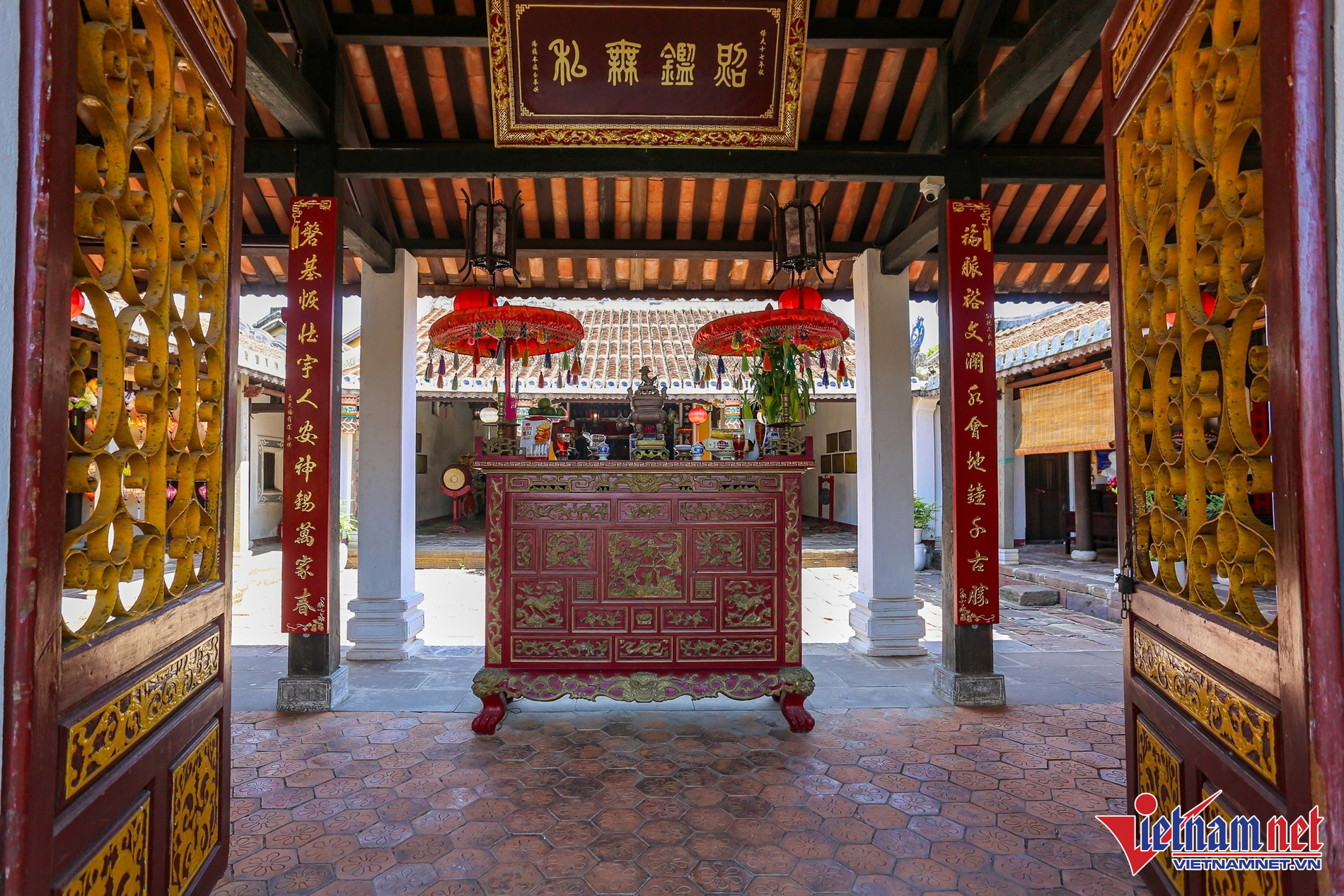

The ancient incense altar at the entrance is exquisitely carved and decorated.

The main hall’s interior worship space honors protective deities of Hoi An residents. Many Han-Nom couplets are engraved on solid stone panels here.

Today, this communal house is not only a historical relic but also a cultural and spiritual symbol, contributing to the Outstanding Universal Value of Hoi An’s World Heritage status.
The worship area dedicated to the principal deity Dai Can reflects the people's reverence for water-related beliefs.

Numerous imperial edicts from different dynasties have been preserved, affirming the site’s historical and religious significance.

The two-story rear sanctuary - an exceptionally rare architectural design - is a distinctive feature of Ong Voi communal house.

On December 15, 2021, Ong Voi communal house was officially recognized as a provincial-level historical site.
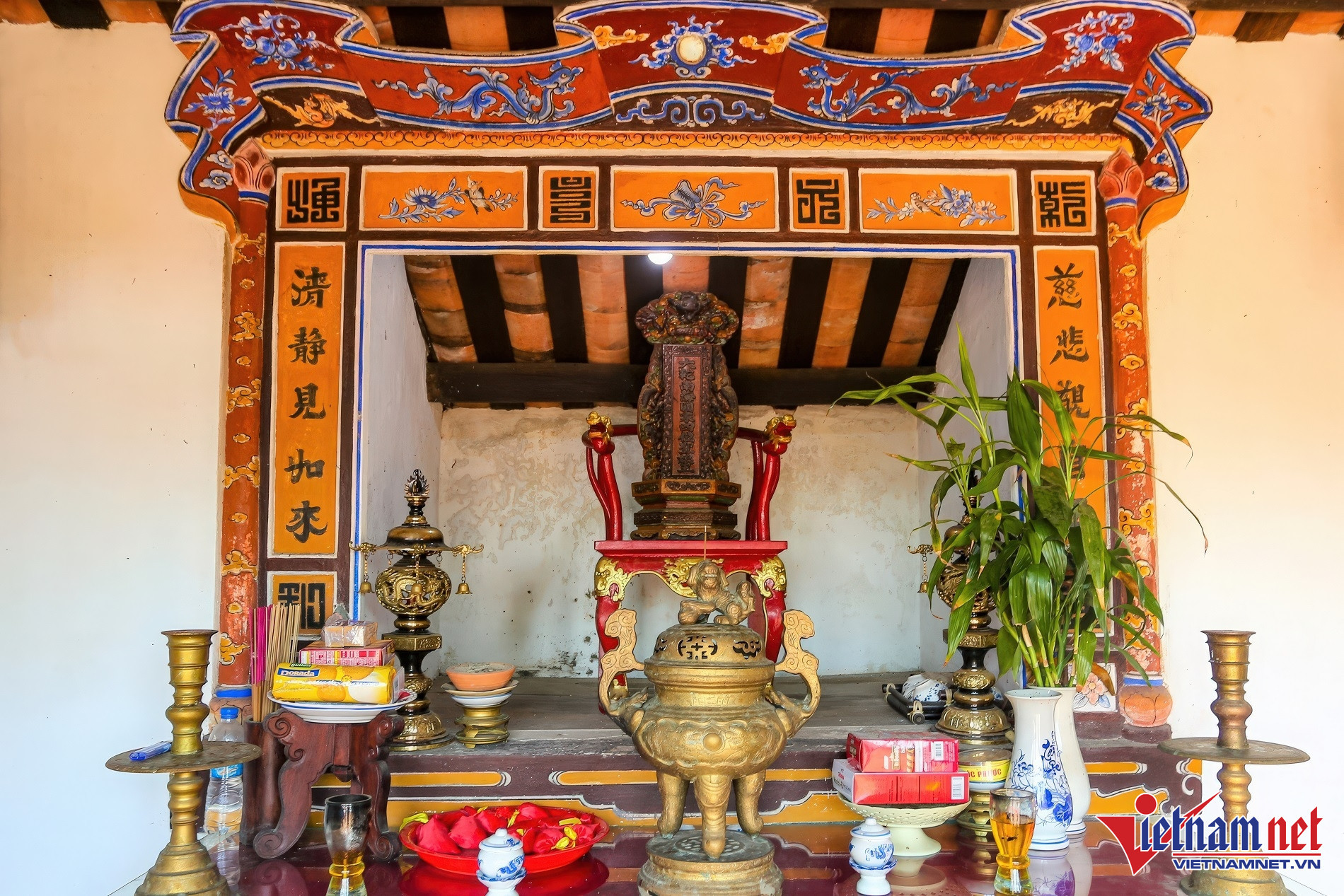
Inside the two-story rear sanctuary, an ancestral altar is still in place.

The stone-paved courtyard is surrounded by the east and west wings and the main hall.

Intricate decorative motifs on columns and eaves showcase traditional carving techniques.

A vibrant qilin image stands out on the screen wall in front of the Ba shrine within the communal house compound. On both sides are stone qilin statues.

Inside the Ba shrine, there are three altars dedicated to the village deity, the Ba Ba goddesses, and the Five Elements. The coexistence of both a communal house and a shrine in the same compound is an extremely rare feature compared to other places.

Ha Nam
.svg)
