 Vietnamnet.vn

 Podcast



Mentioning A Luoi, many people still remember a strategic area along the legendary Truong Son corridor, where soldiers and civilians endured fierce military raids and relentless bombardments during wartime.
On that resilient and heroic land, the Pa Ko people, along with the Co Tu and Bru Van Kieu communities, placed absolute trust and unwavering loyalty in the Party and President Ho Chi Minh.
Representing this spirit is a family with three People's Armed Forces Heroes: Ho Duc Vai, Ho Kan Lich, and Ho A Nun. Among them, Ho Duc Vai is the uncle, while Ho Kan Lich and Ho A Nun are siblings.
Hero Ho Duc Vai and his comrades participated in dozens of battles, striking terror into the enemy.
In some battles, he single-handedly approached enemy troops conducting sweeps and launched attacks that caused them to panic and retreat.
In 1965, he was awarded the title of Hero of the People's Armed Forces, becoming the first ethnic minority person in the South to receive this noble honor. On this occasion, he met Uncle Ho personally and was honored to be given the name Ho Duc Vai.
Upon his return, the people of A Luoi organized a rally to hear his stories about meeting Uncle Ho. Since then, many Pa Ko and Bru Van Kieu people in A Luoi have requested to adopt President Ho Chi Minh's surname – Ho - as their own.
Following in the footsteps of her heroic uncle, female guerrilla fighter Ho Kan Lich became a legend of the Truong Son mountains. Born in 1943, she became famous for her bold and fearless combat style, striking fear into enemy forces stationed in outposts across the A Luoi highlands.
Throughout her combat career, she participated in 49 battles and eliminated hundreds of enemy soldiers. According to historical records, around 1961, Ho Kan Lich used a rifle to shoot down a Dakota aircraft at A So airfield, becoming a legendary story in the A Luoi highlands.
In 1967, Ho Kan Lich was awarded the title Hero of the People’s Armed Forces, becoming the second member of the family to receive the distinction.
While Ho Duc Vai and Ho Kan Lich fought directly on the battlefield, Ho A Nun contributed through extraordinary strength along the Truong Son logistics route.
Born in 1944, Ho A Nun was famous as a porter on the A Luoi battlefield. During the fiercest years of the war, he transported a total of 179 tons of weapons and food supplies for soldiers.
On some trips, he carried nearly 200 kg of goods on his back, crossing forests and streams for dozens of kilometers to provide timely supplies to the front.
Ho A Nun’s strength was not only physical, but also rooted in determination and loyalty to the revolution. In 1969, he was awarded the title Hero of the People’s Armed Forces.
The three Heroes of the People’s Armed Forces in this Pa Ko family contributed to the nation in different ways, yet they all became “red nuclei” deep within the Truong Son mountains.
Continuing the legacy in a revolutionary homeland
Although the war has long ended, the revolutionary spirit of the three heroes continues to be nurtured and passed down to younger generations.
In peacetime, Hero Ho Duc Vai continued serving the country in many positions. He was a member of the National Assembly during the sixth term (1976-1981) and seventh term (1981-1987), as well as a member of the Central Committee of the Vietnam Fatherland Front.
Ho Duc Vai brought the voices of ethnic minority communities to the National Assembly and to the Party and State. As a result, many ethnic policies were issued in line with real conditions, gradually improving the lives of ethnic minority communities.
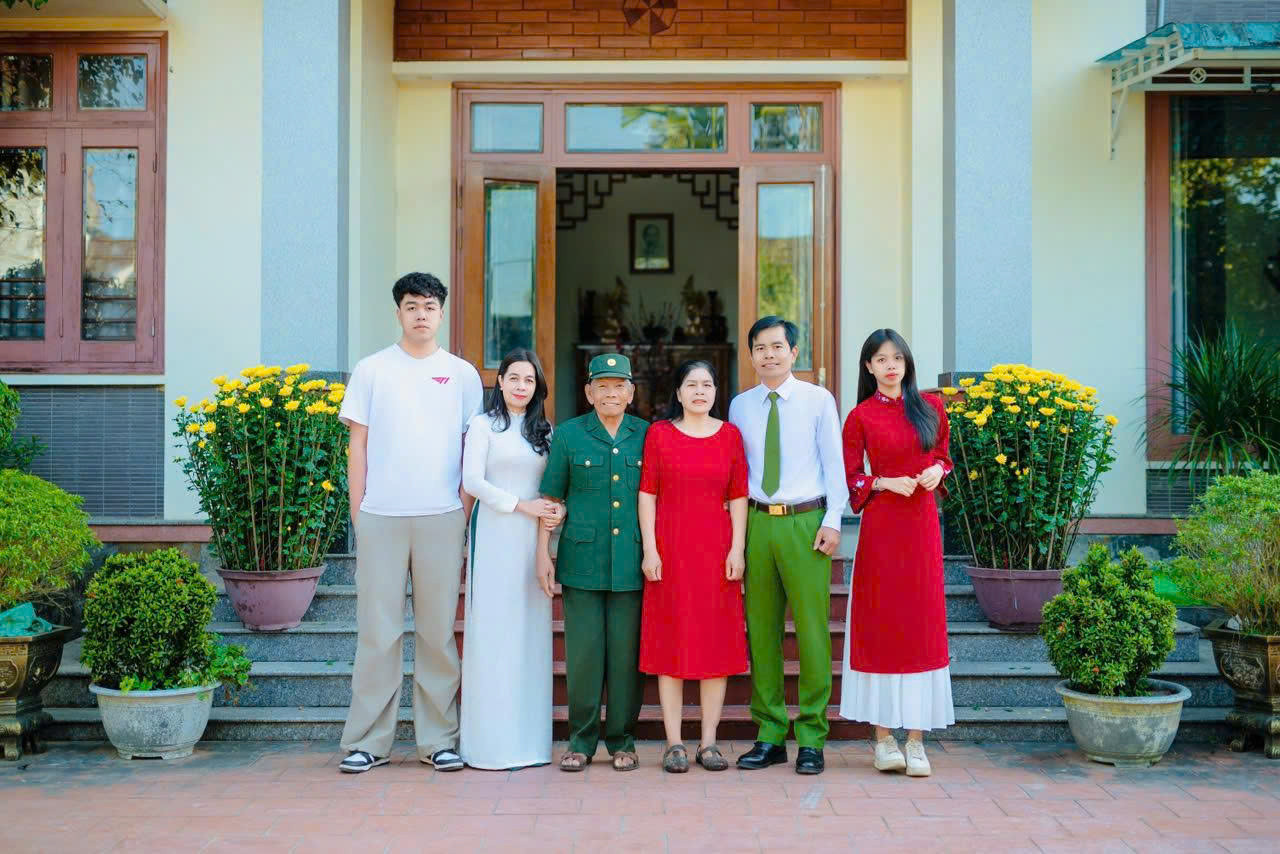
“I am very proud of my father and my family’s precious traditions. As descendants, we always strive to preserve and promote our family’s revolutionary tradition, living and working in ways worthy of the sacrifices and contributions made by previous generations,” shared Lieutenant Colonel Ho Duc Hanh, eldest son of Hero Ho Duc Vai.
The eldest son of Ho Duc Vai currently works in the police force of Hue, while his second son works for the Party Committee of A Luoi 2 Commune.
His children continue quietly contributing to their homeland through their daily work, just as previous generations devoted themselves wholeheartedly to the nation.
Tien Pham
.svg)
