 Vietnamnet.vn

 Podcast



The image of a silver-haired elder, upright and composed in a royal robe, guiding a buffalo across the fields at the Tich dien Doi Son festival in Ninh Binh drew special attention from crowds of residents and visitors alike.
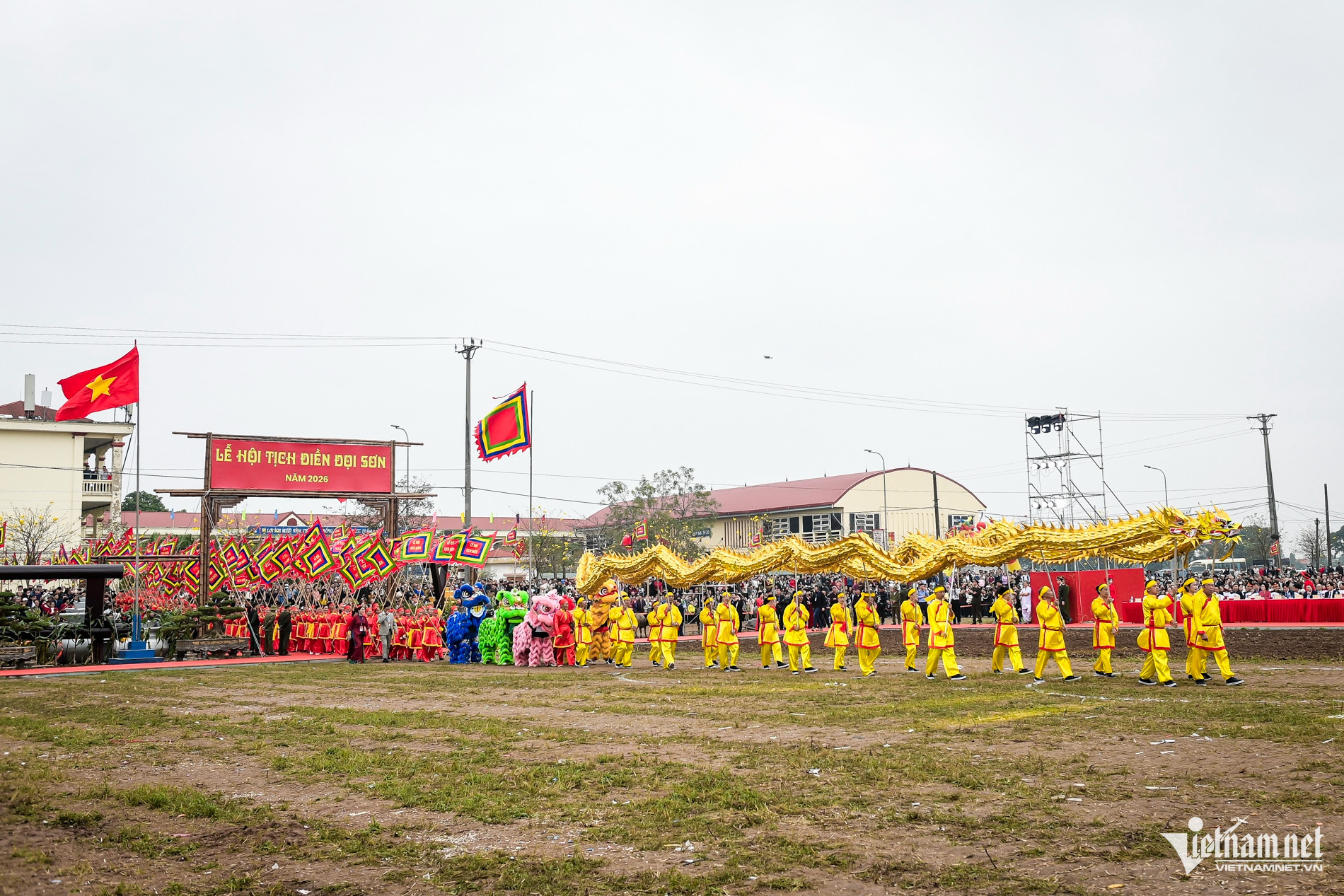
On the morning of February 23, the seventh day of the first lunar month, the 2026 Tich dien Doi Son festival unfolded on the Doi Tin field at the foot of Doi Mountain in Tien Son ward, Ninh Binh province.
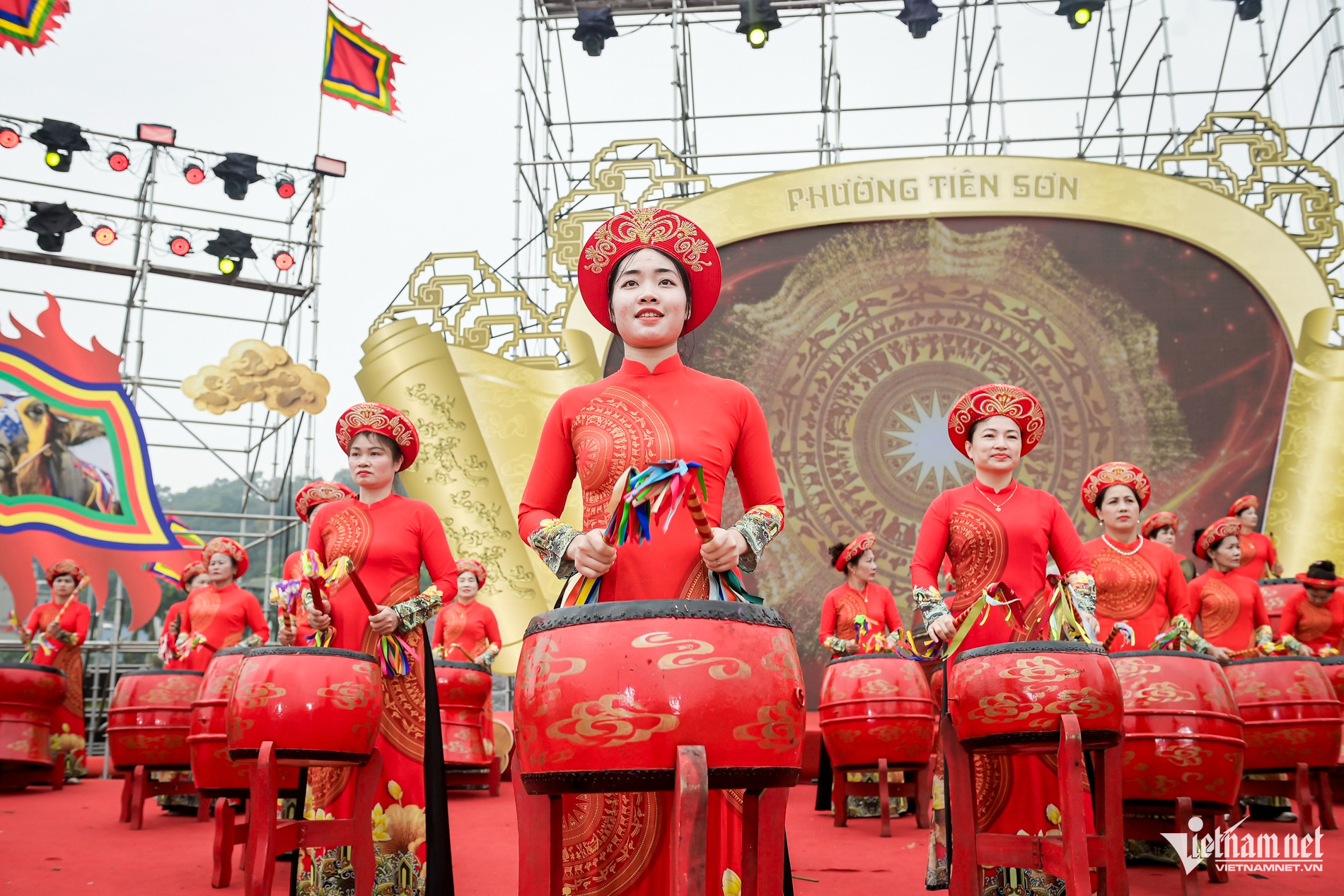
The festival traces its origins to the spring of 987, when King Le Dai Hanh returned to the land of Doi Son and personally ploughed the first furrows of the year to encourage agricultural production. Since then, the “king ploughing the field” ritual has become a beautiful symbol of Vietnam’s agrarian tradition, expressing hopes for favorable weather, abundant harvests and national prosperity.
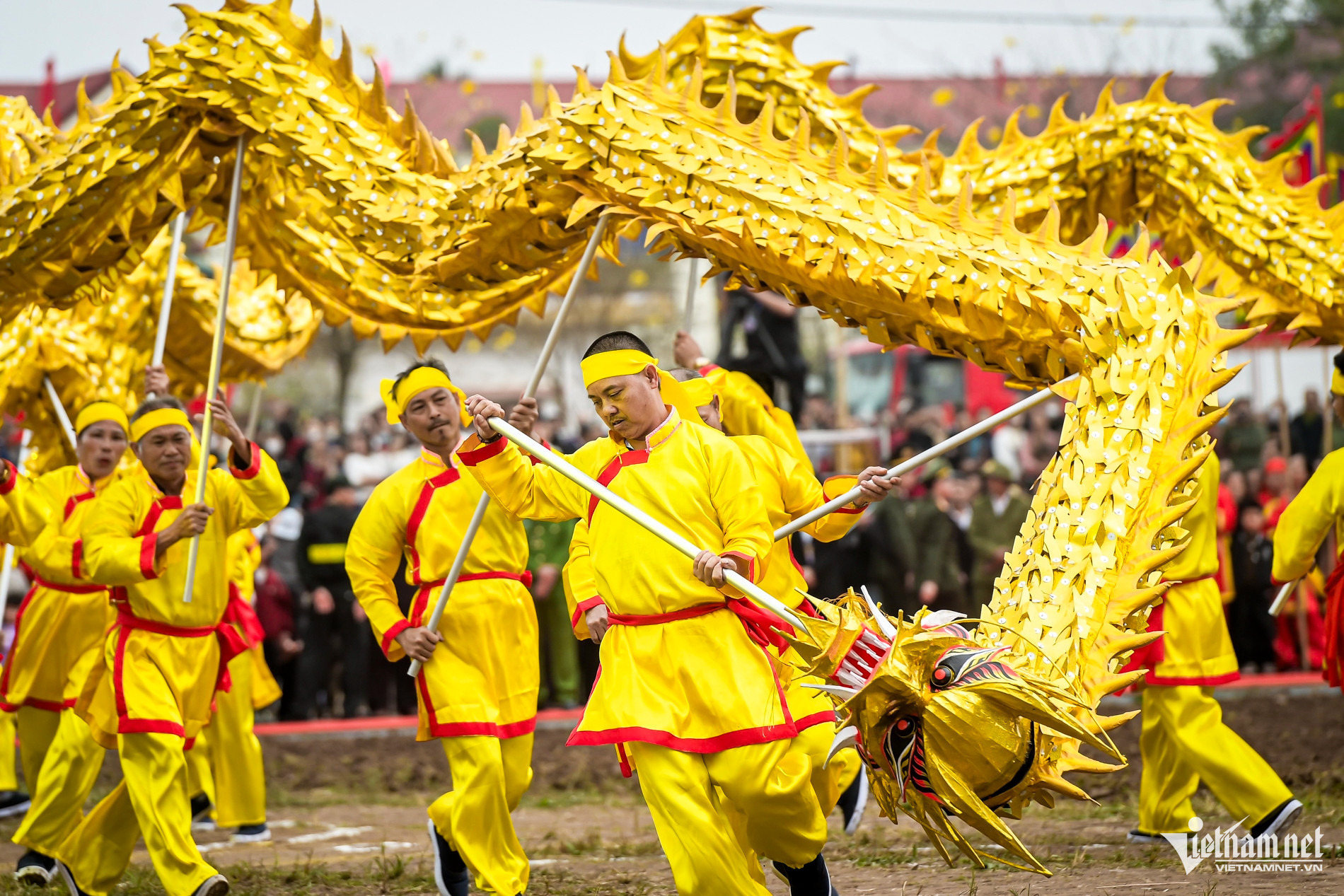
The celebration opened with a dragon dance ceremony, a gesture of reverence toward heaven and earth and a prayer for good fortune in the new year.
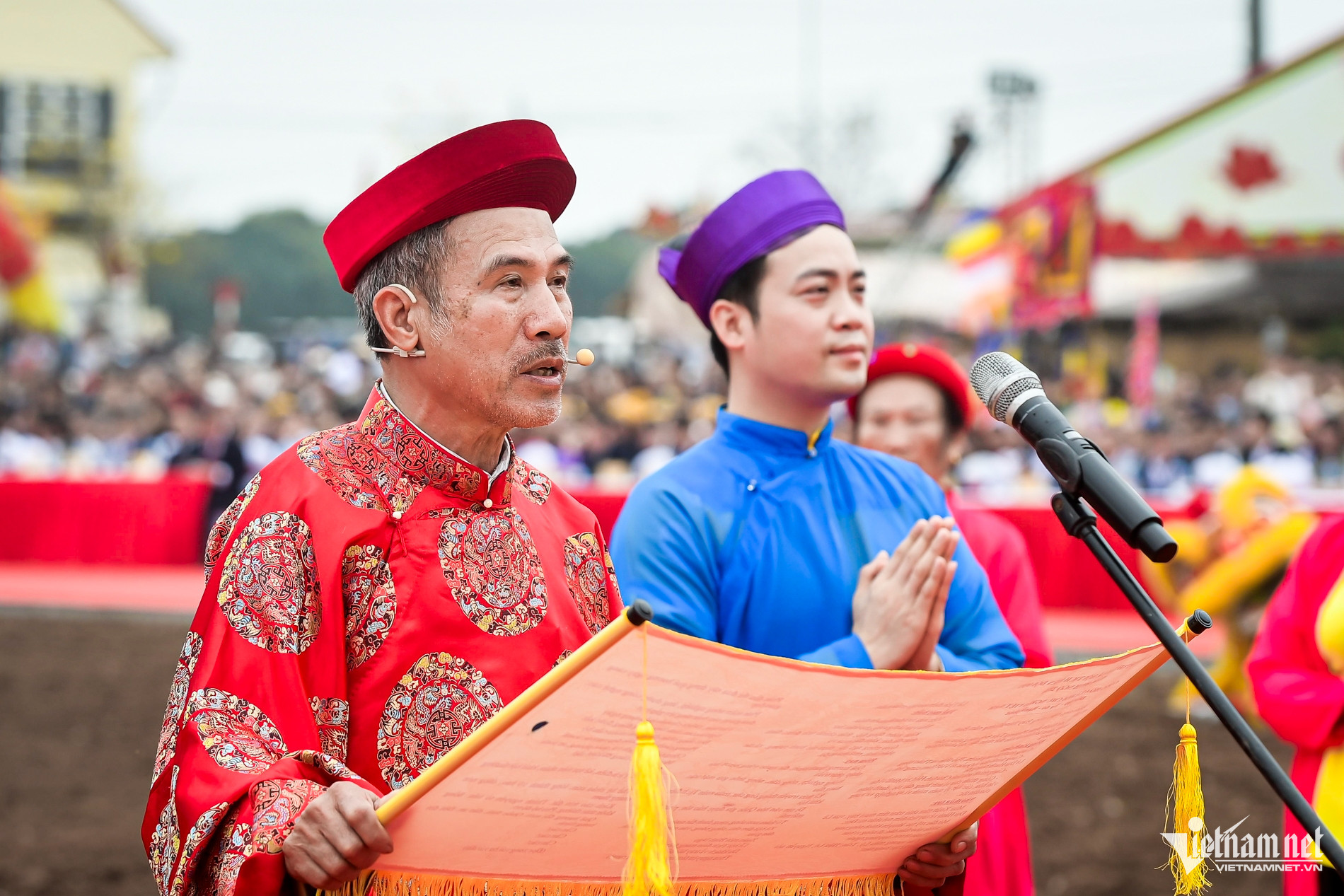
Artisan Pham Chi Khang, representing the local community, read the ceremonial text before the altar of Than Nong and the spirit tablet of King Le Dai Hanh. Delegates then offered incense in solemn tribute.
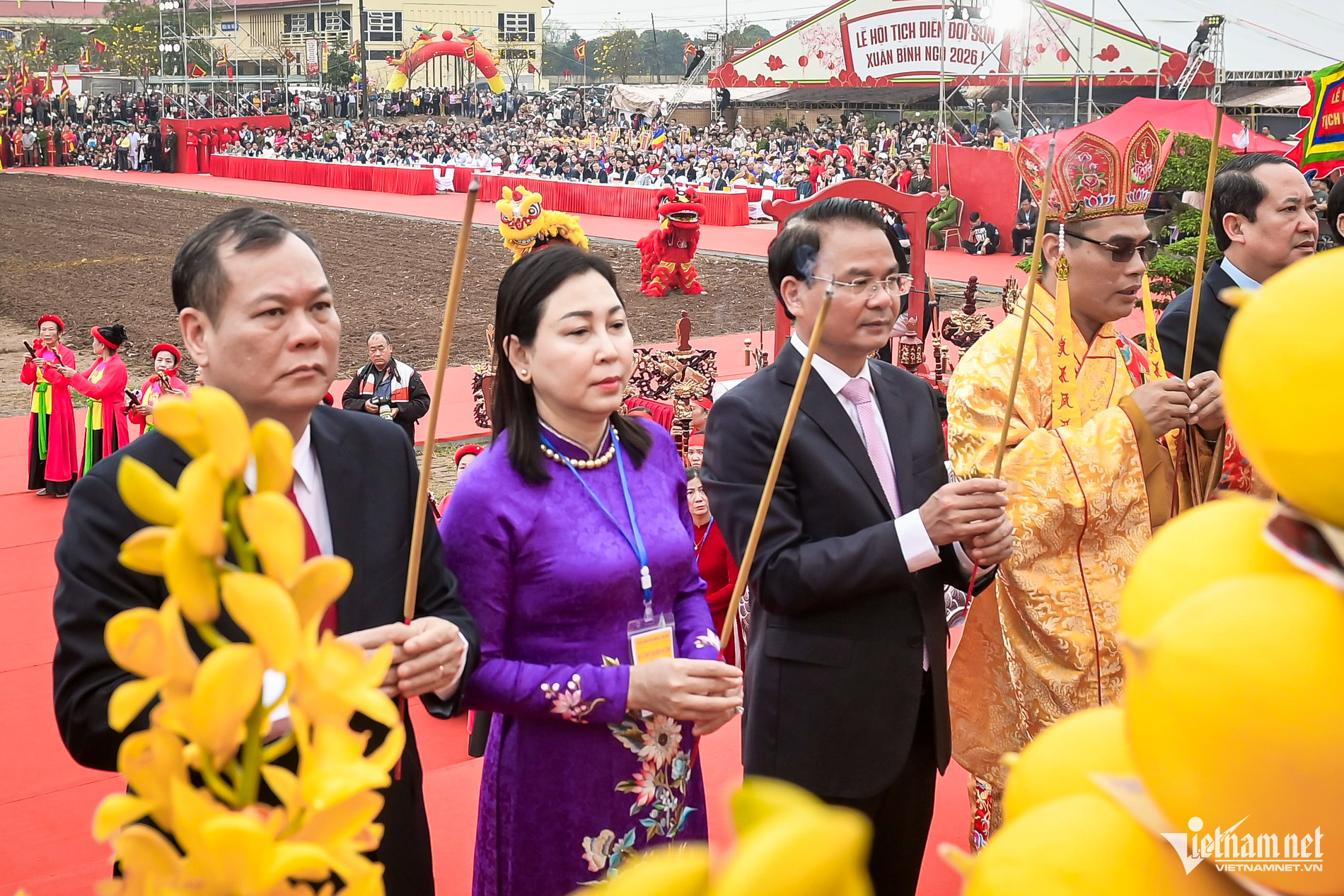
Following the incense offering and rites honoring Than Nong, King Le and other tutelary deities, the field-ploughing ceremony commenced in a dignified atmosphere.
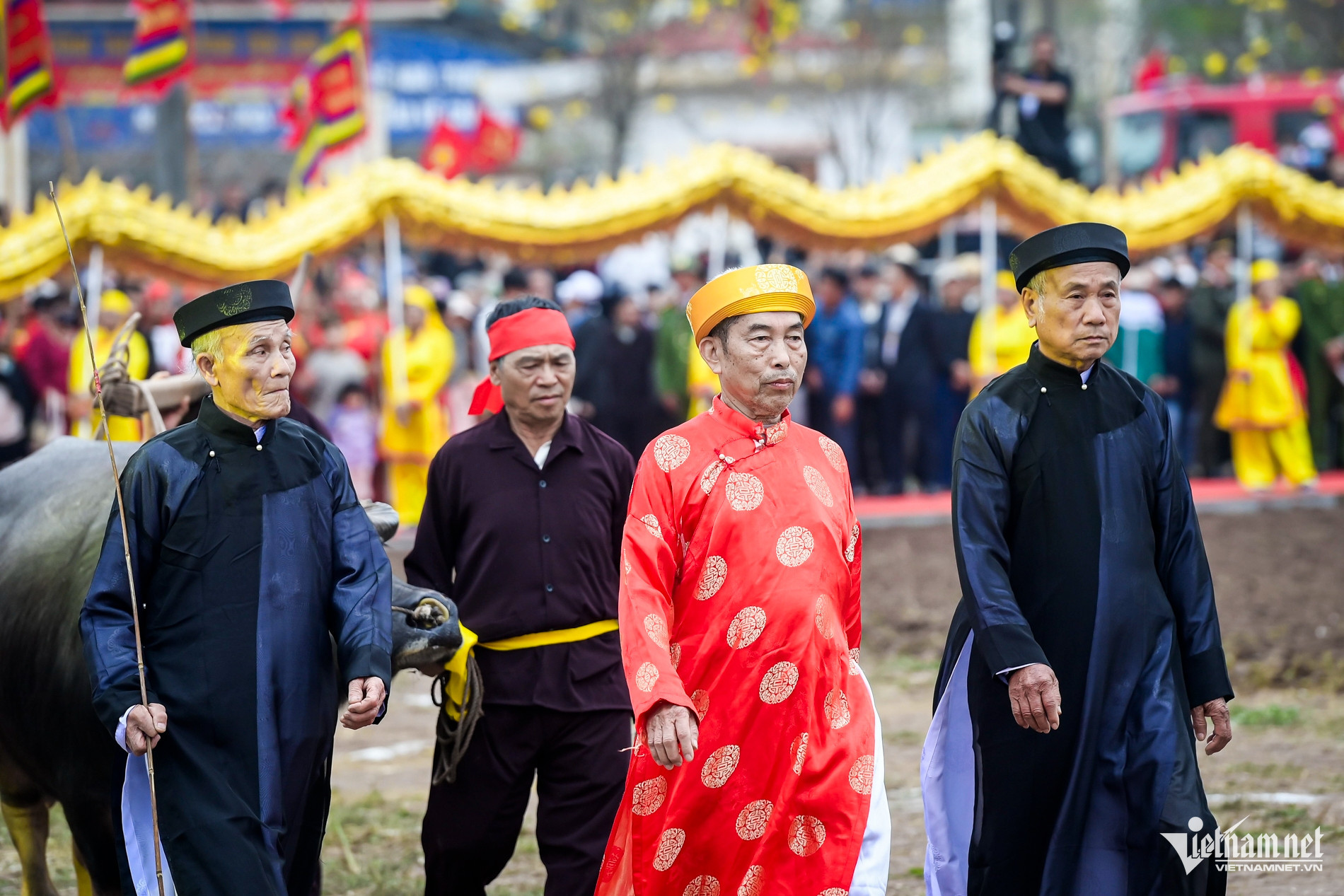
Elder Nguyen Ngoc An, 76, was entrusted with the role of King Le Dai Hanh in this year’s reenactment. Before stepping into the field, he performed the ritual of invoking royal spirit energy, donned a mask and royal robe, then slowly walked toward the selected plot of land.
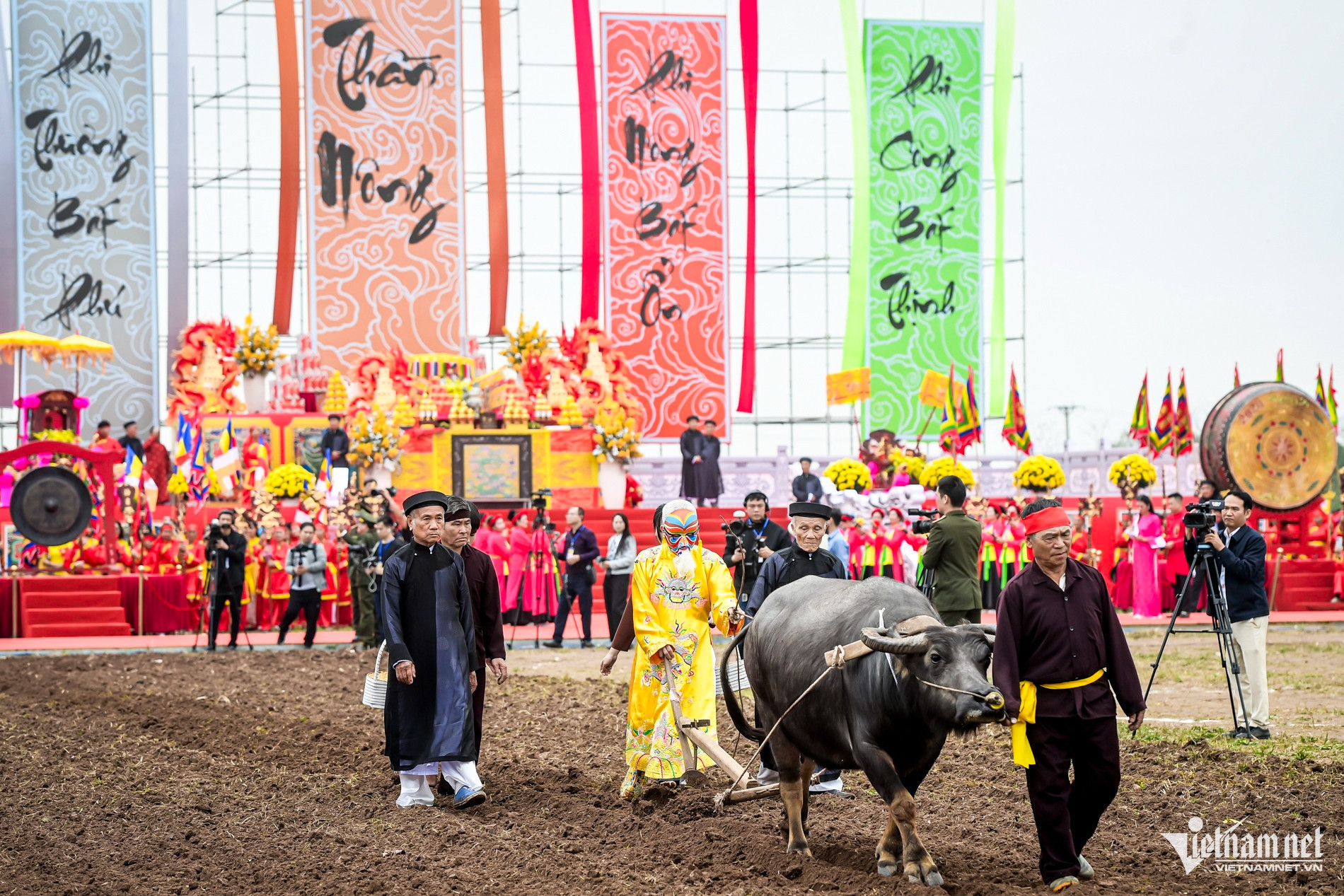
To the rhythm of resounding drums, the man in the role of king guided the buffalo to carve the first furrows of the new year. Behind him, young men and women dressed in traditional brown garments gently sowed seeds into the freshly turned soil.
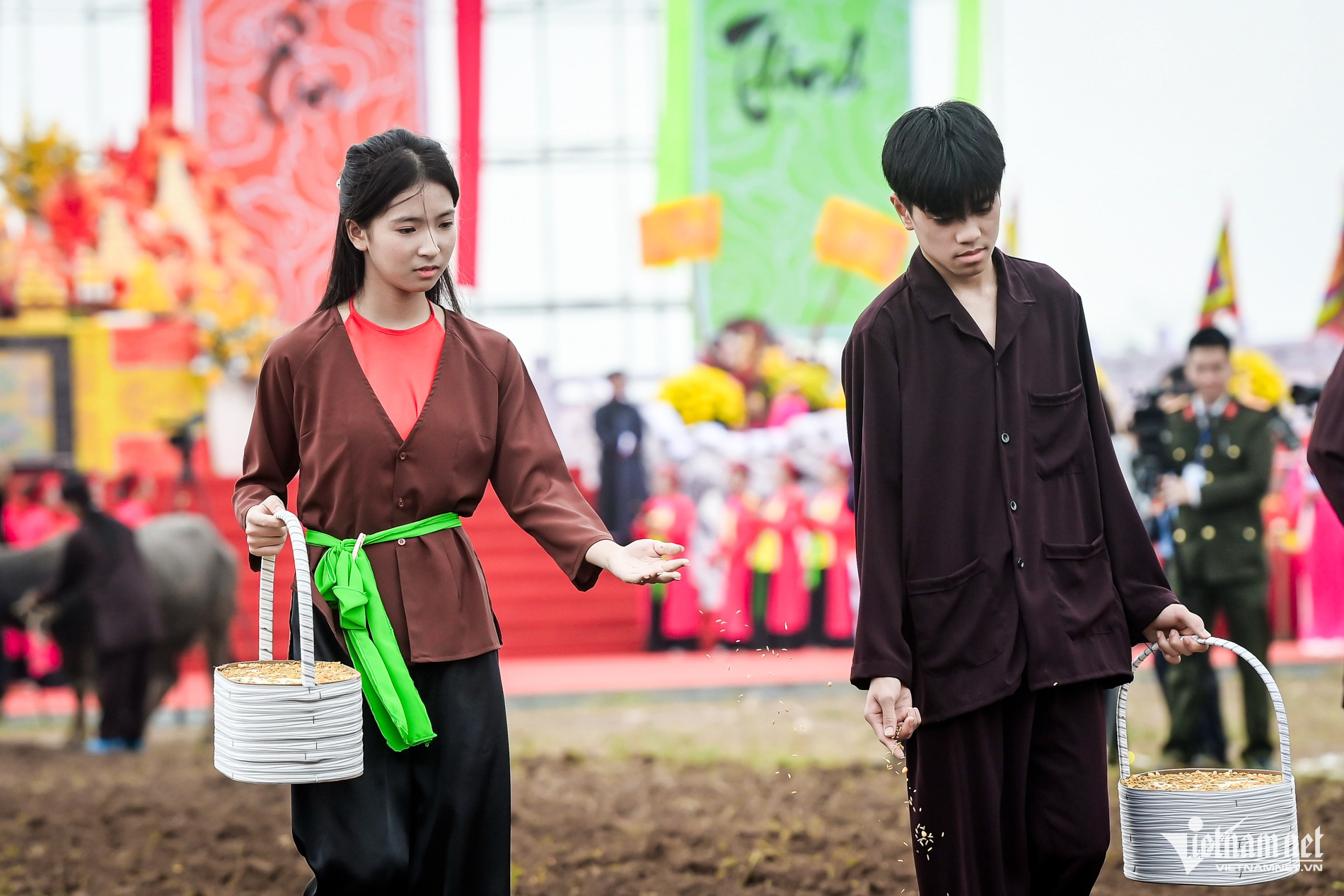
The sight of the “king” and his buffalo in the field not only recreates a historical moment but also conveys wishes for timely rains and bountiful crops.
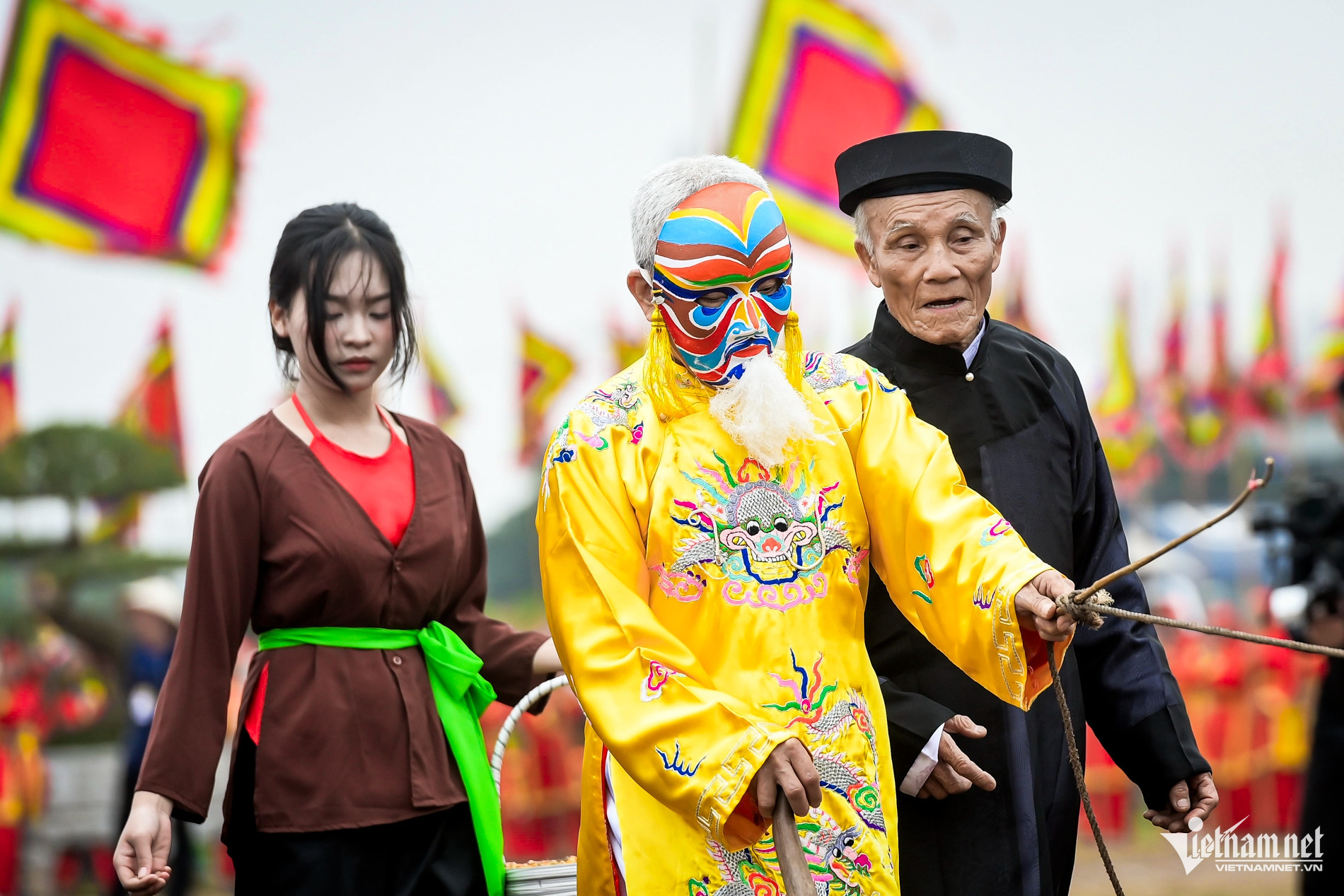
Having assumed the royal role for seven consecutive years, Nguyen Ngoc An said that each time he wears the long bao, he feels deeply honored.
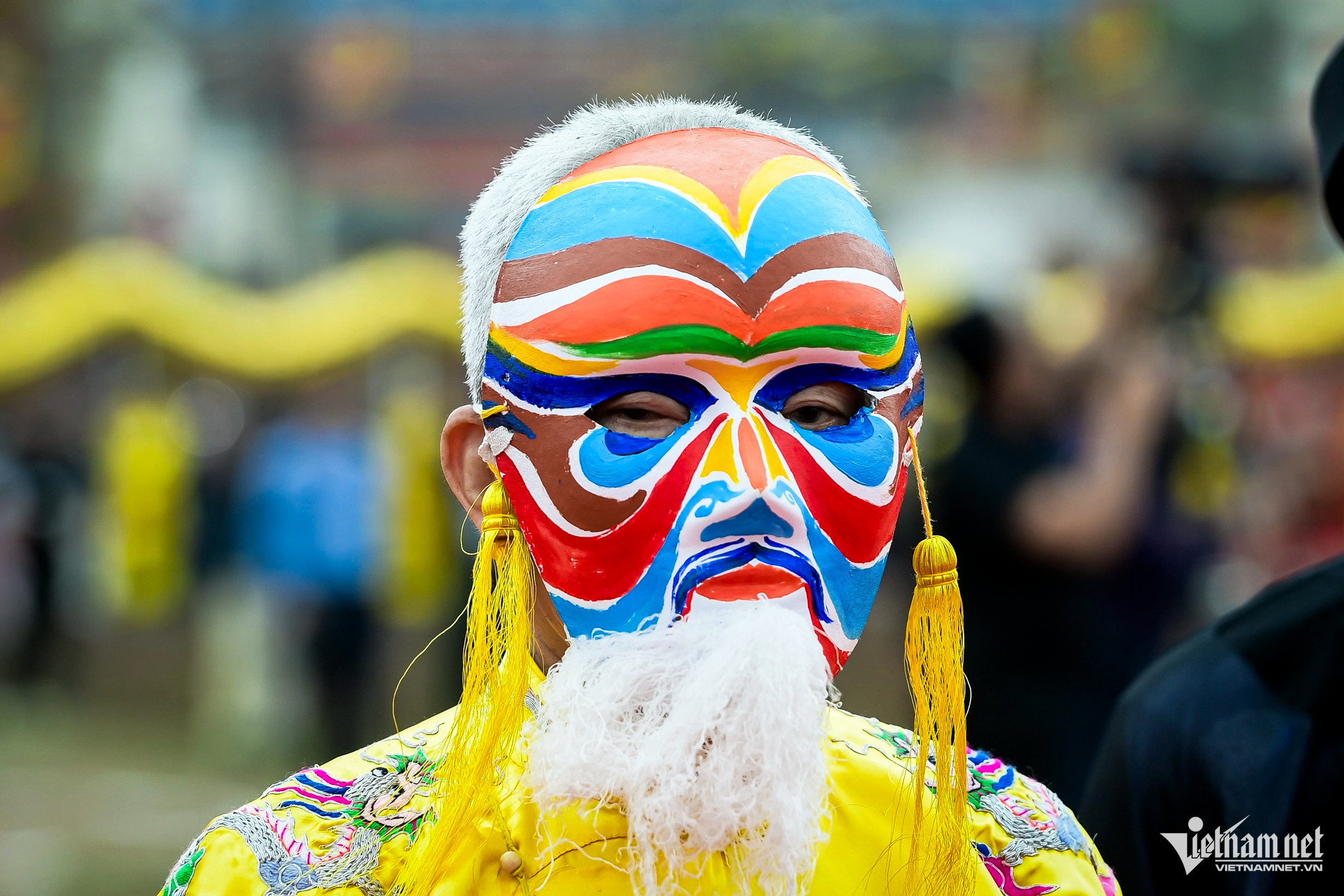
In the days leading up to the main ceremony, he revisits every ritual step and practices handling the buffalo to ensure the furrows are straight and steady, in keeping with the solemn spirit of the festival.
According to An, the person chosen to portray King Le Dai Hanh must be reputable, come from a cultured family, carry himself with dignified bearing and know how to plough a field.
For him, putting on the royal robe at the start of each spring is a way to devote his heart to preserving the cherished traditions of his homeland.
“When I was first entrusted with the role, I felt both nervous and anxious. In the early days, I practiced each movement on my own so that my gait would be unhurried, befitting a monarch. The bowing rituals had to be precise. The hardest part was maintaining the right demeanor. Once in the field, the furrows must be straight and even,” An shared.
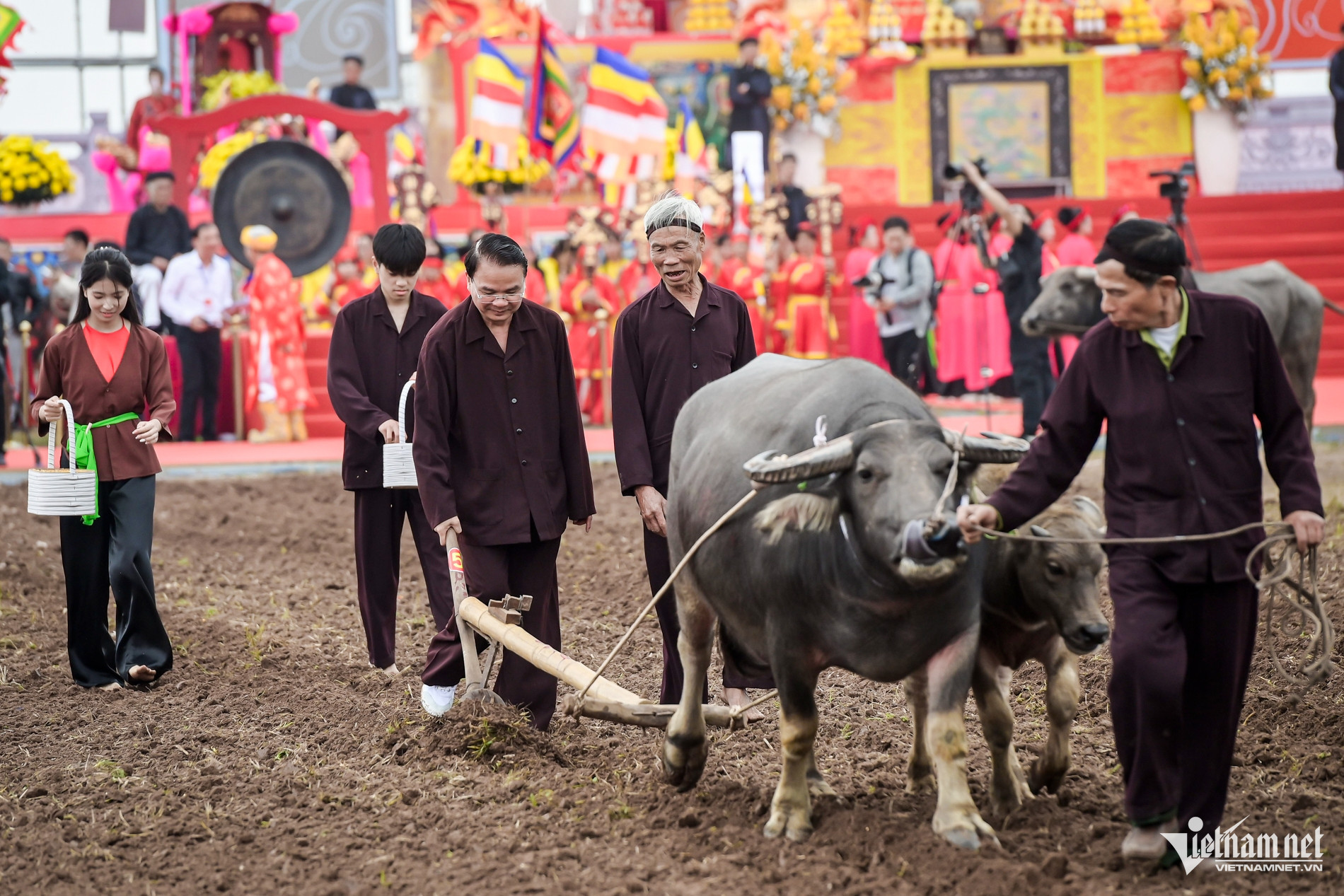
After the king’s ceremonial ploughing, delegates also took turns guiding the plough.
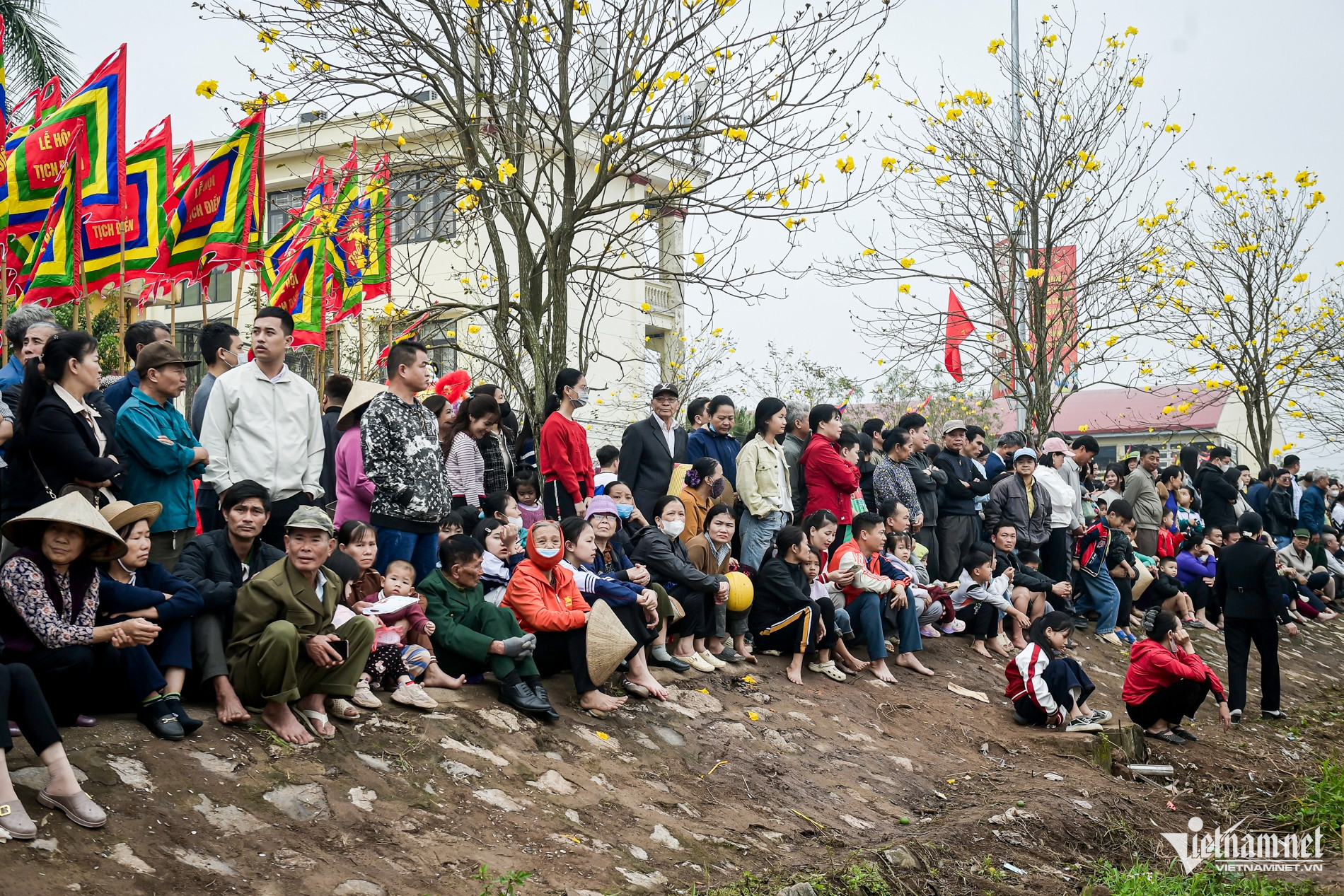
Crowds of residents and visitors lined both sides of the field, watching attentively.
Tran Thi Hoa, a resident of Tien Son ward, said: “Every year I come to watch the ‘king ploughing’ ritual. Being here makes me feel joyful and uplifted, as if given renewed hope for a smooth and prosperous year ahead.”
Trong Tung
.svg)
