 Vietnamnet.vn

 Podcast



More than a year after entering commercial service, the Ben Thanh - Suoi Tien metro line has become a decisive boost, driving comprehensive changes in both the transport landscape and the urban development mindset of Ho Chi Minh City.
A boost from 20 million passenger trips
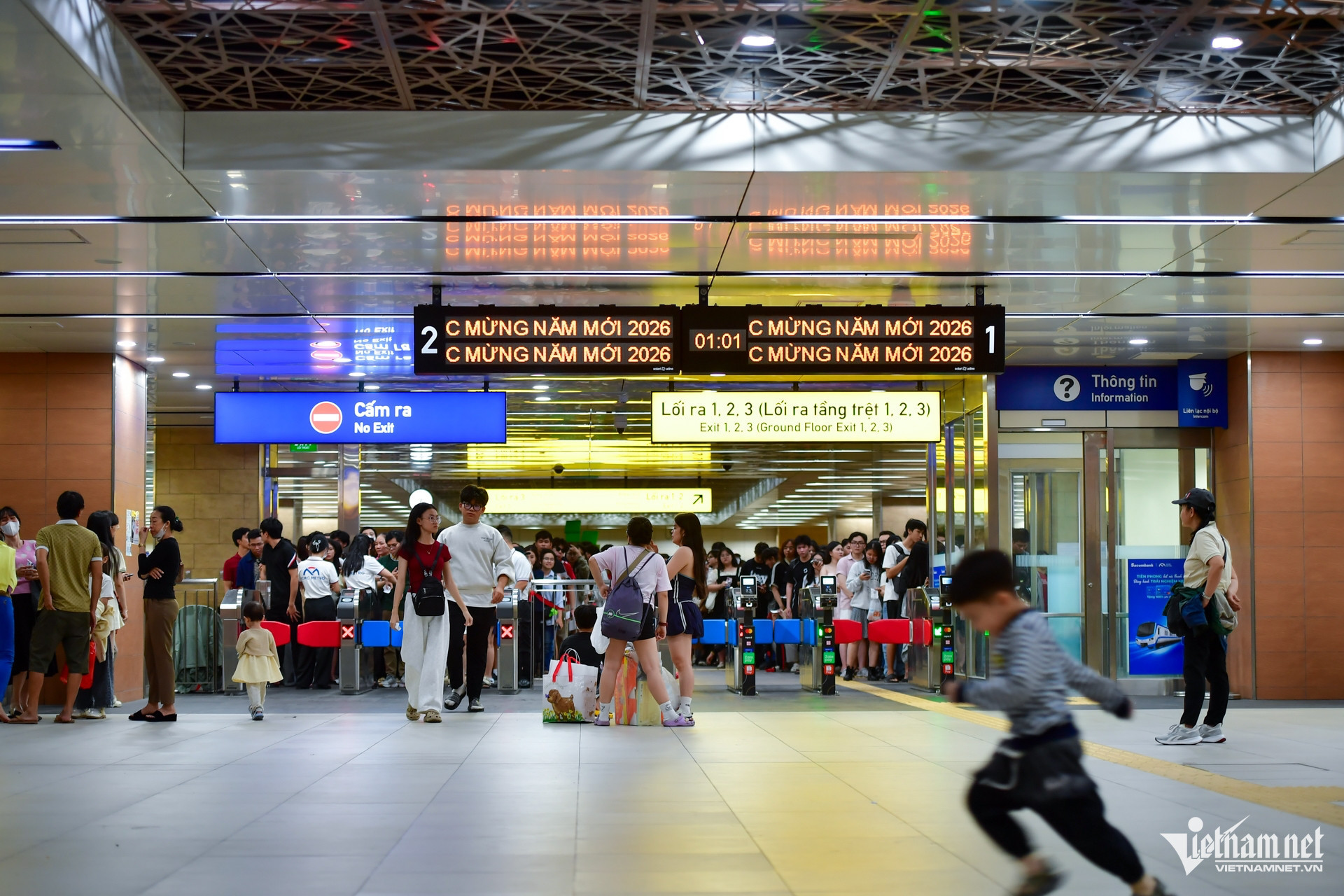
Metro Ben Thanh - Suoi Tien has served more than 20 million passengers after one year of commercial operation. Photo: Tuan Hung
In the first days of 2026, stations along Metro Line 1, Ben Thanh - Suoi Tien, are filled with orderly streams of passengers tapping their cards before boarding. What was once seen as a “dream on paper” now speaks through numbers: more than 20 million passenger trips in 2025, reaching 121.6 percent of the annual target.
Le Thu Ha, 24, an office worker in Sai Gon ward, said the metro has completely changed her notion of going to work.
“Before, every morning from Thu Duc into the city center was a battle with dust, heat and traffic congestion at the eastern gateway of Ho Chi Minh City. Now I have 20 peaceful minutes to read on an air-conditioned train, and I arrive at the office neat and composed. The metro truly feels like a lifeline for office workers,” Ha said.
Elsewhere, Tran Van Nam, 65, a retiree, shared that taking the metro brings him both joy and connection.
“We often arrange to ride the train together and explore the city. The trains run smoothly, the stations are clean and modern. More importantly, it feels safe. My children are more at ease knowing I no longer have to ride a motorbike myself,” he said.
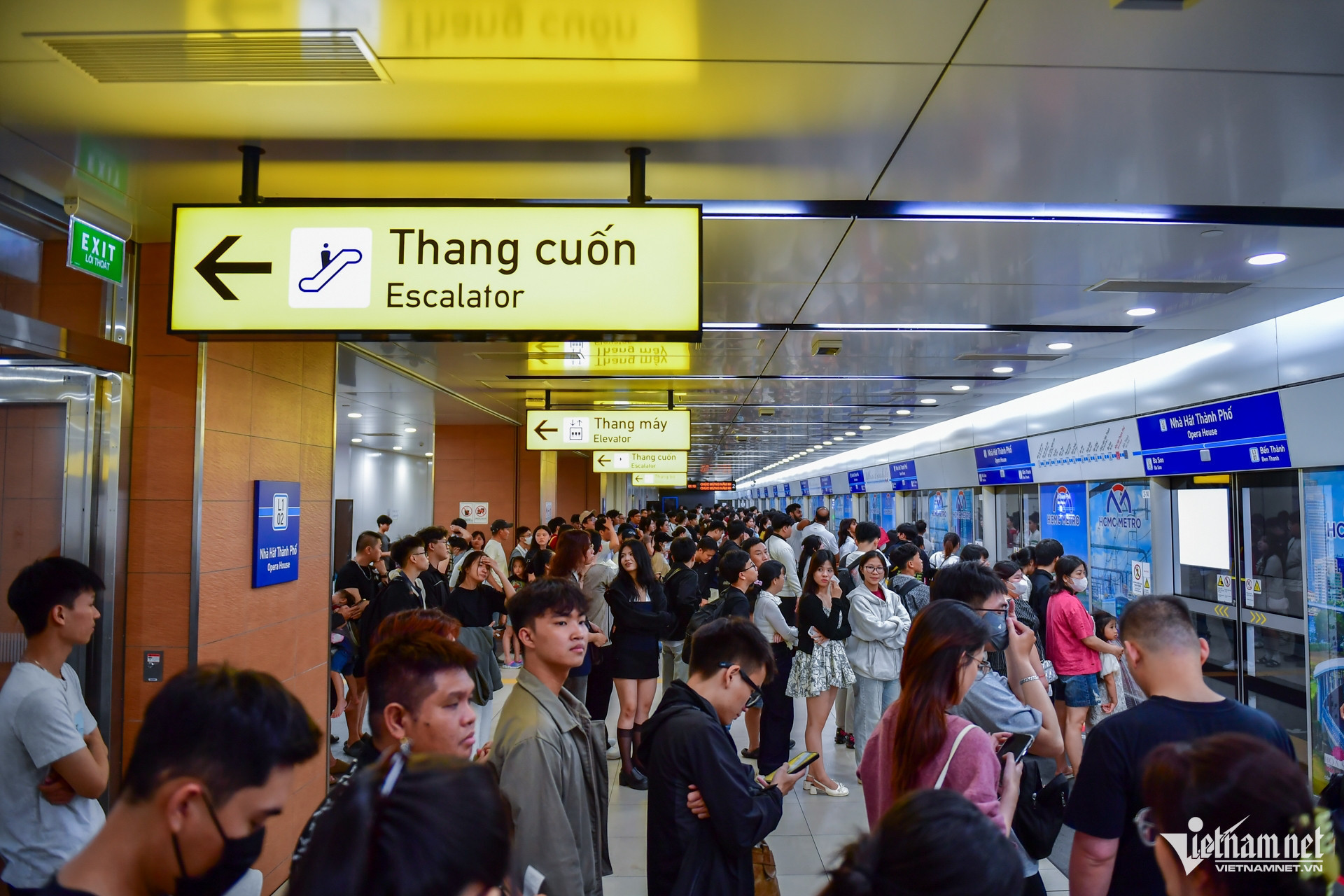
Beyond improving residents’ daily lives, the Ben Thanh - Suoi Tien line has generated strong momentum for businesses, particularly in tourism. Bui Thi To Trinh, Deputy General Director of Suoi Tien Cultural Tourism, said the park’s revenue rose by 32 percent in 2025, while visitor numbers increased by 41 percent compared to the previous year.
“About 60 percent of visitors from Ho Chi Minh City to Suoi Tien now choose the metro as their main mode of transport. Visitors from other provinces often arrive at Ben Thanh first, then continue here by metro,” Trinh noted.
A backbone strategy and a 2045 vision
The ripple effects of Metro Line 1 have laid the groundwork for a broader transformation. On January 15, Metro Line 2, Ben Thanh - Tham Luong, officially broke ground, marking the start of simultaneous deployment of the city’s urban railway network.
Bui Xuan Cuong affirmed that as a special urban center and the country’s economic engine, Ho Chi Minh City faces mounting pressure from population growth and rising travel demand. Developing high-capacity public transport is therefore an urgent necessity.
He emphasized that the priority is to build a modern, synchronized urban railway network serving as the backbone of public passenger transport, strengthening intra-urban and regional connectivity, and moving toward a multi-centered urban structure under the TOD orientation. The goal is to help build Ho Chi Minh City into a civilized, modern, green and livable metropolis, worthy of its position as a major economic hub nationally and regionally.
City leaders outlined a clear roadmap: by 2030, urban railway transport is expected to meet 20 to 30 percent of travel demand; by 2035, 35 to 50 percent; and by 2045, 50 to 60 percent.
Accelerating the nine-line railway roadmap
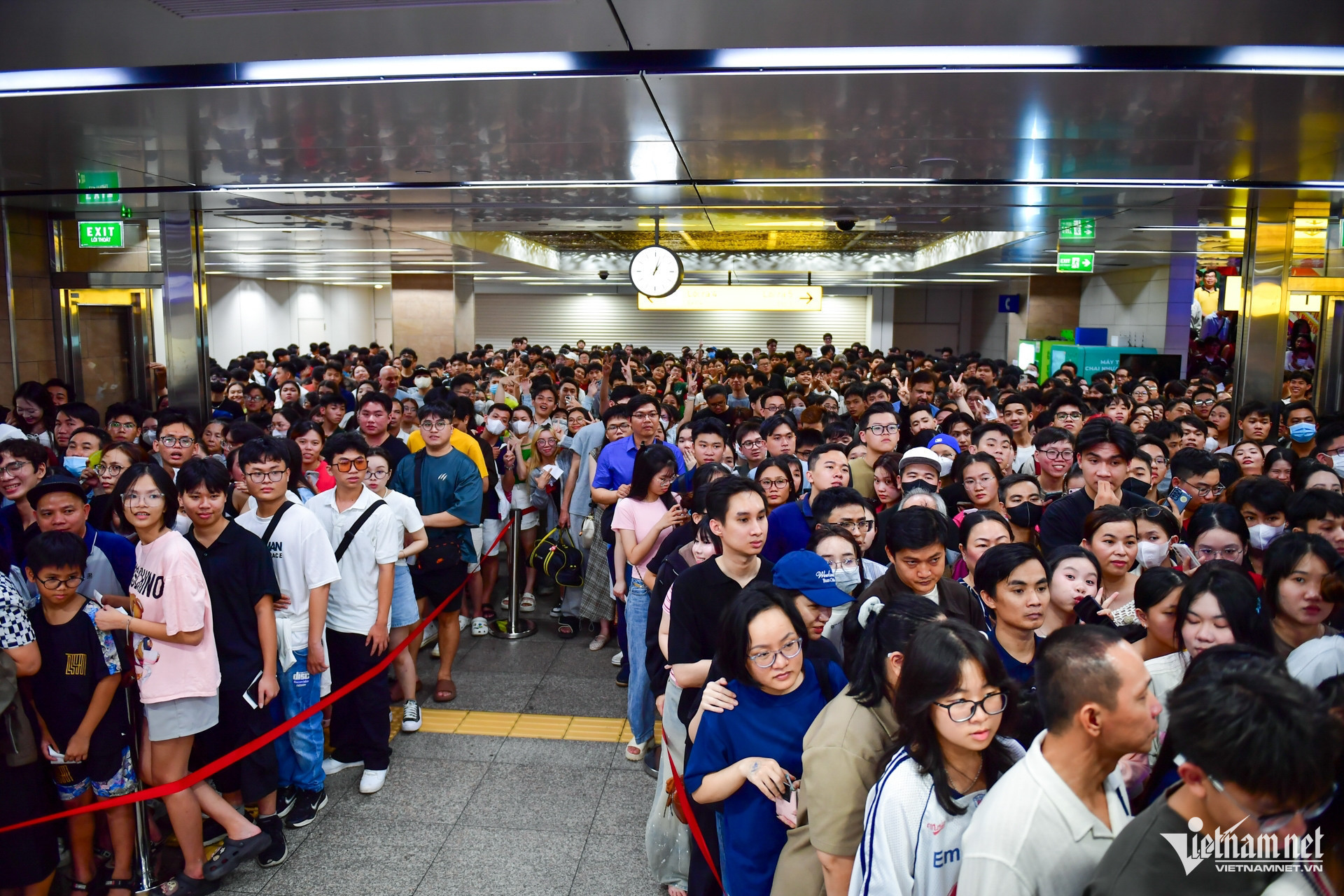
To realize these goals, Phan Cong Bang, Head of the Ho Chi Minh City Urban Railway Management Board, said the city is actively preparing investment for additional lines under the approved master plan, gradually forming a multi-directional network connecting the city center with gateways, new urban areas, industrial parks, high-tech zones and major transport hubs.
“When metro lines no longer operate in isolation but connect into a unified network, operational efficiency will multiply. The metro will not simply be a means of transport, but the backbone guiding bus systems, TOD development and compact urban models,” Bang stressed.
The Ho Chi Minh City People’s Committee has assigned the Urban Railway Management Board to prepare and act as investor for nine urban railway projects. Seven lines were approved under Decision 1195/QD-UBND dated March 28, 2025, and two under Decision 675/QD-UBND dated August 15, 2025, connecting inner-city areas, gateways and inter-regional corridors such as the former Binh Duong direction to Ho Chi Minh City.
In parallel with public investment, several investors have proposed participating in urban railway projects under the PPP model, focusing on lines such as Metro Line 2, Line 3, Line 4, Line 5 and the Thu Thiem - Long Thanh railway.
According to the plan, feasibility studies and FEED designs will be completed in 2026 - 2027. Compensation, support and resettlement work is expected to conclude in 2027 - 2028, with construction scheduled from 2027 to 2035.
More than a year of operating Metro Line 1 is not a long period, but it is enough to affirm the city’s chosen direction. From the everyday rhythm of residents to the strategic vision of policymakers, the “railway dream” is steadily becoming reality, forming a solid backbone that will carry this southern megacity toward a modern, civilized and sustainable future.
Tuan Kiet
.svg)
